Israel’s Katz vows to strike Beirut’s southern suburbs over any rocket or drone fire
Updated 48 minutes ago

IRGC deputy commander says Iran’s armed forces control Strait of Hormuz battlefield for as long as Tehran desires

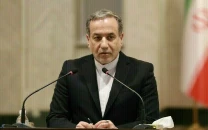
Iranian Foreign Minister Abbas Araghchi said negotiations with the United States were continuing without interruption through mediators, including Pakistan and Qatar, IRNA reported on Wednesday.
According to the post on X, Iranian media stated, "Speaking to Iraqi media, FM Araghchi stated that negotiations with the United States, conducted via mediators such as Pakistan and Qatar, remain ongoing without interruption."
Iranian media further added that Major General Mostafa Izadi, deputy commander of the Islamic Revolutionary Guard Corps (IRGC), said that Iran's Armed Forces control the battlefield in the Strait of Hormuz and would continue to do so for as long as the Islamic Republic desires.
Addressing a gathering in the central Iranian city of Khomain on Tuesday, Izadi claimed that the IRGC Navy and Aerospace Forces maintained operational and intelligence superiority over the strategic waterway.
He said that Iran's enemies sought to push the people away from the scene, adding that the people’s presence and support for the country were key to safeguarding achievements and thwarting the enemies’ plots.
Referring to Iran's missile capabilities, Izadi claimed that American forces were “dawdling at sea” and had moved approximately 700 kilometres away to avoid being targeted by IRGC missiles.
Read: Pakistan, Turkiye, Qatar, and Indonesia to ink defence industry pact
The IRGC deputy commander also referred to the 12-day and 40-day wars, claiming that Iran had emerged victorious despite its adversaries deploying their full military capabilities.
He said Iran's armed forces, supported by the country's people, had delivered a firm response during both conflicts.
Izadi maintained that neither psychological warfare nor propaganda could change the outcome on the battlefield, arguing that Iran's victories were the result of the steadfastness of its people.
Iraq closes Sheeb border crossing with Iran to check security, sources say
Iraq has closed the busy Sheeb border crossing with Iran to review security and install detection equipment to stop the smuggling of prohibited materials, an Iraqi border official said on Wednesday.
Sheeb would be closed to passengers, vehicles and commercial trucks until further notice, two other sources at the crossing said.
Iraq ordered the closure of another crossing with Iran, Shalamcheh, in September as a precaution after drone attacks on Saudi Arabia, two security sources said at the time. Riyadh said the drones had been launched from Iraq.
The current security measures at Sheeb are weak and inadequate, the Iraqi border crossings official told Reuters.
Iran says Saudi Arabia, Houthis have not answered mediation offer
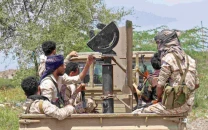
Iran has not received a response from Saudi Arabia or Yemen's Houthis to its offer to help broker talks to end the fighting between them, Iranian foreign minister said in a television interview aired on Tuesday. He offered to help facilitate dialogue as the Houthis intensified strikes on Saudi Arabia earlier this month.
In the interview with Iraq's Al Ekhbariya TV, Araghchi also responded to the possibility of Egypt joining Saudi Arabia in the war against the Houthis.
"Any foreign intervention would complicate matters," he said, adding Cairo has previously told Tehran that it would "not directly" interfere in the Yemeni conflict. Egypt has said it is ready to provide Saudi Arabia with the support it needs to defend its security, potentially raising the stakes in the Middle East.
A vote in the Egyptian parliament on a possible move against the Houthi fighters by the country's military, one of the Arab world's largest, was delayed until October 26.
Pak-Iran border reopens as CDF visits Tehran
The Pakistan-Iran border was reopened on Tuesday as Chief of Defence Forces and Army Chief Field Marshal Syed Asim Munir held a series of high-level talks in Tehran at the time when Houthi attacks on Saudi Arabia added a new and potentially difficult dimension to Islamabad's regional balancing act.
Field Marshal Asim Munir, accompanied by Interior Minister Mohsin Naqvi, met Iranian President Masoud Pezeshkian, Parliament Speaker Mohammad Bagher Ghalibaf, Foreign Minister Abbas Araghchi and General Mohsen Rezaei, representative of Iran's Supreme Leader and Secretary of the Supreme National Security Council, during his fifth visit to Iran in recent months.
Read more: Saudi-led coalition says it intercepted, destroyed drones in Madinah, eastern province
Unlike his previous trips, which were largely driven by Pakistan's efforts to defuse tensions between Iran and the United States, the latest visit came against the backdrop of repeated attacks by Yemen's Iran-aligned Houthis on Saudi energy, airport and other infrastructure.
The development presents a delicate challenge for Islamabad. Pakistan has pledged to defend Saudi Arabia under the Makkah Joint Defence Agreement, while at the same time maintaining close engagement with Tehran and attempting to revive stalled Iran-US diplomacy.
There was no official statement from the Pakistani side until the filing of this report. However, an official familiar with the visit told The Express Tribune that the talks went "very well", without sharing specifics. The official also confirmed that the Pakistan-Iran border had reopened.
Iranian readouts also quoted Field Marshal Asim Munir as saying that issues concerning the border had been resolved. "The issues concerning the Iran-Pakistan border have been resolved, and the border has been reopened as of this morning," the CDF was quoted as saying during a meeting with General Rezaei.








This material may not be published, broadcast, rewritten, redistributed or derived from. Unless otherwise stated, all content is copyrighted © 2026 The Express Tribune.




COMMENTS
Comments are moderated and generally will be posted if they are on-topic and not abusive.
For more information, please see our Comments FAQ