Mir Raza's final hours: A trail of calls, Rs30m plea
Updated 2 hours ago

.
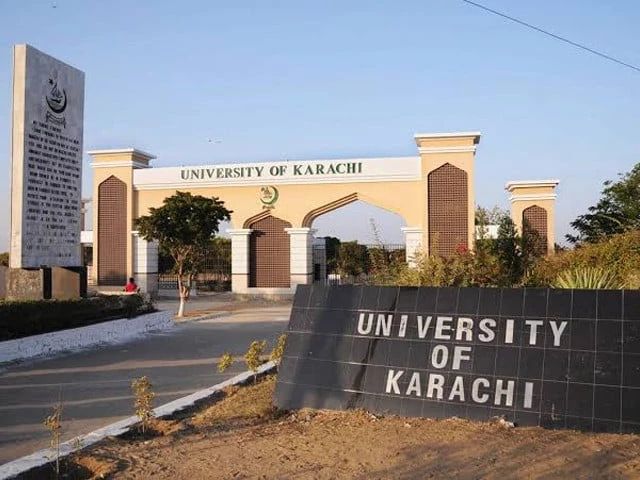
At the University of Karachi, securing admission this year has turned out to be a tale of two scores: while a relatively small proportion of candidates managed to cross the 50-mark threshold in the entrance test, thousands were offered a place after the university relaxed passing criteria in six disciplines.
The admission lists for around 20 degree programmes, based on the entrance test held on September 11, have thrown up some striking numbers. Of the 6,669 candidates who appeared, only 2,832 secured at least 50 marks, translating into a pass rate of around 40%.
The turnout itself was lower than last year, when more than 7,000 candidates took the entrance test for the 2026 academic session.
But the more revealing figures emerged from an analysis of the results published on KU's website. Faced with relatively low scores in six departments, the admissions committee, headed by Dr Saima Akhtar, lowered the passing threshold from 50 marks to as little as 25 in selected disciplines.
The move paved the way for 3,255 candidates to be offered admission against approximately 1,400 seats, with the revised criteria allowing candidates with considerably lower scores to qualify in some programmes.
Applied Chemistry recorded the lowest qualifying threshold at 25 marks. In Applied Physics and Environmental Studies, the minimum was reduced to 35, while candidates scoring 40 marks were also offered admission in Doctor of Physical Therapy (DPT), Education and International Relations.
The score distribution offers another glimpse into how candidates fared.
The largest group among those offered admission comprised 1,073 candidates who scored between 50 and 59 marks, accounting for nearly a third of the total. Another 865 candidates, or 26.57%, fell in the 40-49 bracket, while 661 candidates (20.31%) secured between 60 and 69 marks.
Higher scores were considerably less common. Only 244 candidates managed between 70 and 79 marks, representing 7.50% of those offered admission. The number dropped sharply at the next level, with just 35 candidates scoring between 80 and 89 marks.
At the top end, only seven candidates secured between 90 and 97 marks, accounting for 0.22% of those offered admission.
Meanwhile, the university's decision to lower the qualifying threshold brought candidates with scores below 40 into the admission pool. Of those offered admission with fewer than 50 marks, 34 had scored between 25 and 29, while another 336 obtained between 30 and 39.
The figures underline the wide spread of scores among candidates offered admission and the role of department-specific passing criteria in determining who makes the final list.














This material may not be published, broadcast, rewritten, redistributed or derived from. Unless otherwise stated, all content is copyrighted © 2026 The Express Tribune.









COMMENTS
Comments are moderated and generally will be posted if they are on-topic and not abusive.
For more information, please see our Comments FAQ