Hospital sealed after mpox detected in newborn
Updated 4 hours ago

Report describes police investigation as 'epic failure', urges FIA probe into police conduct
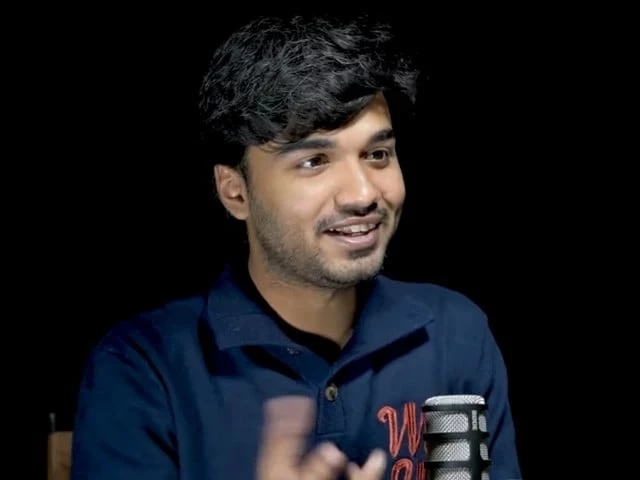
A case that began with a missing young man and a police theory of suicide has exposed what a judicial commission has described as a deeply flawed investigation, compromised evidence and a breakdown of public trust so severe that even the identification of the actual killer may not convince the public.
The single-member Judicial Commission probing the death of 25-year-old Mir Raza Ali has recommended a joint investigation team (JIT), led by DIG Irfan Baloch and comprising senior representatives of the Inter-Services Intelligence (ISI), Intelligence Bureau (IB), Pakistan Rangers (Sindh) and the National Cyber Crime Investigation Agency (NCCIA), to establish the truth.
In a scathing assessment, the commission termed the police investigation an "epic failure", warning that the trust deficit between the Sindh police and society had become "nearly unrectifiable" in this case.
Headed by Sindh High Court Judge Justice Omar Sial, the commission submitted its report to the provincial chief minister on October 15, 2026.
'It was a murder'
The commission concluded that the available medical and physical evidence was incompatible with suicide. "The bullet trajectory, the unusual location of the wound for a self-inflicted injury, the absence of blood, the state of the body, the principles of medical jurisprudence, acid burns and the anesthesia detected in the blood, all clearly excluded suicide as the cause of death. It was a murder," the report stated.
Police probe under fire
The commission found that the police had failed in their most basic responsibility: establishing the truth. It said the suicide hypothesis rested on a handful of unconfirmed text messages, selectively obtained video footage and a preliminary post-mortem report that did not itself conclude that the death was a suicide.
The report also pointed to contradictions between the first and second reports prepared by Dr Osama Shaikh, further weakening the police position.
Describing the investigation as "a rudderless ship, not aware of its destination", the commission said the possibility of an active cover-up in the initial stages "cannot be conclusively ruled out".
Medical board controversy
The commission described the change in medical board as a "highly irregular, inexplicable, legally flawed overreach", attributing it to officials at the upper levels of the Sindh Health Secretariat, particularly the secretary and special secretary.
It further observed that the director-general of health services had "looked the other way", despite being aware that he lacked the legal authority to constitute such a board. "The two gentlemen who directed the change in the Board could not give a cogent reason for the abrupt change," the report stated.
JIT and criminal accountability
With a significant portion of the physical evidence compromised, the commission said the case had reached a critical juncture at which a conventional police investigation was unlikely to restore public confidence.
It warned that even an accurate conclusion or the apprehension of the actual culprit might not be accepted by the public because of the severe breakdown in trust.
To address this, the commission recommended a JIT led by DIG Irfan Baloch, incorporating representatives of the ISI, IB, Pakistan Rangers (Sindh) and NCCIA, in line with the family's request. "This extreme step is necessary to restore public trust and end speculation," the report stated.
The commission also called on the police to acknowledge their operational failures, apologise transparently and initiate formal inquiries against the officers responsible.
Separately, it recommended that a high-level committee, preferably headed by the FIA, investigate whether police officials involved in the first ten days of the probe had violated Sections 201, 166(2) and 218 of the PPC, concerning evidence-related offences and misconduct by public servants.







This material may not be published, broadcast, rewritten, redistributed or derived from. Unless otherwise stated, all content is copyrighted © 2026 The Express Tribune.


COMMENTS
Comments are moderated and generally will be posted if they are on-topic and not abusive.
For more information, please see our Comments FAQ