Britain says it will carry out defensive air missions over Saudi Arabia
Updated 29 minutes ago

Around 130 million names removal from India's electoral rolls under a revision has sparked mass protests
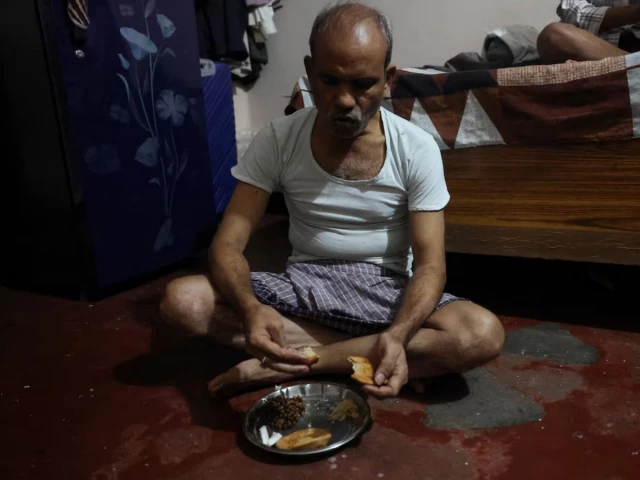
Kamta Prasad has been shuttling between government offices in Delhi, trying to prove he is not dead.
The 53-year-old tailor is among 130 million names removed from India's electoral rolls under a voter roll revision that has sparked mass protests and posed the biggest challenge to Prime Minister Narendra Modi's government.
The Special Intensive Revision (SIR) has led to removals for reasons ranging from "logical discrepancies" to people being recorded as dead, leaving many such as Prasad struggling to get more than just their voting status restored.
He has had to forgo his daily wage of 250 rupees ($2.63) that supports his family of four to scurry around the city to reverse the error.
"I panicked when I heard about it," said Prasad, who is among 4.2m Delhi voters struck off the list, according to the draft rolls published by the poll body on August 31. "Since then I've been going everywhere to prove that I'm alive."
Read: India's 'cockroach' movement founder released a day after detention
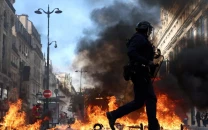
The deletions have triggered a political storm, with opposition parties and youth groups staging near-daily protests in New Delhi and elsewhere, which have been met with force by the police.
They allege Election Commission chief Gyanesh Kumar manipulated the revision to benefit Modi's Bharatiya Janata Party (BJP), a charge denied by both the commission and the BJP.
'Nobody listens'
According to Rajendra Kumar, a volunteer with non-profit Jan Sarokar, about 2,000 of the roughly 9,000 voters in Prasad's block were struck off after the revision, classified as absent, shifted, deceased or registered elsewhere.
Prasad is the only person in this block who has been declared dead, but several similar cases have been reported by local media across the country.
The Election Commission has said it was removing duplicate, deceased, shifted and otherwise ineligible voters and that anyone excluded in error can file claims, submit supporting documents and pursue appeals before the rolls are finalised.
For voters such as Prasad, however, exclusion leads to a bureaucratic maze, and depending on the circumstances they may have to provide proof of life, establish residency, correct alleged discrepancies or submit fresh documentation.
That involves repeated visits to election offices, hearings before electoral officials and multiple rounds of appeals, with some spending weeks or months trying to restore their names.
Read more: Imran Khan challenges 'unconstitutional' exit notice in Bombay High Court
"I told them I voted in the last assembly and general elections and have been voting for 35 years, but nobody listens," Prasad said.
India's Election Commission did not reply to a request for comment for this story.
Register as a new voter
Following weeks of protests, the Election Commission ordered fresh verification in some states, including Delhi, and Prasad said officials had assured him his name would be restored.
Kamal Lal, a 38-year-old private school teacher in Delhi, was marked as "shifted" even though he still lives in a settlement beneath a flyover with dozens of other families.
"It is very disappointing that we have been voting in this country and now our names have been cut because we do not have land papers or a water bill," he said.
Lal said he first learned of his exclusion in September and has since approached election officials, attended hearings and filed multiple reinstatement applications.
For some excluded voters, the remedy offered by officials has brought little comfort: rather than restoring their previous registrations, they were advised to apply afresh as new voters.
For poorer voters, fears run even deeper.
"Now local election officials are asking us to register as new voters, and my husband is strongly opposed to that because he has voted in the last few elections," said 39-year-old Mamta, who does not use a surname.
"I am worried that if our names are not restored to the list, I could lose access to subsidised ration and other government welfare schemes."





This material may not be published, broadcast, rewritten, redistributed or derived from. Unless otherwise stated, all content is copyrighted © 2026 The Express Tribune.



COMMENTS
Comments are moderated and generally will be posted if they are on-topic and not abusive.
For more information, please see our Comments FAQ