Araqchi blames US for Strait of Hormuz tensions
Updated 30 minutes ago

Naqvi says peace more important than war
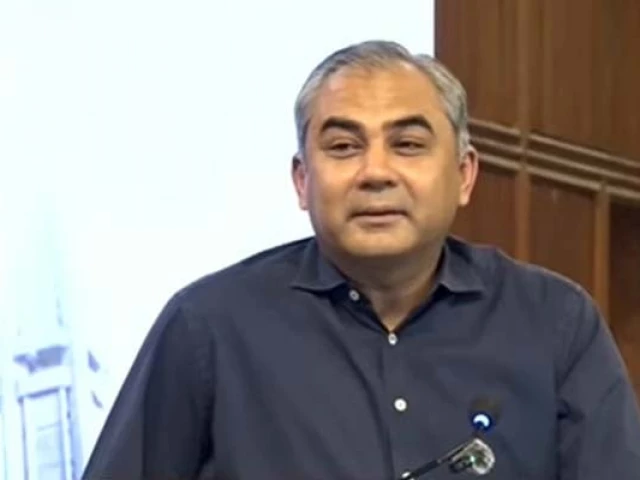
Interior Minister Mohsin Naqvi on Monday said Pakistan had made every possible effort to ease tensions between Iran and the United States and bring both sides to the negotiating table, stressing that winning peace was more important than winning a war.
Addressing the 8th Global Security Forum in Doha, Naqvi said the conflict had created serious risks for the Middle East and the wider world. He said Pakistan had chosen the path of peace at a critical time and continued its diplomatic efforts despite moments of extreme tension.
Highlighting the role of Chief of Defence Forces and Chief of Army Staff Field Marshal Syed Asim Munir, the minister said his personal efforts, relations with world leaders and continued engagement with all sides had helped open channels for dialogue.
Naqvi said he had participated in the peace efforts alongside Field Marshal Asim during visits to Tehran and meetings with senior Iranian officials, where he witnessed the difficulties involved in the negotiations. Despite the challenges, he said, Pakistan continued talking, listening and working to build trust.
"Peace is not achieved in one meeting; it requires patience, trust and continuous efforts," he said, adding that Pakistan and Qatar had never sought credit for their mediation efforts but aimed to prevent further conflict and save innocent lives.
Recalling the diplomatic process, Naqvi said Pakistan hosted the Islamabad talks in April, followed by the signing of the Islamabad Memorandum of Understanding in June. Pakistan and Qatar subsequently held discussions at a summit in Switzerland, where, he said, Field Marshal Asim and Qatari Prime Minister Mohammed bin Abdulrahman Al Thani worked for more than 16 hours without a break.
"There were no cameras, no announcements, only two men who refused to let the talks fail," he said, describing the meeting as an example of the commitment shown by the two mediating countries.
Naqvi also praised Qatar for continuing to engage with different sides when others chose to take positions, saying Pakistan had worked closely with Doha to promote dialogue and regional stability.
He outlined three lessons from the mediation efforts: the doors to dialogue should never be closed, trust was essential for negotiations, and peace required sincere efforts from all sides. No single country, he said, could achieve regional peace alone.
Referring to the Makkah Joint Defence Agreement signed by Pakistan, Saudi Arabia and Turkiye, Naqvi described it as a pact for defence rather than war. He said lasting peace was impossible while neighbouring countries remained caught in conflict.
Turning to counterterrorism, the minister said Pakistan understood the cost of insecurity, having lost thousands of citizens, soldiers and police personnel. Describing terrorism as a common enemy, he called for stronger international cooperation, improved intelligence-sharing and joint efforts to defeat the threat.
He also highlighted Pakistan's contribution to United Nations peacekeeping missions, saying its soldiers and police personnel had helped protect civilians, support local police and restore peace in conflict-affected countries.
"We do not want credit for stopping wars. We want a future where wars do not start," Naqvi said, reaffirming Pakistan's commitment to dialogue, peace and cooperation.










This material may not be published, broadcast, rewritten, redistributed or derived from. Unless otherwise stated, all content is copyrighted © 2026 The Express Tribune.




COMMENTS
Comments are moderated and generally will be posted if they are on-topic and not abusive.
For more information, please see our Comments FAQ