Zubaida Khanum remembered on 13th death anniversary for her musical legacy
Updated 2 hours ago

Playback singer recorded around 250 songs in Urdu and Punjabi before stepping away from the film industry in the 1960s
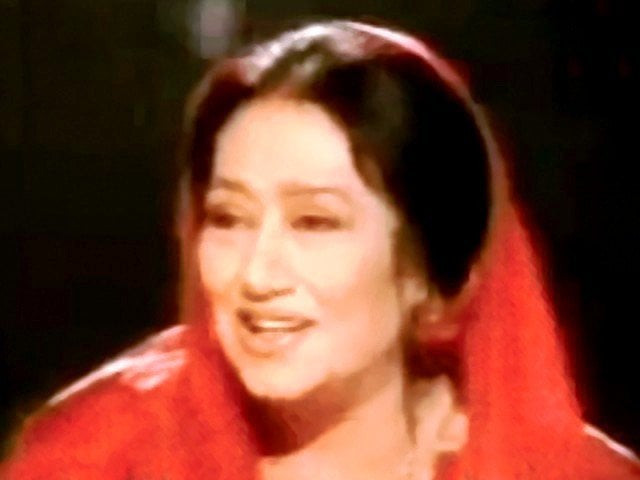
Pakistani playback singer Zubaida Khanum is being remembered on her 13th death anniversary, with her recordings continuing to represent an important chapter in the country’s film music history.
Khanum, who died in Lahore on October 19, 2013, at the age of 78, was among the prominent female voices of the flourishing film industry of the 1950s. Her work in Urdu and Punjabi cinema helped establish her reputation at a time when songs were central to both storytelling and the commercial appeal of films.
Born in Amritsar in 1935, Khanum moved to Lahore with her family following the Partition of the subcontinent in 1947. She rose to prominence as Pakistan’s emerging film industry developed its own musical identity, drawing on Punjabi folk traditions and the wider musical heritage of the region.
According to IMDb, Khanum began her singing career with the film Billo in 1951 before gaining wider recognition through the Punjabi film Shehri Babu, released in 1953.
Her career flourished during the 1950s, when Lahore was an important centre of Pakistani film production. She became known for her playback singing, in which singers record songs that are later performed on screen by actors. Her voice featured in numerous Urdu and Punjabi films, helping make songs an enduring part of the cinematic experience for audiences of the period.
In an obituary published on October 30, 2013, The Independent reported that Khanum recorded approximately 250 songs, largely in Urdu and Punjabi. The publication also noted her solo performances and duets, as well as recordings that extended beyond film music.
Her film credits included Pattan, Heer and Patay Khan in 1955, followed by Chann Mahi and Dulla Bhatti in 1956. These films belonged to a period when Punjabi cinema was building a strong audience through stories, performances and music rooted in local culture.
Khanum also appeared in a small number of films as an actress, including Patay Khan and Dulla Bhatti, although playback singing remained the principal source of her recognition.
Despite her popularity, Khanum’s career was relatively short. She stepped away from playback singing in the 1960s after marrying film cameraman Riaz Bokhari.
The Independent noted in its obituary that she left the industry to devote herself to family life, leaving behind a body of work concentrated largely in the period when Pakistani cinema was establishing many of its best-known musical traditions.
Her career illustrated the distinctive role of playback singers in South Asian cinema. While actors appeared on screen, singers supplied the voices that conveyed the emotions of romantic sequences, folk-inspired performances and dramatic moments. Their contributions could become widely recognised even when audiences associated the performances visually with the actors.
Khanum’s legacy continued to receive public recognition years after her death.
In 2020, the Punjab Institute of Language, Art and Culture (PILAC) marked the singer’s seventh death anniversary with an event that included the inauguration of a folk studio and performances of her songs.
PILAC’s then director general, Sughra Sadaf, highlighted Khanum’s importance to Punjabi culture and traditions, noting that her relatively brief career had left behind a significant musical legacy.
Khanum died of a heart attack at her Lahore residence on October 19, 2013. Thirteen years after her death, her place in Pakistan’s musical history remains closely tied to the songs she recorded during the industry’s formative decades. Her career connected the popular cinema of the 1950s with musical traditions that had developed across the Punjab region before and after Partition.
Although her time in the recording industry was relatively brief, Khanum’s work offers a window into an era when film songs played a central role in popular entertainment. Her recordings remain part of the legacy of the singers, composers, lyricists and filmmakers who helped shape Pakistan’s early cinematic identity.













This material may not be published, broadcast, rewritten, redistributed or derived from. Unless otherwise stated, all content is copyrighted © 2026 The Express Tribune.






COMMENTS
Comments are moderated and generally will be posted if they are on-topic and not abusive.
For more information, please see our Comments FAQ