SHC sets aside most cuts ordered by Sindh censor board in 'Ghost School'
Updated 3 hours ago

Court rules board failed to justify the cuts, directs it to reconsider the film's certification within 10 days
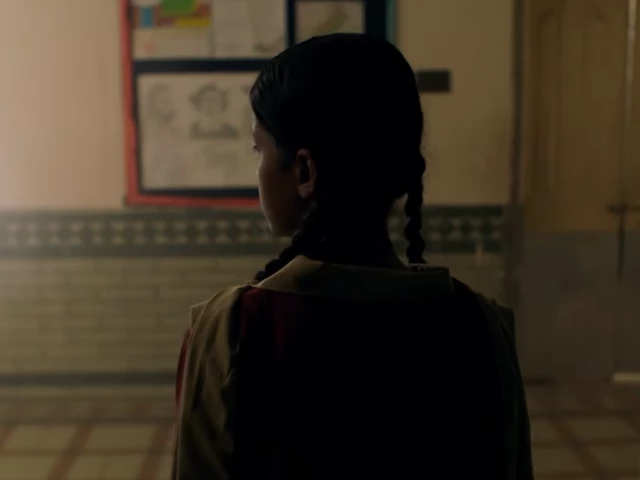
The Sindh High Court (SHC) on Monday set aside most of the cuts ordered by the Sindh Board of Film Censors in the feature film Ghost School, ruling that the board had failed to justify its decision and observing that “the power to excise is not unbounded”. The court directed the board to reconsider the film’s certification within 10 days.
The case concerned Ghost School, a film about a 10-year-old girl who discovers that the only school in her village has closed amid rumours that it is haunted. The story explores the abandoned school and the fears and beliefs that have taken hold in the village.
The filmmakers challenged the censor board’s decision before the SHC under Article 199 of the Constitution, contesting its requirement to remove eight items before the film could receive a Universal (U) certificate.
A division bench comprising Justice Yousuf Ali Sayeed and Justice Adnan Iqbal Chaudhry held that the board’s decision could not stand because it had failed to explain how the disputed material violated the law or why its removal was necessary.
“The power to excise is not unbounded,” the court observed, adding that the necessity of any cut had to be assessed against the purpose it served and the constitutional protection of freedom of expression.
The court set aside the board’s decision, except for one cut to which the filmmakers had agreed. It directed the board either to issue a certificate allowing the film to be shown publicly without further cuts or, if it considered a higher age rating necessary, to give the filmmakers a personal hearing and issue a reasoned order explaining each objection.
The court also clarified that the board could reconsider only the objections it had already raised and directed it to adopt the least restrictive age rating that adequately addressed its concerns.
In a letter dated September 11, the Sindh board had ordered the removal of the expressions “biradri ka wadera”, “wadera” wherever it appeared, “kameene”, “haram khor”, “manhoos siyasatdan” and “Buraq” wherever it appeared. It had also ordered the removal of a child’s abusive remark in a school scene, as well as scenes depicting books being burnt and the school being set on fire at the end of the film.
The Central Board of Film Censors and the Punjab Board of Film Censors had already cleared the film for unrestricted public exhibition without any cuts. The Sindh board, however, had initially refused to certify it without explaining the reasons for its decision.
The filmmakers challenged that refusal in an earlier petition. In an order issued on August 21, the SHC directed the board to reconsider the matter, provide the filmmakers with a meaningful opportunity to be heard in person and record “cogent and intelligible reasons” for its decision.
Also Read: SHC orders Sindh censor board to reconsider ban on ‘Ghost School’
In its latest judgment, the court held that the board had failed to comply with those directions. Neither its decision nor its comments explained how the disputed words and scenes violated any of the grounds for censorship under Section 6(1) of the Sindh Motion Pictures Act, 2011, or any provision of a censorship code.
“Mere reference to a statutory provision, unconnected to the material said to offend it, is not a reason,” the judgment stated, adding that the board could not justify its decision retrospectively through comments or submissions.
“While we accept that such a concern as to rating may be a legitimate consideration under Section 4(2)(c), the power to excise is not unbounded,” the court observed.
It added that whether an excision was “necessary” had to be assessed against “the purpose it serves” and, where a citizen’s expression was “curtailed”, measured against Article 19 of the Constitution.
The court also questioned why the Sindh board had reached a different decision from the central and Punjab boards, which had approved the same version of the film without cuts.
“Nevertheless, where the Film, in identical form, has been found suitable for the same category elsewhere in the country, the Board was obliged, if it considered a different course necessary for Sindh, to at least say why,” the court observed.
The judgment added that any justification for a different decision, whether based on local circumstances or other considerations, had to be disclosed in a “reasoned order” with reference to Section 6(1) of the Act or a Censorship Code, allowing the decision to be scrutinised. The absence of such reasoning, it said, “reinforces the conclusion that the Impugned Decision was not the product of a considered exercise of discretion.”
The bench also questioned the board’s decision to treat the disputed words and scenes as though they were all of the same nature, without explaining why each needed to be removed.
“A term of social description such as ‘wadera’, a mild political epithet, mildly abusive words such as ‘kameene’ or ‘haram khor’, and the depiction of a school’s burning in a film condemning such acts, do not all stand on the same footing, and no single unexplained direction can justify them all,” the court observed.
“The Board was directed on 21.08.2026 to record cogent and intelligible reasons for whatever conclusion it reached,” the judgment stated. “Neither the Impugned Decision nor the Respondents’ comments do anything of the sort, and in the absence of any stated ground, we are of the view that the excisions, other than the one consented to, cannot stand.”
Read More: Seemab Gul’s award-winning film 'Ghost School' barred from cinemas in Sindh
The bench also considered whether the filmmakers could approach the High Court directly. The respondents objected that Rule 36(2) of the Sindh Censorship of Film Rules, 2014, provided for an appeal to an appellate committee.
The filmmakers argued that the committee had neither been constituted nor notified and that their inquiries to the relevant department about its status had gone unanswered. The court noted that the respondents had not addressed the issue in their comments and had raised the objection only during the hearing.
“Needless to say, a remedy that the Government has itself failed to bring into being cannot be pressed as an alternative,” the court said, holding that the petition was maintainable.
In examining the legal limits of censorship, the court referred to an earlier SHC judgment in Moulvi Iqbal Haider v Federation of Pakistan, which emphasised the need to protect freedom of expression when reviewing censorship decisions.
Quoting from that judgment, the bench said, “The default position of the Court under Article 199 ought to be that of fully safeguarding the fundamental right by giving as expansive an interpretation to Article 19 as possible, and in the event of a restriction being imposed by the Board or any other authority that may be competent in that regard, testing the reasonableness of that restriction stringently, so as to ensure that the same is ‘reasonable’ in the strictest conceivable sense”.
The court also referred to the Supreme Court’s ruling in Pakistan Electronic Media Regulatory Authority v ARY Communications, which held that a work of art should be assessed as a whole and that restrictions should go no further than necessary.
The bench noted that the Supreme Court had called for a more lenient approach when reviewing elements of an artistic work that were necessary to convey its message. Where only a particular part was objectionable, the court said, only that part should be modified, with restrictions kept to a minimum.
The petition was allowed, and the board’s decision was set aside except for the cut accepted by the filmmakers. The court directed the board to reconsider the film’s certification within 10 days of the filmmakers removing the agreed item.
Under the order, the board must either issue a certificate allowing unrestricted public exhibition without further cuts or, if it considers any of the remaining excisions necessary for a category higher than U, provide the filmmakers with a personal hearing and issue a reasoned order. The order must identify the specific concern in each instance, with reference to Rule 11 of the 2014 Rules.













This material may not be published, broadcast, rewritten, redistributed or derived from. Unless otherwise stated, all content is copyrighted © 2026 The Express Tribune.






COMMENTS
Comments are moderated and generally will be posted if they are on-topic and not abusive.
For more information, please see our Comments FAQ