CM eyes Punjab as regional livestock hub
Updated 51 minutes ago

Three-century-old clay toy culture loses ground to electronic and plastic toys
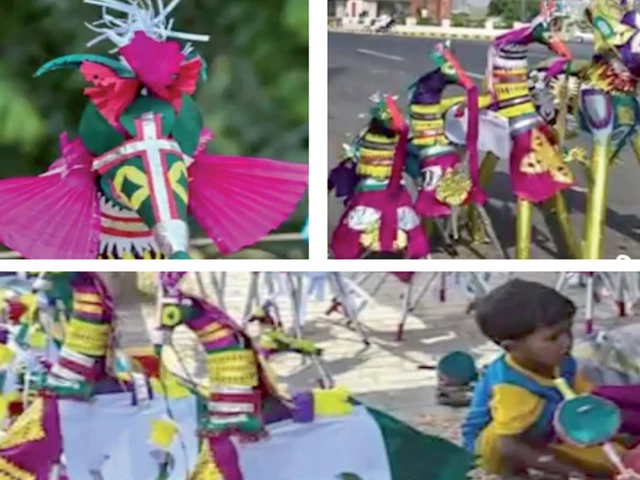
Punjab's 300-year-old traditional clay toy known as ghughu ghoray has virtually disappeared due to the absence of official patronage and rapid technological advancement. During the 19th century, women from nomadic communities would carry baskets of these clay toys on their heads, selling them in streets and neighbourhoods while calling out, "Ghughu Ghoray Lo, Bhughu Ghoray."
The craft began declining in the early 20th century and has now almost completely vanished. These toys are rarely seen today except in antique toy shops, cultural festivals, Sunday bazaars or occasionally with nomadic families selling them outside parks and during Punjab Culture Day events.
In Punjabi, the word "Ghughu" refers to a bird or a soft, repetitive sound.
Since the toy produces a similar low-pitched whistle, it came to be known as Ghughu Ghoray. In literary and political discourse, the term has also become a metaphor for a person or system lacking independent decision-making ability and being controlled by others.
One of the key reasons for the toy's decline is that skilled artisans, including potters and nomadic craftsmen, have abandoned the profession.
Today, the toys are displayed at exhibitions as part of Punjab's folk heritage to keep younger generations connected with their cultural roots.
Cheap plastic and electronic toys imported from China have further contributed to the decline. Ghughu Ghoray was once one of Punjab's most popular traditional toys. Usually shaped like a horse, it was a handmade clay whistle that children played by blowing into it.
For centuries, it remained a major attraction for children at fairs and festivals across rural Punjab. The hollow horse-shaped toy, made from clay, straw, cloth and kite paper, contains a hole through which air is blown to produce the distinctive "Ghughu" sound. After being baked in a kiln, it turns red and is decorated with colorful indigenous patterns.
Potters and nomadic tribes in Multan, Attock and other parts of Punjab traditionally produced these toys from generation to generation.
Though plastic toys have largely replaced it in the digital age, the Ghughu Ghoray survives as a symbol of folk heritage and craftsmanship at cultural festivals and in some villages. More than just a toy, it is also linked to the ancient Indus Valley Civilization of Harappa and Mohenjo-daro.
The clay version is made from fine soil, often collected from the Ravi and Chenab rivers. Potters mold the horse by hand, leaving it hollow and creating a small opening that produces a whistle-like sound when blown. After drying in the sun, it is baked in a traditional kiln and decorated with bright local colors.
Another version, mostly made by nomadic tribes, uses old cloth, waste paper, reeds and straw. A frame is stitched from cloth and stuffed with straw, while bamboo or wooden sticks form the legs. Decorative paper, glue and lace are used to adorn the neck, saddle and face.
Kamil Shah, owner of a toy shop in Rawalpindi, said his family has been in the toy business for generations and he has personally run the shop for the last 24 years.
He said Ghughu Ghoray once sold in large numbers, with fresh supplies arriving every ten days and being purchased by retailers and hawkers. Today, however, children prefer electronic toys. He added that the toys are now purchased mainly during cultural events in Rawalpindi, Islamabad and Punjab, making them more of a cultural item than a commercial product.











This material may not be published, broadcast, rewritten, redistributed or derived from. Unless otherwise stated, all content is copyrighted © 2026 The Express Tribune.






COMMENTS
Comments are moderated and generally will be posted if they are on-topic and not abusive.
For more information, please see our Comments FAQ