World Bank explores tie-up with SMEDA in building skills
Updated 2 hours ago

Five establishments' licences suspended; FDA alleges contractor-to-broker chain reaching retailers
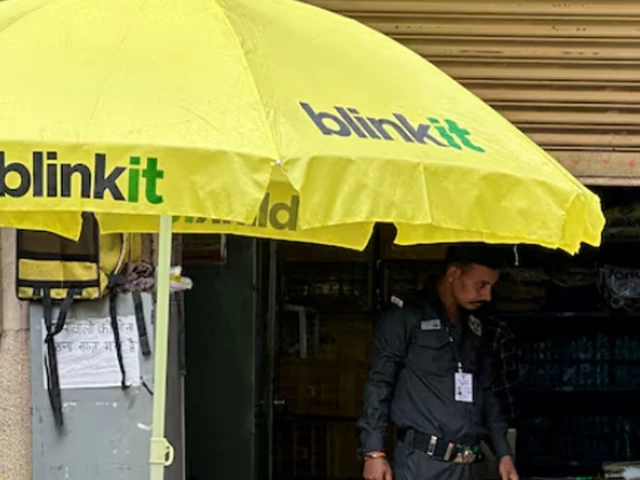
India's food safety authority has named officials of Reliance retail and consumer units and of Eternal's Blinkit and Hyperpure units, including Blinkit CEO Albinder Dhindsa, in a probe over expired food products that have allegedly re-entered the food supply chain, according to case documents reviewed by Reuters.
The Food and Drug Administration (FDA) of Maharashtra state, home to Mumbai, has led a crackdown on food safety under its chief Tukaram Mundhe, 51, including shutting down some of Mumbai's most popular eateries as well as outlets of Domino's and Pizza Hut for poor hygiene. The state agency has also suspended the permit of a McDonald's outlet.
The latest case, which has led to a police complaint by the food safety authority, involves large retail and quick-commerce companies, which sell products to millions of households in the world's most populous country.
Maharashtra's Food and Drug Administration, according to the documents reviewed by Reuters, said its officials visited some warehouses of Reliance Retail, Reliance Consumer and Zomato Hyperpure, and that company officials could not provide verifiable proof that disposal of expired food was actually carried out by their contractors.
"The disposal agencies... do not destroy the stock," the case document alleged.
In the case of a Zomato Hyperpure warehouse, a company representative named a contractor as its disposal agency which FDA officials could not trace, according to the documents.
Reliance and Blinkit did not immediately respond to a Reuters request for comment.
"Any attempt to divert expired, damaged or consumer-rejected food products meant for destruction back into the market is a serious matter that demands strict scrutiny and accountability," Maharashtra's FDA chief Tukaram Mundhe told Reuters.
"No company, brand, business or individual is above the law when it comes to food safety."
India's intensifying crackdown
Reliance Retail and Reliance Consumer are part of billionaire Mukesh Ambani's business group. Zomato's Hyperpure is a unit of Eternal that also runs food delivery service Zomato and quick commerce business Blinkit.
The FDA probe said it found a pattern where large retail and quick commerce distribution warehouses handed over expired and customer-rejected packages of food to contractors who passed the food to unlicensed sorting yards. These sorting yards then separated out saleable-looking packets, which eventually reached other retailers and the consumer market, according to case documents from the probe.
"The chain thus runs from company warehouse to disposal agency, unlicensed yard, broker, retailer and consumer."
The Maharashtra FDA on Thursday suspended the licences of five establishments in the state – three Reliance and two Eternal entities, the case documents said.
Enforcement of food safety laws has traditionally been weak in India and the recent round of extensive crackdowns has garnered large-scale public support.
In August, Indian authorities raided an illegal operation in Mumbai that faked expiry dates and nutritional information on original food products manufactured by PepsiCo, Nestle, Coca-Cola and Unilever, so they could be exported to other countries.
Ban on added sugars in infant foods proposed
India's food safety regulator on Saturday proposed a ban on adding sucrose and fructose to food products for infants up to six months of age, tightening rules on added sugars in infant nutrition products.
Under existing rules, lactose and glucose polymers are the preferred carbohydrate sources in infant nutrition products, while sucrose and fructose can be added when required, subject to prescribed limits, the regulator said.
The move comes amid an intensifying food safety crackdown in India, where regulators have forced local eateries and branded restaurants to suspend operations, while a push for front-of-pack warning labels has rattled the country's more than $100 billion packaged food industry.
The Food Safety and Standards Authority of India (FSSAI) said the proposed measure aims to reduce infants' exposure to added sugars and address health risks linked to childhood obesity.
The existing regulations set nutritional composition, quality and safety standards for infant nutrition products intended for children from birth to 24 months of age, it said.
Activists and officials have long raised concerns about rising obesity rates, particularly among children. India had 180 million overweight or obese adults in 2021, a figure projected to reach 450 million by 2050, according to a study published in the medical journal The Lancet.
The FSSAI and some state regulators have intensified checks on food safety in recent months, releasing regular public updates including photos and videos of raids that have drawn widespread attention online.
In August, the FSSAI proposed a red hexagonal stamp on labels of food products high in any two or more nutrients of concern such as sugar, salt or saturated fat, but tightened the proposal after a public outcry, saying a warning would now be required if even one nutrient exceeds the prescribed level.













This material may not be published, broadcast, rewritten, redistributed or derived from. Unless otherwise stated, all content is copyrighted © 2026 The Express Tribune.






1727268465-0/Untitled-design-(42)1727268465-0-208x130.webp "sisyphus in the land of saviours")



COMMENTS
Comments are moderated and generally will be posted if they are on-topic and not abusive.
For more information, please see our Comments FAQ