EU wants more legal migration from Pakistan
Updated 7 minutes ago

Says disputed property claims require declaration of title alongside possession
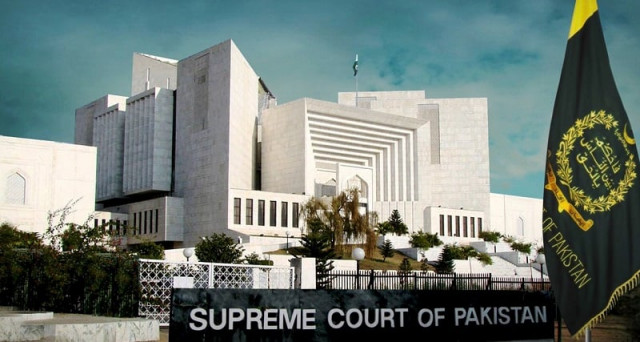
The Supreme Court on Wednesday has ruled that cancelled mutation entries cannot, by themselves, establish legal ownership of property, observing that where title is disputed, a suit seeking possession alone is insufficient and must also seek a declaration of ownership.
The court dismissed an appeal concerning possession of one kanal of land in Kamalia, upholding the Lahore High Court's judgment.
In a judgment authored by Justice Shahid Waheed, the court held that the legal heirs of deceased appellant Abdul Rahim had failed to establish their lawful title to the disputed land. The relevant mutations had been cancelled by the District Officer Revenue on November 23, 2004, while the original sale deeds were not produced before either the trial court or the appellate court.
A three-member bench comprising Justice Jamal Khan Mandokhail, Justice Shahid Waheed and Justice Irfan Saadat Khan heard the case on October 13, 2026.
According to the judgment, the appellant claimed to have purchased the land from Ilahi Bakhsh and others through Mutation No. 8106 dated September 30, 1985, and filed a suit for possession on July 21, 1993.
The government educational institution concerned, however, maintained that the land had been in the possession of Government Normal School Kamalia since 1926. The institution is now known as Government College Elementary Teachers Kamalia.
The Supreme Court observed that revenue entries do not, by themselves, constitute documents of title, and their cancellation does not automatically invalidate the underlying sale deeds. However, the appellant failed to establish ownership through the required legal evidence because the original sale deeds had not been produced.











This material may not be published, broadcast, rewritten, redistributed or derived from. Unless otherwise stated, all content is copyrighted © 2026 The Express Tribune.






COMMENTS
Comments are moderated and generally will be posted if they are on-topic and not abusive.
For more information, please see our Comments FAQ