ADB to help boost tertiary healthcare
Updated 51 minutes ago

LHC dismisses petition of employee accused of torture
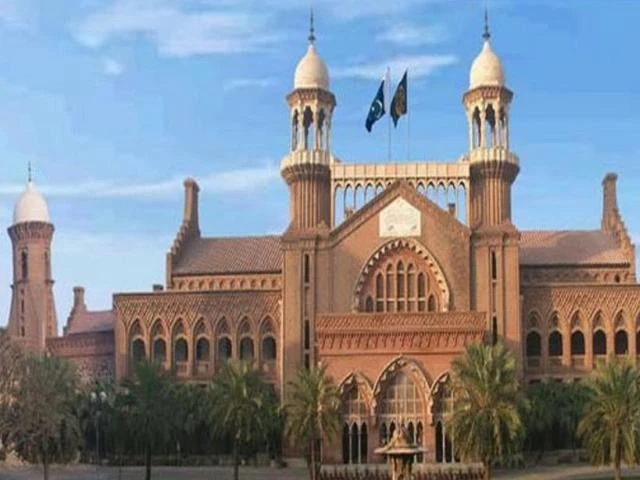
The Lahore High Court (LHC) has ruled that officials of the Punjab Enforcement and Regulatory Authority (PERA) cannot claim exemption from the ordinary criminal law merely because a special statutory mechanism exists to deal with complaints against them, holding that allegations of criminal offences must be examined under the relevant provisions.
Justice Muhammad Ajmal Zahid dismissed a constitutional petition filed by a PERA official, observing that the applicability of the special procedure under the Punjab Enforcement and Regulation Act, 2024, must be determined according to the nature of the offence rather than the official status of the accused.
The court held that the existence of a special legal framework does not automatically exclude the general criminal law in every case involving a PERA official. It clarified that while offences punishable under the special law must be dealt with through the procedure prescribed therein, allegations independently attracting provisions of the Pakistan Penal Code (PPC) cannot be excluded from consideration without examining their legal character.
The ruling came on the petition filed by Tauqeer Asif, a PERA official, challenging an order of an ex-officio justice of peace dated August 29. The order had directed the station house officer concerned to record the version of the complainant and proceed in accordance with law if a cognisable offence was made out.
According to the allegations before the court, the complainant claimed that the petitioner, accompanied by eight to 10 unidentified PERA officials, had subjected him to physical torture, forcibly taken him to Ferozwala police station and later shifted him to an undisclosed location, where he had been stripped and tortured.
The complainant also alleged that the officials had recorded a video of the incident, snatched Rs25,200 from his pocket and threatened him with dire consequences if he disclosed the matter.
He relied on a medico-legal certificate issued by a hospital in support of his claim of having suffered injuries.
The petitioner argued that the Punjab Enforcement and Regulation Act provided a special statutory mechanism for dealing with complaints and offences involving PERA officials, making the ordinary procedure for registration of an FIR under Section 154 of the Criminal Procedure Code unavailable.
His counsel relied on an earlier LHC judgment, arguing that Sections 16, 49 and 53 of the act provided the relevant remedies for grievances arising from the conduct of PERA officials.
Rejecting the argument that the earlier ruling barred recourse to ordinary criminal law in every such case, Justice Zahid observed that the judgment had to be understood in the context of the offences and statutory provisions examined in that matter. Its principle could not be extended indiscriminately to every alleged offence committed by a PERA official, irrespective of whether the conduct independently constituted a crime under general criminal law.
The court explained that Section 16 provides a mechanism for representations against specified enforcement actions, Section 49 deals with the procedure relating to offences punishable under the act and Section 53 provides a complaint mechanism against misuse of authority by PERA officials.
These provisions must be given effect in matters falling within their scope, but their existence does not justify treating every allegation of violence or other criminal conduct as exclusively governed by the special law, the judge observed.
The court noted that the complainant's allegations went beyond a grievance against an enforcement measure, such as a fine, confiscation, sealing of premises or removal of an encroachment.












This material may not be published, broadcast, rewritten, redistributed or derived from. Unless otherwise stated, all content is copyrighted © 2026 The Express Tribune.








COMMENTS
Comments are moderated and generally will be posted if they are on-topic and not abusive.
For more information, please see our Comments FAQ