Nasir Adeeb questions society's double standards for men and women in 'Dar-e-Nijaat'
Updated 3 hours ago

Veteran writer draws a contrast between how Zamil and Zaryab are judged, forgiven and given a chance to change
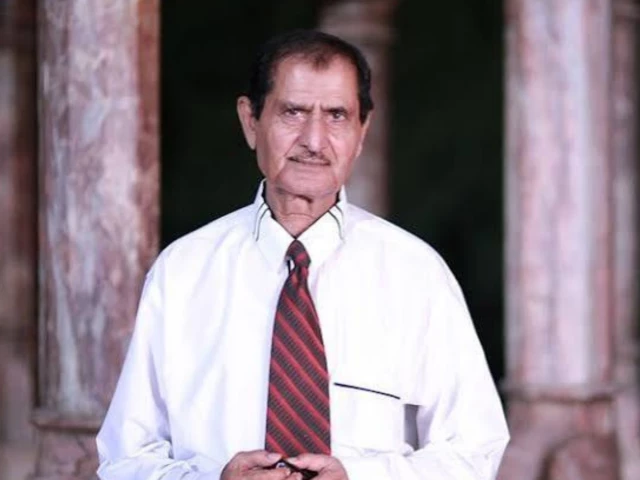
Veteran writer Nasir Adeeb has questioned the double standards society applies to men and women when it comes to mistakes, morality and forgiveness, drawing a parallel with the characters of ongoing drama Dar-e-Nijaat.
Adeeb is one of Pakistan’s established film writers, best known for his work in Punjabi cinema and for writing the classic Maula Jatt. His long career has made him a familiar voice in discussions about Pakistani cinema and society.
In a recent discussion, he argued that men are often given considerably more room to make mistakes, repent and eventually regain their place in society, while women can remain under scrutiny for actions they may not have committed at all.
For Adeeb, the difference is not simply about individual mistakes but about who society believes deserves a second chance.
He pointed to what he sees as a familiar social pattern: a man may make serious personal or moral mistakes, change his behaviour and eventually be accepted as a reformed person. His past, while remembered, does not necessarily define him forever. Women, he argued, are often judged by a different standard.
Adeeb illustrated his point through Dar-e-Nijaat, drawing a contrast between the way the drama’s two leads, Zamil and Zaryab, are treated in relation to their mistakes and perceived transgressions. “It is very big to say a woman has committed a crime but are sins only for women as men are always forgiven,” he said.
For the writer, Zamil represents a man who can make mistakes yet still imagine a future in which society will accept him after he changes his ways. His eventual redemption remains possible because, in Adeeb’s reading, men are more readily given the space to recover from their past.
“He will get that 'nijaat',” Adeeb said, referring to the freedom and social acceptance he believes Zamil can ultimately receive.
Zaryab’s experience, however, raises a different question. “I link this to Dar-e-Nijaat because his Zamil’s character sees that he will be accepted from society — that, yes, I’ll change, won’t drink alcohol — but the girl who was seen even from the window, people will say, ‘Oh, she’s staring at someone.’”
The contrast, in Adeeb’s interpretation, lies at the heart of the drama’s wider conversation about reputation: a man can be forgiven for what he has done, while a woman can be condemned for what people merely believe she might have done.
The discussion comes as Dar-e-Nijaat continues to generate debate around Zamil and Zaryab’s relationship. Zamil’s behaviour has already prompted criticism from viewers, while Nameer Nawaz Khan himself has publicly acknowledged the problematic side of his character.
Adeeb’s comments therefore shift the discussion beyond whether Zamil is simply a good or bad character. His broader question is what happens after the wrongdoing: who gets the opportunity to change, and who is expected to carry the consequences?













This material may not be published, broadcast, rewritten, redistributed or derived from. Unless otherwise stated, all content is copyrighted © 2026 The Express Tribune.






COMMENTS
Comments are moderated and generally will be posted if they are on-topic and not abusive.
For more information, please see our Comments FAQ