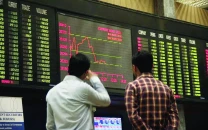
PSX gains over 400 points as buying returns
Updated 1 hour ago

Says govt consumption increased by 11.2%, while real exports rose 5.9% and real imports fell 6.8%
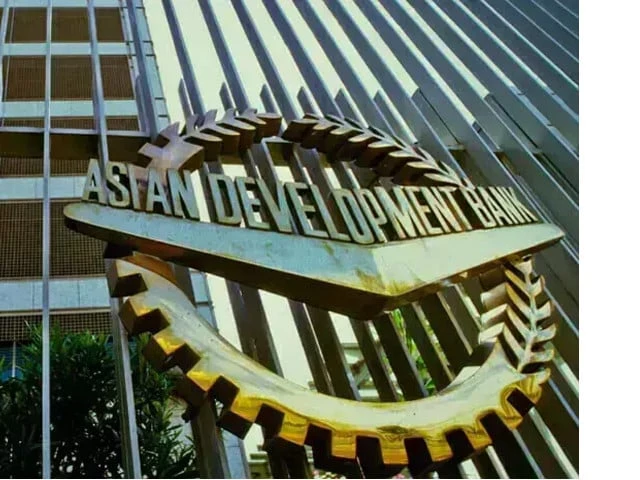
Pakistan’s economic growth was projected to remain at 3.7 per cent in fiscal year 2027 while inflation was expected to rise to 8.3 per cent, the Asian Development Bank (ADB) said on Wednesday, warning that higher energy and import costs and prolonged geopolitical tensions could weigh on the outlook.
In its Asian Development Outlook (ADO) September 2026 edition, the flagship biannual publication – the bank retained its growth forecast for Pakistan at 3.7 per cent for FY2027, while projecting inflation above the State Bank of Pakistan’s medium-term target range of 5-7 per cent.
The bank said Pakistan’s economy had expanded by 3.7 per cent in FY2026, which ended on June 30, up from 3.2 per cent a year earlier, with the recovery supported by improving credit conditions and broad-based growth.
“Growth strengthened in fiscal year (FY) 2026, although the Middle East conflict curbed activity in the last quarter,” the ADB said.
ADB Growth Projections 2026:
— Asian Development Bank (@ADB_HQ) September 23, 2026
People’s Republic of China: 4.6%
India: 7%
Indonesia: 5.2%
Thailand: 2%
Philippines: 3.3%
Vietnam: 7.8%
Bangladesh: 3.7%
Malaysia: 4.9%
Pakistan: 3.7%
Türkiye: 2.8%
Kazakhstan: 4.8%
🔗 More in our #ADO2026 September update:… pic.twitter.com/Who5VAmNEk
It said economic expansion had averaged 4 per cent during the first three quarters of FY2026, supported by the lagged effects of monetary easing and improved business confidence, but slowed in April-June as the government’s response to the Middle East conflict weakened domestic spending.
The recovery was broad-based, with services, manufacturing and agriculture all contributing to growth. Agriculture expanded by 2.9 per cent, industrial output increased by 3.5 per cent, and services grew by 4.1 per cent during FY2026.
Manufacturing was a major contributor to the industrial recovery, with growth of 6.6 per cent, while information and communications expanded by 7.5 per cent on the back of stronger service exports.
“Private investment propelled growth,” the ADB said, noting that private investment rose 8.6 per cent in real terms in FY2026 as borrowing costs fell and business confidence improved.
Household consumption, however, grew by only 0.8 per cent, compared with 2.1 per cent in FY2025, as higher global energy prices reduced real incomes. Government consumption increased by 11.2 per cent, while real exports of goods and services rose 5.9 per cent and real imports fell 6.8 per cent.
Read: Fixed tax draws only 2 new traders
The bank said inflation had become a growing constraint, averaging 7.1 per cent in FY2026 compared with 4.5 per cent a year earlier. Price pressures accelerated sharply in the second half of the fiscal year as food and energy costs increased.
Headline inflation reached 11.7 per cent in May 2026 after a record fuel price increase in April, before easing to 11.1 per cent in June and 9.2 per cent in July as global energy pressures moderated.
For FY2027, the ADB expected inflation to remain above the central bank’s target range as elevated fuel, logistics and agricultural input costs continued to feed into domestic prices. “Inflation is projected to reach 8.3% in FY2027, above the central bank’s medium-term target range, complicating monetary policy,” the bank said.
The ADB said the forecast assumed inflation would gradually moderate from 11.1 per cent in June 2026 and return to the 5-7 per cent range in the second half of FY2027.
It warned that domestic fuel and logistics costs were likely to remain elevated during the first half of the fiscal year because of disruptions to global energy supplies, while higher international fertiliser prices could push up agricultural input and food costs.
Read More: PM unveils austerity measures as Gulf conflict spirals
A recovery in economic activity and rising import costs could also put pressure on the exchange rate and contribute to imported inflation, the bank said.
The ADB said the central bank would face a difficult balance between supporting economic activity and bringing inflation back within its target range, with the real policy rate having fallen close to zero by the end of FY2026.
On the fiscal side, Pakistan’s consolidated budget deficit narrowed to 2.6 per cent of GDP in FY2026 from 5.4 per cent a year earlier, while the primary surplus reached 2.9 per cent of GDP, exceeding the 2.6 per cent target under the International Monetary Fund’s Extended Fund Facility programme.
However, the improvement was driven mainly by lower interest payments rather than a broadening of the tax base. Federal Board of Revenue collections increased 10.8 per cent year-on-year but fell short of the IMF programme benchmark by about Rs969 billion.
“The improvement came mainly from interest savings rather than a broadening of the revenue base,” the ADB said.
The bank said Pakistan’s current account remained broadly balanced in FY2026, recording a deficit of $304 million, or 0.1 per cent of GDP, compared with a surplus of $1.8 billion a year earlier.
Also read: ADB cuts growth forecast to 3.7%
The merchandise trade deficit widened to $33.7 billion from $26.8 billion as exports weakened and imports increased faster than workers’ remittances. Merchandise exports fell 4.7 per cent to $30.8 billion, while imports rose 9 per cent to $64.5 billion.
Workers’ remittances, however, increased 8.6 per cent to $41.6 billion, while the services deficit narrowed to $2 billion as service exports grew 18.6 per cent, led by information technology, business services and travel receipts.
“Workers’ remittances grew by 8.6% to $41.6 billion, underpinned by external stability and a market-determined exchange rate,” the ADB said.
The bank also noted improved access to international financing, with the government issuing a $750 million Eurobond and a $250 million Panda bond in April-May 2026.
Gross international reserves increased from $14.5 billion at the end of June 2025 to $18.5 billion at the end of June 2026, raising import cover to 2.9 months.
The ADB said sustained implementation of the IMF programme, renewed access to international capital markets and sovereign credit-rating upgrades had improved investor confidence and reduced financing costs.
For FY2027, private investment was expected to remain the main driver of demand, supported by lower input tariffs under the National Tariff Policy 2025-2030 and a reduced corporate tax burden following a cut in the super tax.
The bank said services were likely to remain resilient, particularly because of information technology exports, while manufacturing could face slower momentum as higher energy prices raised production costs.
Construction was expected to benefit from budget incentives, including reduced property transaction taxes and a higher interest subsidy under the prime minister’s housing scheme.
However, the ADB warned that Pakistan remained particularly vulnerable to external shocks because of its dependence on imported petroleum and remittances from Gulf economies.
“External factors provide downside risks,” it said, warning that an escalation of the Middle East conflict could raise energy import costs, intensify domestic inflation and disrupt labour markets in Gulf countries, limiting workers’ remittances.
The bank also identified weaker-than-targeted tax collection, weather-related agricultural shocks, tighter global financial conditions and delays in structural reforms as risks to the outlook.
It said Pakistan could strengthen its medium-term growth prospects through reforms in taxation, energy, state-owned enterprises and tariffs, while expanding its information technology and digital services sectors.
“Sustained performance under the EFF provides a credible macroeconomic anchor, but realising medium-term potential growth will depend on the consistent implementation of structural reforms,” the ADB said.












This material may not be published, broadcast, rewritten, redistributed or derived from. Unless otherwise stated, all content is copyrighted © 2026 The Express Tribune.








COMMENTS
Comments are moderated and generally will be posted if they are on-topic and not abusive.
For more information, please see our Comments FAQ