Oil falls as Russian diesel supply prospects counter Gulf supply risks
Updated 2 hours ago

ECC sanctions sale of 29.5% PNSC shares to NLC, 200,000T sugar export
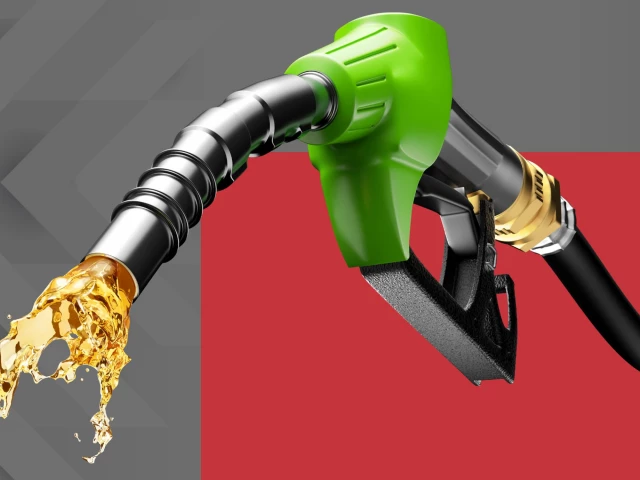
The government on Monday approved Rs75 billion in petrol relief package for three months for motorcyclists and small car owners, which was equal to 16% of the projected monthly levy collection, a move that would provide only a temporary respite.
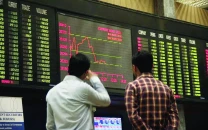
The Economic Coordination Committee (ECC), which formally sanctioned the fuel package, also approved sale of 29.5% shares of Pakistan National Shipping Corporation (PNSC) to National Logistics Corporation (NLC) at Rs500 per share. The sale price was equal to the closing price of PNSC shares at the Pakistan Stock Exchange on Monday. NLC will make the payment of Rs29.2 billion in five installments. The ECC approved export of 200,000 metric tons of surplus sugar, succumbing to pressure from millers. The approval was in breach of the IMF deal, which bars any government role in the sugar sector.
The ECC allowed the purchase of 15 more bullet-proof vehicles at a cost of Rs3 billion for the SCO summit. In two weeks, it has sanctioned Rs9.6 billion for buying 45 bullet-proof vehicles.
Fuel package
The ECC approved Rs75 billion as a technical supplementary grant for the PM fuel scheme, which envisages targeted relief for the lower-income segments in the wake of elevated petroleum prices, said the finance ministry in a statement.
For the current fiscal year, the government has set a Rs1.67 trillion petroleum levy collection target, which translates into Rs139 billion per month. The three-month fuel relief is hardly equal to 16% of the levy target and is limited to only 20 litres per month for motorcyclists and 30 litres for up to 800cc cars.
The government charges a petroleum levy of Rs80, climate support levy of Rs5 and customs duty of Rs21 on a litre of petrol. It has not reduced these rates, which pushed the fuel price to Rs376 per litre on Monday.
Under the scheme, two- and three-wheelers will receive a relief of Rs500 per week, equivalent to 5 litres at Rs100 per litre, while cars up to 800cc will receive a relief of Rs1,000 for 10 days, based on 30 litres per month, at Rs100 per litre.
The scheme will be restricted to non-commercial users, with relief limited to one vehicle per user. The Ministry of IT & Telecom will deploy and manage the Fuel Pass System (FPS) for digital management and transparent delivery of the relief, said the finance ministry.
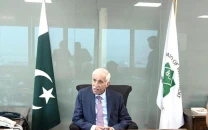
"Regardless of scarcity of resources, the government has tried to protect the weak segments of society," Petroleum Minister Ali Pervaiz Malik said. IT Minister Shaza Fatima Khawaja said eligible applicants could register from home by sending their CNIC number, plate number, the first letter of their province and the vehicle's registration date to 9771 via text message.
Before visiting a petrol station, she elaborated, the registered beneficiaries would need to send TOK to 9771 to receive a fuel relief token. The fuel station will then provide subsidised fuel upon seeing the token number. Shaza said that motorcycle users would be able to avail of petrol subsidy once a week, while car users could receive the subsidy once every 10 days. The subsidy will be provided through a token for 10 litres of petrol for cars and five litres for motorcycles.
Sale of PNSC shares
The ECC considered a summary submitted by the Maritime Affairs Division regarding restructuring of PNSC ownership and management control. "The ECC approved the implementation framework as recommended by the implementation committee, headed by the minister of privatisation," said the finance ministry.
PNSC is listed on the Pakistan Stock Exchange. The government has an 87.56% stake while 10.87% shares are owned by the general public and 1.57% by the PNSC Employees Empowerment Trust. PNSC earned Rs20.4 billion profit in 2024-25.
The implementation committee unanimously recommended the implementation framework, along with the draft sale-purchase agreement and shareholders' agreement. According to the framework, the government will transfer 29.5% shareholding in PNSC to NLC at a price of Rs500 per share. NLC will pay the full price to the government in five equal annual installments of 20% each. The stake will be transferred to NLC upon issuance of a payment clearance certificate by the Ministry of Finance for the initial 20% payment and signing of agreements.
Oil refinery upgrades
The ECC approved a summary of the Petroleum Division regarding the draft upgrade agreement under the Pakistan Oil Refining Policy for up-gradation of existing brownfield refineries. The agreement will provide the framework for implementation and monitoring of refinery up-gradation projects and associated incentives, with a completion period of five years.
The amended policy provides incentives to the existing refineries for undertaking up-gradation aimed at producing Euro-V petroleum products, reducing furnace oil output and improving the overall plant configuration and efficiency. To avail of the incentives, the refineries are required to execute upgrade agreements with the Petroleum Division or its designated entity.
The agreement provides a uniform contractual framework for refinery up-gradation under the amended policy. It sets out the rights and obligations of parties and establishes a mechanism for implementation and monitoring of upgrade projects, administration of refinery up-gradation accounts, verification of project milestones and disbursement of incentives.
The refineries have a maximum of six years to upgrade and the government will disburse customs duty on crude oil to these refineries through the inland freight equalisation margin (IFEM). A refinery will retain 5% deemed duty on diesel but will deposit 2.5% in an assigned account. On petrol, 10% deemed duty will be deposited in the account.
According to an important provision, in case of default on the payment of government taxes collected from consumers, the government will suspend the accounts of such refineries. In case, the refineries do not sign the upgrade agreement by October 1, they will lose rights on 2.5% deemed duty. Another 2.5% duty right will end if the agreement is not signed in the next three months.
The ECC also allowed the Petroleum Division to keep collecting sales tax refunds, which had to be paid by the FBR, from fuel consumers and pay them to oil marketing companies through the IFEM. Tax refunds are the responsibility of the FBR but due to its refusal to pay the refunds because of legal issues, these are now recovered from consumers and are paid to the companies. The finance ministry statement said that the approval had been given for July 2025 to June 2026.








This material may not be published, broadcast, rewritten, redistributed or derived from. Unless otherwise stated, all content is copyrighted © 2026 The Express Tribune.








COMMENTS
Comments are moderated and generally will be posted if they are on-topic and not abusive.
For more information, please see our Comments FAQ