Peshawar to clear bazaars
Updated 23 hours ago

Militants are turning commercially available quadcopters into weapons, while limited counter-drone systems leave vulne
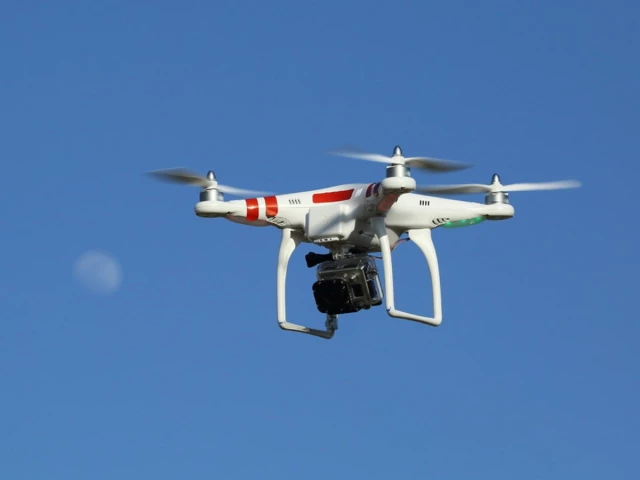
Militants have opened a new front in Peshawar by weaponising commercially available drones to target police installations from a distance while remaining concealed.
At least two drone attacks have been reported in recent weeks. The first targeted the Tarnab police post in the limits of Chamkani police station, injuring four people, including two policemen and two civilians.
Just 72 hours later, militants launched another drone attack in Mattani. Metal mesh and protective sheets installed over the police station blocked the explosives, limiting damage to a police vehicle parked outside.
Police officials say the attacks pose a growing challenge as militants can operate drones from several kilometres away without direct confrontation.
The threat is particularly serious for police stations and check posts in peripheral areas bordering Khyber and Mohmand districts and adjoining Dara Adamkhel.
Peshawar has around 34 police stations and 84 check posts, but limited resources make it difficult to equip every location with anti-drone guns, thermal imaging and night-vision systems.
Talking to The Express Tribune, Senior Superintendent of Police (SSP) Operations Peshawar Farhan Khan said detailed security instructions had been issued to all police stations and personnel were following standard operating procedures against drone threats.
"Police stations are implementing SOPs at their own level to counter threats from drones and other aerial surveillance devices," he said.
He said the large number of check posts made it difficult to deploy heavy equipment at every location.
"Wherever there is a need, police use night vision, thermal technology and anti-drone systems. These technologies have already proved useful for Peshawar Police," Farhan Khan said.
According to information available with The Express Tribune, militant groups have increasingly used drones in Malakand, Lakki Marwat, Bannu, Karak, Tank, Hangu, Bajaur and Peshawar.
Police data suggests more than 250 attempted drone attacks were reported in these areas from January to July, while officials say the growing availability of high-range drones and shortages of specialised equipment are making the threat harder to counter.
A police official deployed at a sensitive check post in Mattani said conventional attacks allowed police personnel to respond directly, but drones had complicated the threat.
"Now the situation has become more complicated. A drone can suddenly appear and drop explosives at almost any location," he said, adding that the development had increased risks for personnel deployed at isolated posts.
The official said thermal technology had also enabled militants to remain concealed at a distance, making it harder for police to monitor their movements.
A senior police officer posted in Regi, on Peshawar's outskirts, said personnel continued operations despite shortages of equipment and incentives.
He said Khyber-Pakhtunkhwa police were not receiving hard-area and terrorism allowances despite serving in high-risk areas, while incentives were lower than those available to police in Punjab.
Despite these constraints, he said, Peshawar Police continued to confront militants and maintain security operations.
Peshawar Police Chief Dr Mian Saeed said the force had foiled dozens of attacks and installed anti-drone systems at several sensitive locations.
He attributed the limited damage in the Mattani attack to preventive measures, including metal mesh sheets installed over the police station.
"Metal mesh sheets had been installed over the police station as part of our security arrangements. As a result, the drone attack did not cause significant damage," Dr Mian Saeed told The Express Tribune.
He said the police had around seven anti-drone guns and other counter-drone systems for high-profile events and sensitive locations.
The emergence of drone attacks marks a shift in the militant threat, allowing attackers to conduct surveillance and drop explosives without approaching their targets, forcing police to strengthen protection at vulnerable posts.









This material may not be published, broadcast, rewritten, redistributed or derived from. Unless otherwise stated, all content is copyrighted © 2026 The Express Tribune.






COMMENTS
Comments are moderated and generally will be posted if they are on-topic and not abusive.
For more information, please see our Comments FAQ