Shengtang Group eyes $10m MoU in Pakistan
Updated 1 hour ago

Container dwell times remain 10 days against India's two and Kenya's three
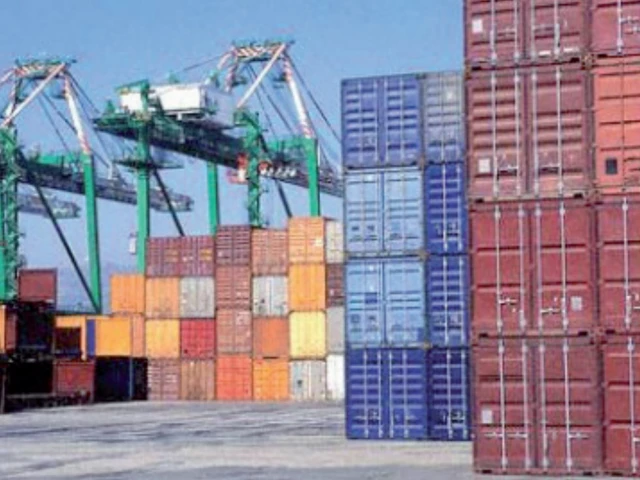
The government's recent decision to establish a Trade Facilitation Board under the chairmanship of the prime minister is an important step towards putting export-led growth at the centre of Pakistan's sustainable economic strategy.
The high-level board is expected to address regulatory issues affecting cross-border trade, improve the entire trade supply chain, and establish a mechanism to monitor progress.
This is particularly important because Pakistan remains one of the least trade-oriented economies in the world. Trade in goods and services accounts for only around 27% of gross domestic product (GDP), compared with a global average of more than 56%. If Pakistan wants to successfully adopt the export-led growth model, it must considerably improve its integration with the global economy.
For decades, two major policy barriers have held trade back. The first has been protectionism. The government took a potentially transformative step in June 2025 by adopting a five-year tariff reform programme. The government is facing serious challenges from some entrenched vested interests, but if it succeeds in fully implementing the new policy, it will largely overcome this handicap.
But there is another barrier that is just as important and far less visible. It is the cost of moving goods across the border. Even when tariffs come down, importers and exporters still have to navigate a formidable maze of regulations, agencies, inspections, documents and approvals. These non-tariff measures and administrative barriers can be every bit as damaging as customs duties.
Despite major progress in cutting red tape through the highly successful Pakistan Single Window and port modernisation, Pakistan has seen little improvement in container dwell times, which remain around 10 days. In contrast, dwell times have fallen from six to two days in India and from six to three days in Kenya, even as their container volumes grew by over 60%, compared with around 35% in Pakistan.
Three issues stand out. The first is the control mindset. Less than 50% of containers are cleared through the Green Channel. In an era of artificial intelligence (AI) and advanced data analytics, modern customs administrations increasingly conduct risk assessments before a vessel even arrives.
In the United Arab Emirates (UAE), for example, more than 80% of consignments reportedly receive pre-arrival clearance, compared with less than 20% in Pakistan. Modern customs administration does not attempt to examine everything. It identifies the small proportion of shipments that present a high risk and allows the overwhelming majority to pass with minimal intervention.
The second is the continued reliance on antiquated laws and regulations that much of the world has moved away from. Pakistan claims to have implemented more than 97% of its commitments under the World Trade Organisation (WTO) Trade Facilitation Agreement, but much of this compliance exists on paper rather than in practice.
The same problem is evident in customs valuation: Pakistan continues to rely on an outdated system for valuing imported goods, rather than adopting the modern approaches used by most of the world. Customs valuation has consequently become one of the most litigated areas and a major source of delays in the clearance of goods.
The third is the number of agencies involved in clearance. A shipment may have to pass through multiple regulatory authorities, each with its own requirements and procedures. Digitising these agencies is useful, but to fully realise the benefits of a single-window system, their internal processes and controls must also be aligned with the digital ecosystem to enable faster and more efficient decision-making. The objective should be to eliminate unnecessary controls, consolidate inspections and make government agencies work as one system.
The government has to take daring decisions, as it did on tariffs, if it is to bring about a decisive break from the past. The Trade Facilitation Board should establish a small set of simple, outcome-oriented key performance indicators (KPIs) that are publicly monitored and regularly reported.
These should include average container dwell time; the percentage of consignments physically examined; the number of agencies involved in clearance; and, critically, the actual implementation of the WTO Trade Facilitation Agreement and Customs Valuation Agreement, measured by outcomes rather than by the mere issuance of notifications.
The prime minister's decision to personally chair the Board sends a strong signal. The next step is to turn that political commitment into implementation. Pakistan has begun the difficult journey of dismantling its protectionist tariff regime. It now needs to dismantle the red tape at the border with the same determination.
Tariff reform can make trade cheaper. Trade facilitation can make it faster. Pakistan needs both; if it is to become an exporting economy.
THE WRITER IS A SENIOR FELLOW, PAKISTAN INSTITUTE OF DEVELOPMENT ECONOMICS. HE HAS PREVIOUSLY SERVED AS PAKISTAN'S AMBASSADOR AND PERMANENT REPRESENTATIVE TO THE WTO









This material may not be published, broadcast, rewritten, redistributed or derived from. Unless otherwise stated, all content is copyrighted © 2026 The Express Tribune.







COMMENTS
Comments are moderated and generally will be posted if they are on-topic and not abusive.
For more information, please see our Comments FAQ