Fact check: Viral video does not show Dubai-Tel Aviv Flydubai flight at time of attempted hijacking
Updated 2 hours ago

Houthis have declared control over the strait while declaring a naval blockade against Saudi Arabia
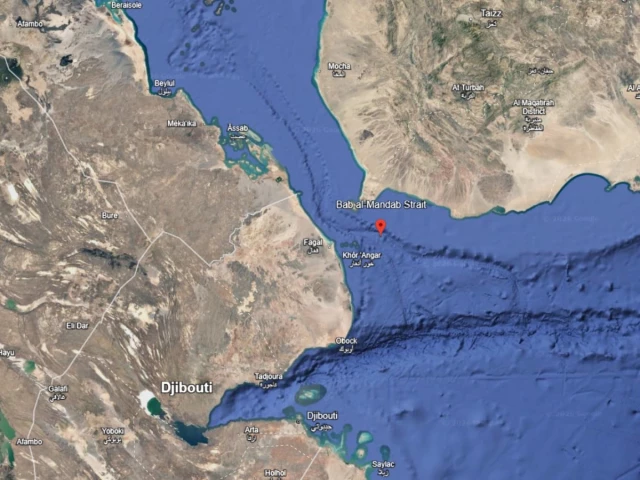
The Iran-backed Houthis are seeking to control the whole Yemeni Red Sea coast, which would further consolidate their leverage over the Bab el-Mandeb Strait — one of the busiest and most contested global maritime chokepoints.
The group has already declared a naval blockade against Saudi Arabia, the world's largest oil exporter, and Houthi dominance over the Bab el-Mandeb waterway would further isolate Gulf oil producers from their main shipping routes.
Where is Bab el-Mandeb?
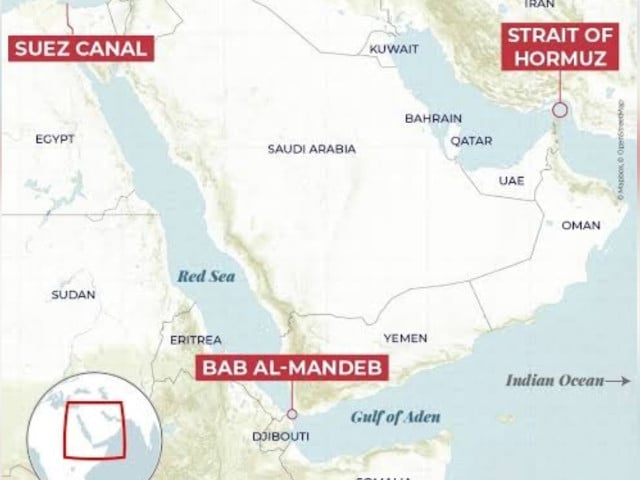
Named the 'Gate of Tears' for its perilous navigation conditions, the strait at the southern end of the Red Sea is located between Yemen on the Arabian Peninsula and Djibouti and Eritrea on the African coast.
It lies on the opposite side of the peninsula from the Strait of Hormuz, which has been a major focus during the US-Iran war.
Read: Saudi-led coalition carries out airstrikes in Yemen’s Al-Hudaydah
The waterway is 29 kilometres wide at its narrowest point, limiting traffic to two channels for inbound and outbound shipments, divided by the Yemeni island of Perim (Mayyun in Arabic).
To the north lie the Hanish Islands, positioned between the port cities of Hodeidah and Mocha — giving whoever controls them a commanding view over approaching vessels. The Houthis control Hodeidah, which they have used as a base for their broader campaign of attacks on Red Sea shipping.
Which shipments pass through Bab el-Mandeb?
The strait is one of the world's most important routes for global seaborne commodity and goods shipments, particularly from Asia to Europe via the Suez Canal. It is also vital for traffic from the Suez-Mediterranean pipeline on Egypt's Red Sea coast, as well as commodities bound for Asia, including Russian oil.
It serves as the southern gateway to the Suez Canal, meaning ships must pass through it to access the canal from the south.
Disruption of shipping in the strait forces vessels to reroute around the Cape of Good Hope in southern Africa, adding weeks and high costs to what would otherwise be a straightforward journey.
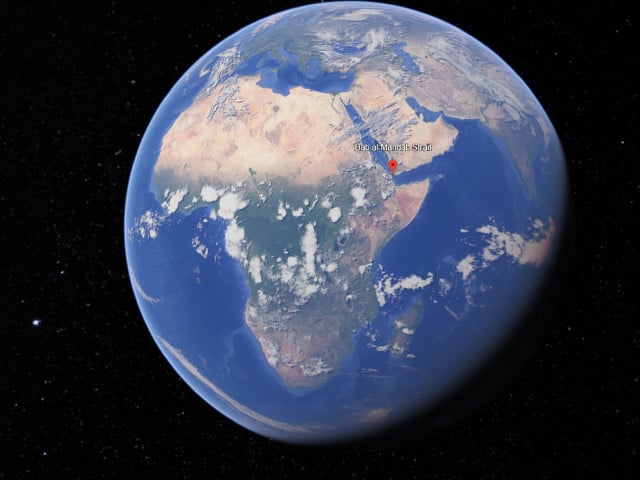
Bab el-Mandeb blockade has forced ships to navigate around Africa to reach the Mediterranean Sea. Photo: Google Earth
What would Houthi control mean?
Even partial disruption of the strait has proven devastating. Beginning in late 2023, the Houthis launched a sustained campaign of attacks on shipping in the southern Red Sea and the Bab el-Mandeb, which they said was in solidarity with Palestinians in Gaza during the Hamas-Israel war.
Read more: No military response discussed under Makkah defence pact over Houthi attacks on Saudi Arabia: FO
The impact was immediate and far-reaching. Major shipping firms and oil companies — including Hapag-Lloyd, MSC and Maersk, oil major BP, and oil tanker group Frontline — rerouted vessels away from the Suez Canal, circumnavigating the African continent instead.
Freight costs surged and journey times lengthened significantly.
The Houthis imposing a stranglehold over the waterway could give their sponsor Iran a critical advantage in its war with the United States, which has already seen a sharp reduction in energy shipments through the Strait of Hormuz, sending oil prices soaring.
Total petroleum volumes transiting Bab el-Mandeb amounted to about 7% of global oil output in June, according to Kpler data.












This material may not be published, broadcast, rewritten, redistributed or derived from. Unless otherwise stated, all content is copyrighted © 2026 The Express Tribune.






COMMENTS
Comments are moderated and generally will be posted if they are on-topic and not abusive.
For more information, please see our Comments FAQ