FinMin seeks BB rating, $1.5b financing
Updated 7 hours ago

Only 5% penetration; banks urged to fund freelance drivers
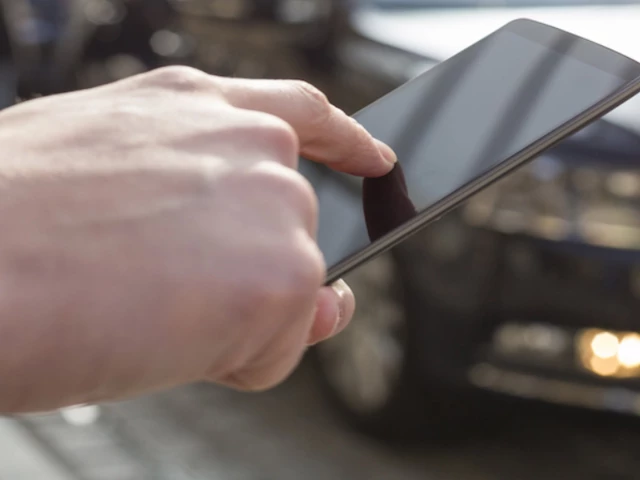
Pakistan's ride-hailing market has reached only around 5% of the country's population, compared to approximately 20% globally, leaving significant room for expansion, but the shortage of vehicles remains a key constraint that could limit growth unless banks step up financing for freelance drivers, according to Wael Ibrahim, Regional Director EMEA at inDrive.
Speaking to the media, Ibrahim said Pakistan had emerged as one of inDrive's fastest-growing and strategically important markets globally. The company, which entered Pakistan in 2021, now operates ride-hailing services in more than 20 cities, while its intercity service connects over 200 cities.
He said rapid urbanisation, rising smartphone adoption and gaps in public transport were creating strong demand for affordable and reliable mobility. However, the low penetration rate showed that the sector was still at an early stage of development.
Ibrahim identified the availability of vehicles as one of the major supply-side challenges facing the industry. inDrive management suggested that greater access to auto financing could enable more people to enter the platform economy as freelance drivers.
The proposal comes as auto financing has already begun to recover sharply. According to Yasin Kodvavi, Research Head at Optimus Capital Management, car financing has risen around 35% to approximately Rs381 billion from nearly Rs275 billion a year earlier.
Banks face risks in freelance financing
Kodvavi said banks could provide auto loans to freelance drivers, but vetting and due diligence would remain a major challenge. "Unstable demand and income" and the absence of a binding commitment to continue freelancing could make it difficult for banks to assess borrowers and manage the risk of non-performing loans, he said.
He also pointed to the rising cost of ride-sharing as another factor limiting demand, suggesting that the affordability challenge is not confined to the supply side.
Kodvavi said the financing problem was also linked to the regulatory ceiling for local vehicles. "The auto-financing limit remains capped at Rs3 million despite repeated calls to increase it to Rs6 million."
Former Pakistan Association of Automotive Parts & Accessories Manufacturers (PAAPAM) Chairman Abdul Rehman Aizaz said vehicle financing through equated monthly instalments was an important component of vehicle sales in markets around the world.
Pakistan, however, has tightly controlled car financing through restrictions on both financing limits and loan tenures, he said, adding that banks were generally more comfortable lending to the government than taking risks in consumer financing.
Aizaz acknowledged that freelance financing carried risks but argued that it was an area worth exploring. "With well thought-of safeguards in place and support from government," freelance vehicle financing could have significant potential to generate self-employment opportunities for young people, he said.
Flexible fares drive platform's appeal
Ibrahim said inDrive's peer-to-peer pricing model was particularly suited to Pakistan's price-sensitive consumers. Despite inflation, fuel-price volatility and regulatory challenges, he said the company had continued to expand because its model was designed to adapt to local market conditions rather than depend heavily on subsidies.
The expansion of ride-hailing is also accompanied by growing emphasis on safety and accountability. Yango's 2024-25 Ride Safety Report shows that reported grave traffic violations declined globally by 31%, from 9.83 incidents per million trips in 2024 to 6.76 in 2025. In the MENA and South Asia region, reported reckless-driving incidents fell 47%, from 19.25 to 10.1 per million trips.
Pakistan-specific data in the report shows post-trip contacts declined 31%, while Yango expanded selfie-based anti-fraud measures to Pakistan alongside several other markets.
The report says Yango uses document and identity checks, recurring selfie verification, vehicle checks and anti-fraud systems to prevent suspicious users from accessing its services.
Technology is also used during and after rides through route monitoring, protected communication, GPS-based signals, driving-style analysis and passenger feedback. In-app calls and number masking allow users to communicate without exposing personal telephone numbers.
In Punjab, Yango has also partnered with the Punjab Safe Cities Authority. When users contact emergency number 15 through the app's safety feature, trip information, vehicle and driver details and location can automatically be transmitted to police, potentially supporting a faster response.
From ride-hailing to wider gig economy
Ibrahim said inDrive was looking beyond conventional ride-hailing, expanding into intercity travel, courier, freight and groceries as part of a broader "Super App" strategy.
Its grocery service is operating in Karachi and Lahore, while courier and freight operations are being scaled to support consumers, SMEs and local businesses. The broader ecosystem could also provide drivers with additional earning opportunities beyond passenger rides.
The company is additionally exploring ways to support electric mobility, including retrofitting petrol motorcycles into electric motorcycles at a lower cost than purchasing new EVs.
For Pakistan, the bigger opportunity may therefore lie not simply in increasing the number of ride-hailing users, but in creating an ecosystem where vehicle financing, digital platforms and flexible employment combine to bring more drivers and consumers into the formal mobility economy.










This material may not be published, broadcast, rewritten, redistributed or derived from. Unless otherwise stated, all content is copyrighted © 2026 The Express Tribune.






COMMENTS (1)
Comments are moderated and generally will be posted if they are on-topic and not abusive.
For more information, please see our Comments FAQ