Blackpink’s LISA says the group has to 'hide when we’re dating' and recalls secret relationships
Updated 24 minutes ago

Actor raises alarms over deepfakes, false information and AI legal cases while accepting Venice honour
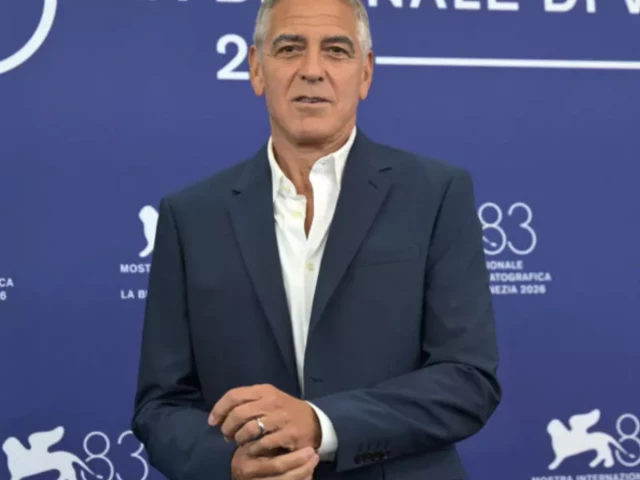
George Clooney has raised fresh concerns about the future of artificial intelligence, arguing that government officials may not be the people who should be trusted to oversee a technology he considers potentially transformative and dangerous.
Speaking at a Venice Film Festival symposium focused on the future of creativity, the Oscar winning actor questioned whether government regulation would provide the answer to the growing challenges surrounding AI. Clooney used a joke about Meta CEO Mark Zuckerberg appearing before US Senator Chuck Grassley to make his point.
"I don't know that you want government to be regulating this either," Clooney said, before joking about watching Zuckerberg testify before Grassley. He then delivered his sharper assessment: "These are not the people that you want to entrust the holy grail with."
Clooney's comments came as artificial intelligence continues to raise major questions across Hollywood, journalism and the wider public. During his appearance in Venice, he focused particularly on the ability of AI systems to create convincing material that can make genuine events difficult to distinguish from fabricated ones.
He warned that the problem goes beyond people believing something that is completely invented. According to Clooney, increasingly sophisticated AI could also make audiences question information that is completely genuine. That erosion of trust could create a situation in which authentic photographs, videos or reports are dismissed as fake simply because fabricated material has become so convincing.
The actor also pointed to the threat posed by deepfake technology. He raised the possibility of a fabricated video showing a world leader announcing a nuclear attack, highlighting how difficult it could become for ordinary people to establish whether an alarming piece of footage is genuine.
Reuters reported that Clooney's Venice comments centred on the growing difficulty of separating truth from fiction as AI generated material becomes increasingly sophisticated. The actor said the technology could undermine public trust in information and create serious problems for journalists, governments and audiences.
Clooney also brought the discussion into the legal world through an example involving his wife, human rights lawyer Amal Clooney. He said she had encountered instances in which AI systems produced invented legal authorities. Such errors can become particularly serious when lawyers fail to verify information before relying on it in court.
The concern reflects one of the broader problems surrounding generative AI, where systems can produce confident sounding answers containing inaccurate information. Clooney argued that uncertainty over who ultimately controls these technologies adds another layer of risk.
He also questioned the concentration of power within the technology industry, noting that some of the most influential AI systems are controlled by extremely wealthy individuals and companies. His comments came during a festival appearance in which he repeatedly connected technology with wider questions about democracy, media ownership and public trust.
The discussion was part of a busy Venice appearance for Clooney. He received the Golden Lion for Lifetime Achievement at the 83rd Venice International Film Festival, marking one of the festival's major honours this year. Reuters reported that Clooney used his time in Venice to address AI, journalism and the political pressures affecting public life.
Clooney also spoke about American politics and the importance of competing viewpoints within democracy. He argued that disagreement is essential to a functioning democratic system and said political institutions need younger voices bringing new ideas.







This material may not be published, broadcast, rewritten, redistributed or derived from. Unless otherwise stated, all content is copyrighted © 2026 The Express Tribune.




COMMENTS
Comments are moderated and generally will be posted if they are on-topic and not abusive.
For more information, please see our Comments FAQ