PSX gains 266 points in range-bound session
Updated 4 hours ago

Govt, agriculture sector join hands to prop up Pakistan's farm economy
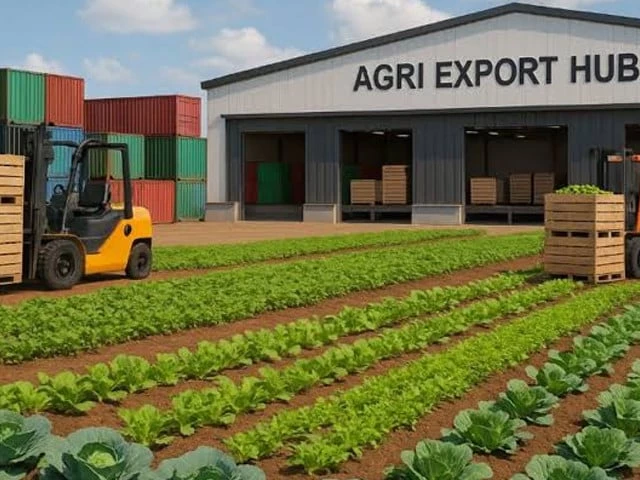
The government has brought together agriculture-sector stakeholders to formulate a roadmap aimed at increasing Pakistan's high-value agricultural exports, with a particular focus on processing, certification, traceability, branding and access to international markets.
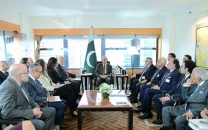
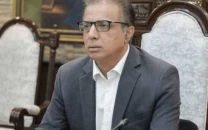
Federal Minister for Planning, Development and Special Initiatives Ahsan Iqbal made the remarks while chairing the third session of the Strategic Dialogue Series on Unlocking Pakistan's High-Value Export Potential, held with key stakeholders from the agriculture sector on Friday. Coordinator to the Prime Minister on Commerce Rana Ihsaan Afzal also attended the session.
Ahsan Iqbal called for a major transformation of Pakistan's agriculture sector, urging a shift from exports of raw commodities to high-value, certified, processed and branded products to unlock billions of dollars in additional export potential.
The roundtable brought together around 100 participants, including representatives of federal and provincial institutions, agricultural and engineering universities, chambers of commerce, trade associations, certification agencies, exporters and growers associated with meat, poultry, dairy, rice, dates, horticulture, olive and organic products.
Ahsan Iqbal said that the purpose of the dialogue series was to move beyond traditional consultations and establish a practical partnership among government, industry, academia and research institutions to address sector-specific challenges. He pointed out that agriculture contributed nearly one-fourth of Pakistan's gross domestic product and provided employment to around 37% of the country's labour force, yet its contribution to exports remained disproportionately low.
Speaking on the occasion, Rana Ihsaan Afzal said agricultural products accounted for nearly 22% of Pakistan's exports but remained heavily concentrated in raw commodities, leaving the sector vulnerable to international price fluctuations and external shocks.
He said that achieving Pakistan's $60 billion export target and eventually crossing $100 billion by 2035 would not be possible without moving towards branding, processing and value addition. He outlined several measures being pursued by the government, including a review of the Export Policy Order and regulatory requirements through the Cabinet Committee on Regulatory Reforms.
The government also plans to expand the Exim Bank's export finance pool from Rs1 trillion to Rs2 trillion between 2026 and 2028, with monthly monitoring to improve access to financing. A dedicated financing window for small and medium-sized enterprises is also being developed in coordination with the Ministry of Finance and the State Bank of Pakistan.
Other measures included the gradual withdrawal of additional customs and regulatory duties during the second year of the National Tariff Policy and the use of Pakistan Horticulture Development and Export Company as a dedicated platform for agricultural exporters, he said.
The PM coordinator further said that the National Compliance Authority was expected to become operational within three months to strengthen the country's compliance infrastructure.
The conference reviewed Pakistan's agricultural export performance, with food exports reaching $5.02 billion in FY2026 compared with a food import bill of $9.15 billion. The decline was largely attributed to lower exports of rice and sugar, while meat, fish and fruit exports registered growth during the year.
The new fiscal year began on a positive note, with food exports increasing 2.5% in July 2026. Rice exports rose 19%, while meat exports increased 16% during the month, he added.
The participants highlighted several areas with significant export potential, including halal meat and poultry, premium horticulture, branded Basmati rice, processed foods, dates and edible oils. The halal meat sector, in particular, was identified as a major opportunity under the government's target of achieving $700 million in exports by 2028.
Industry representatives and academics presented a series of proposals aimed at removing barriers to agricultural exports. Among the recommendations was the removal of sales tax differential that placed processed and packaged meat at a disadvantage compared with informal trade.
The stakeholders also called for taking a national cattle and goat farming initiative focusing on disease control, improved breeds and better production standards.








This material may not be published, broadcast, rewritten, redistributed or derived from. Unless otherwise stated, all content is copyrighted © 2026 The Express Tribune.





COMMENTS
Comments are moderated and generally will be posted if they are on-topic and not abusive.
For more information, please see our Comments FAQ