Coastal flood damages in Asia-Pacific could reach $199b annually by 2050: ADB
Updated 4 hours ago

Aurangzeb stresses macro stability, structural reforms for sustainable growth
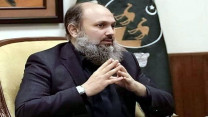
Federal Minister for Finance and Revenue Senator Muhammad Aurangzeb on Friday said the government was committed to maintaining macroeconomic stability and steering the economy from stabilisation towards sustainable growth.
He also stressed the need to stay on course in structural reforms and strengthen the private sector's role through privatisation and public-private partnerships (PPPs).
Addressing an event titled "Mobilising Private Capital: National Strategic Dialogue on PPPs and Privatisation", organised by the Asian Development Bank (ADB), the minister said Pakistan had made significant progress in addressing the structural twin deficit, which had declined from 12.5% of GDP to 2.6% over the last two and a half to three years.
He said the progress on the fiscal side was driven by increased revenues following the transformation of the Federal Board of Revenue (FBR) in terms of people, processes and technology, with revenues growing by 40% over the last two years. At the same time, he said, the government was working to reduce expenditures, including those related to running the civil government and debt servicing, while acknowledging that there was still a long way to go.
Aurangzeb said the FBR's tax-to-GDP ratio had improved from 8.8% to 10.3% and needed to reach 11-12% in the short term. On the external side, he said the country's position had been supported by strong remittance flows and growth in IT services export, which reached $4.6 billion last year, including $1.6 billion contributed by freelancers.
However, he said goods' exports had remained broadly flat at around $30 billion and it was an area that required greater focus. The minister said reforms in the energy sector, state-owned enterprises (SOEs) and privatisation were interlinked, adding that structural reforms in the energy sector were essential for progress on SOEs and privatisation.
He mentioned that 27 transactions had been given to the Privatisation Commission, while some SOEs that were "beyond repair" were closed down, including the Utility Stores Corporation, Passco and PWD. He said debt servicing, reduction in public debt and pension reforms were also part of the government's public finance reform agenda.
Aurangzeb pointed out that Pakistan had received three sovereign rating upgrades since April 2025, enabling it to return to international capital markets after a hiatus of about four years. The order book for the latest $3 billion transaction was twice the amount issued, with a diverse investor base comprising Asian, Middle Eastern, European and US investors. "This is a great vote of confidence in terms of our direction as far as the economy is concerned," he remarked.
Looking ahead, the minister said the government aimed to achieve economic growth of more than 4% during the current fiscal year and increase foreign exchange reserves from $18.4 billion as of June 30 to $21 billion by the end of the fiscal year. The government was also closely monitoring the ongoing regional conflict and its potential impact on growth and inflation projections.
The minister said the government was working to reduce its over-reliance on the banking system for borrowing needs by developing debt capital markets and diversifying the investor base, including insurance companies and other non-bank financial institutions.
He revealed that the Ministry of Finance was working on a rupee-denominated, dollar-settled bond and was also exploring the possibility of tokenizing some existing Eurobond debt, following what Hong Kong had done. Aurangzeb said greater participation of local investors and conglomerates in privatisation transactions would send a strong signal to foreign investors, adding that conglomerates were increasingly willing to work together through consortiums.
Speaking at the event, Adviser to the Prime Minister on Privatisation Muhammad Ali said that public-private partnerships (PPPs) and privatisation were critical instruments for the future economic growth of Pakistan.











This material may not be published, broadcast, rewritten, redistributed or derived from. Unless otherwise stated, all content is copyrighted © 2026 The Express Tribune.


COMMENTS
Comments are moderated and generally will be posted if they are on-topic and not abusive.
For more information, please see our Comments FAQ