Coastal flood damages in Asia-Pacific could reach $199b annually by 2050: ADB
Updated 8 hours ago

Weekly index increases 0.65% on higher prices of essential commodities
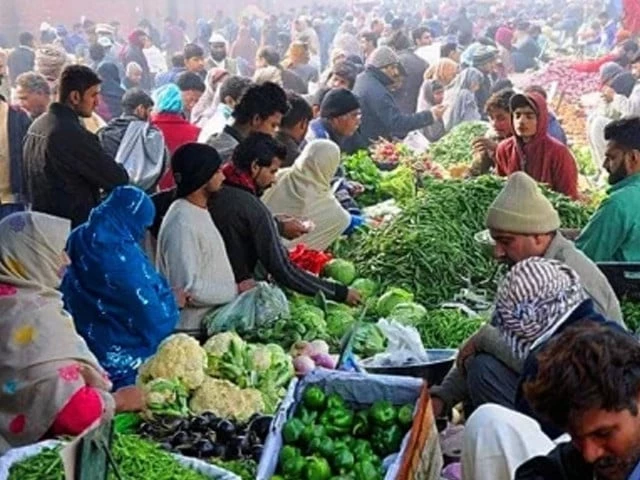
Pakistan's short-term inflationary pressure eased as the Sensitive Price Indicator (SPI) rose 8.35% year-on-year in the week ended September 3, down from 9.04% a week earlier, marking a step down in the annual inflation trajectory.
However, the moderation in headline inflation came alongside a 0.65% week-on-week increase in prices of essential commodities, signalling that consumers continue to face fresh price pressure despite the improvement in annual reading.
The SPI reading covers 51 essential items, whose data is collected from 50 markets across 17 cities and is used to track short-term movements in consumer prices.
The biggest weekly increase was recorded in onion prices, which surged 26.30%, followed by tomatoes at 2.55%, potatoes at 0.96%, wheat flour at 0.88% and chicken at 0.85%. Fuel prices also moved higher, with petrol becoming 0.90% more expensive and diesel increasing 0.09% during the week.
The annual comparison paints a more severe picture for several essential commodities. Onion prices were 162.75% higher than a year ago, while LPG prices jumped 53.61%. Diesel and petrol prices were also significantly higher, rising 37.70% and 31.01%, respectively, while electricity charges for Q1 increased 25.24%.
The overall annual increase was partly offset by declines in prices of several food items. Potato prices fell 31.61%, chicken declined 23.50%, sugar 19.38% and eggs 18.18%. Prices of gram, masoor and moong pulse also recorded annual drops.
This divergence highlights the uneven nature of the current inflationary trend, with sharp increases in selected essentials being counterbalanced by significant declines in others.
The SPI for the lowest expenditure group rose 7.59% YoY, below the combined increase of 8.35%. The second, third and fourth expenditure groups faced annual increases of 8.20%, 7.19% and 7.43%, respectively, while the highest expenditure group registered an 8.47% spike.
The latest decline in the annual SPI provides some relief, but rising energy and food prices could complicate the disinflationary trend. Data shows that the annual inflation rate has fallen steadily in recent weeks, from 9.66% in late July to 9.05%, 9.29%, 9.11% and 9.04% before reaching 8.35% in the latest week.
With tensions involving Israel, the United States and Iran escalating, the inflation outlook could remain vulnerable to renewed energy and supply-side shocks.















This material may not be published, broadcast, rewritten, redistributed or derived from. Unless otherwise stated, all content is copyrighted © 2026 The Express Tribune.






COMMENTS
Comments are moderated and generally will be posted if they are on-topic and not abusive.
For more information, please see our Comments FAQ