PSX struggles to gain ground amid weak sentiment
Updated 22 minutes ago

World Bank's 14% export forecast fails as imports grow at double rate of exports
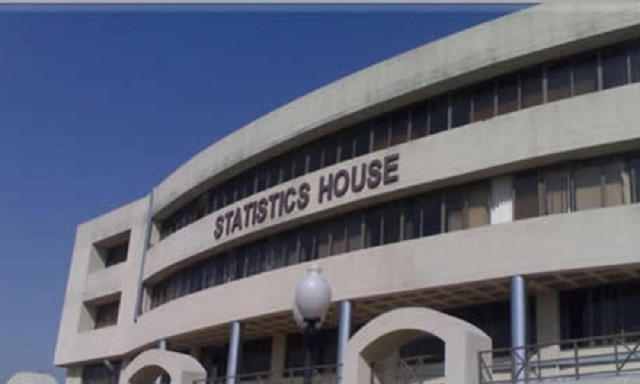
Pakistan's trade deficit jumped 18% to $7.1 billion during the first two months of the fiscal year, as exports grew at half the rate of imports – an amount that is more than double of the expensive $3 billion debt Pakistan raised on Thursday from international capital markets at a profit rate of 7.9% to 8.25% for five and a half to 10 years.
According to the Pakistan Bureau of Statistics (PBS), the gap between imports and exports increased to $7.1 billion during July-August, up $1.1 billion or 18% from the same period last year.
The $7.1 billion trade deficit was more than double the $3 billion debt raised at an actual profit rate based on current market prices.
Pakistan's external sector stability hinges upon the continued flow of foreign debt of any tenor and amount, as the two critical non-debt creating inflows – foreign direct investment (FDI) and exports – have not grown despite the establishment of the Special Investment Facilitation Council (SIFC). FDI remained at a disappointingly low $1.64 billion in FY26.
After reaching close to $3 billion in July, exports slipped to its conventional level of $2.5 billion a month despite exporters availing sacred financial resources in the shape of subsidised loans and other benefits.The PBS has said that cumulative exports during the first two months increased by only $359 million or 7% to $5.5 billion.
Exporters blame the strong rupee, which is appreciating despite the Real Effective Exchange Rate (REER) indicating an 8% depreciation of the rupee's value against the US currency.
The official data showed that imports jumped to $12.6 billion during the first two months, higher by $1.5 billion or 13%.
The government's trade liberalisation policy has not helped increase exports, despite rosy projections from the Ministry of Commerce, the World Bank and the International Monetary Fund (IMF). Under the World Bank, IMF and foreign consultants-guided National Tariff Policy, the government has opened the economy to foreign competition without first creating an enabling environment and building a sufficient cushion to absorb the impact of higher imports.
The World Bank had predicted that the new tariff would result in a 14% increase in exports and only a 7% surge in imports. After the dismal results in the first year of implementation, the trend in the second fiscal year remains the same with imports growing at double the rate than any increase in exports.
In the last fiscal year, exports plunged 6% to $30 billion. Tariff walls have been brought down without giving medium-term assurances on exchange rates, interest rates, tax rates and energy costs to businesses to remain competitive.
In the budget, Prime Minister Shehbaz Sharif announced more incentives for exporters by reducing their minimum and advance taxes to 1.25% and abolishing the 10% super tax on exports. The government has also approved a Rs98 billion subsidy package for exporters for the current fiscal year. It approved three dedicated schemes for export enhancement.
The PBS data showed that on a month-on-month basis, exports plunged 15% to its traditional level of $2.5 billion. In absolute terms, exports decreased $443 million in August compared to July. Imports also dropped over 17% on a monthly basis to close to $5.7 billion. The monthly trade deficit was down by 19% or $777 million, showed the official statistics.
However, on an annual basis, imports increased 7.4% or $390 million. Compared to this, exports increased only 3.8% or $92 million. The trade deficit on an annual basis widened one-tenth to $3.2 billion, which was $170 million more than the $3 billion debt raised at very high interest rates.
For the current fiscal year, the government has set a modest export target of $32.5 billion but projected imports to grow to $70 billion. The gap is filled by foreign remittances, as new loans are taken to pay back the maturing loans.





This material may not be published, broadcast, rewritten, redistributed or derived from. Unless otherwise stated, all content is copyrighted © 2026 The Express Tribune.




1727268465-0/Untitled-design-(42)1727268465-0-208x130.webp "sisyphus in the land of saviours")
COMMENTS (3)
Comments are moderated and generally will be posted if they are on-topic and not abusive.
For more information, please see our Comments FAQ