Pakistan condemns Houthi attacks on Saudi Arabia, calls for immediate halt at UN
Updated 1 hour ago

Chinese envoy visits Islamabad for second time
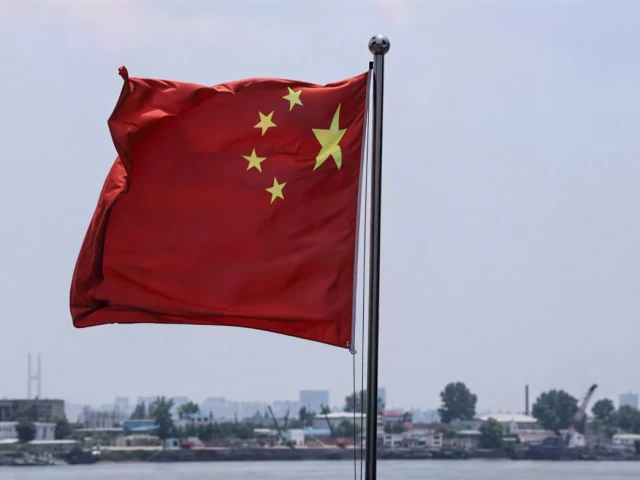
China seems to have stepped up efforts to revive its diplomatic initiative aimed at easing tensions between Pakistan and Afghanistan, with its special envoy for Afghanistan Ambassador Yue Xiaoyong visiting Islamabad for the second time in less than five weeks to explore the possibility of convening the next round of the Urumqi process.
Yue, who is leading a Chinese delegation, held talks with Pakistan's Special Representative for Afghanistan Mohammad Sadiq on Tuesday. The discussions focused on the deteriorating regional security environment and the growing threat from terrorist groups operating from Afghanistan, particularly the banned Tehreek-e-Taliban Pakistan (TTP) and the East Turkestan Islamic Movement (ETIM).
Ambassador Sadiq described the meeting as a "constructive engagement", saying the two sides discussed the "evolving regional security environment and the growing threat posed by terrorist groups, particularly TTP and ETIM, which continue to undermine regional peace and stability," according to a statement shared on his X handle.
He said Pakistan and China remained firmly committed to deepening security and counter-terrorism cooperation, strengthening coordination against terrorism in all its forms and working through diplomatic means to safeguard regional peace, stability and security.
The latest Chinese diplomatic push comes as Beijing seeks to revive the Urumqi process after hosting the first meeting between Pakistani and Afghan representatives in April.
Representatives of China, Pakistan and Afghanistan held week-long informal discussions in Urumqi from April 1 to 7. The delegations included officials dealing with foreign affairs, defence and security. China described the talks as candid, pragmatic and focused on solving problems and producing results.
The first Urumqi meeting took place after relations between Islamabad and Kabul had deteriorated sharply, including military confrontation over Pakistan's longstanding concerns that Afghan territory was being used by the outlawed TTP to launch terrorist attacks against Pakistan.
At the conclusion of the talks, Beijing said terrorism was the "core issue" affecting Afghanistan-Pakistan relations. The three sides also agreed to explore a comprehensive plan to address bilateral disputes and maintain communication under what has since become known as the Urumqi process.
However, despite the agreement to maintain dialogue, there was no immediate breakthrough on the central security dispute.
Pakistan has consistently demanded verifiable and effective action by the Afghan Taliban against the TTP and other terrorist organisations using Afghan territory.
Kabul, for its part, has repeatedly deined that it provides sanctuary or direct support to the TTP, creating a fundamental obstacle to a settlement of the security dispute.
China nevertheless appears determined to keep the process alive. In May, reports emerged that Beijing wanted to convene a second meeting in an effort to maintain momentum and prevent the diplomatic channel from becoming dormant.
The latest visit by Yue is seen in this context.
The Chinese envoy previously visited Pakistan from May 31 to June 3, meeting Foreign Secretary Amna Baloch and Sadiq among others. He subsequently travelled to Afghanistan. More recently, from July 30 to August 8, Yue again visited Türkiye, Pakistan and Afghanistan, holding consultations on improving Pakistan-Afghanistan relations.
His latest shuttle diplomacy indicates that Beijing is continuing to explore whether conditions are conducive for the second Urumqi meeting.
Islamabad has increasingly emphasised that the key to improving relations lies in Kabul taking concrete steps against groups that Pakistan considers responsible for cross-border terrorism.
The issue also has a direct bearing on China's own security concerns. Beijing is particularly concerned about ETIM, which it regards as a terrorist organisation, and fears that instability in Afghanistan could create space for militant groups hostile to China. Pakistan and China therefore share an interest in preventing Afghanistan from becoming a base for terrorist organisations.
China's role has consequently gone beyond its traditional economic engagement with Afghanistan. Beijing has sought to use its close strategic relationship with Pakistan, growing contacts with the Afghan Taliban and its own security concerns to position itself as a facilitator between Islamabad and Kabul.
The immediate challenge, however, remains translating diplomatic engagement into concrete commitments on terrorism.








This material may not be published, broadcast, rewritten, redistributed or derived from. Unless otherwise stated, all content is copyrighted © 2026 The Express Tribune.











COMMENTS
Comments are moderated and generally will be posted if they are on-topic and not abusive.
For more information, please see our Comments FAQ