Sindh will not be divided, decision rests with assembly: Murad Ali Shah
Chief minister states division decision rests with Sindh Assembly members, not 'businessmen from Lahore'

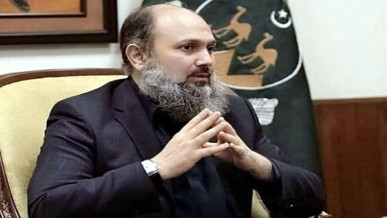
Chief Minister of Sindh Murad Ali Shah on Monday said that the province could never be divided, stating that the decision regarding the division would be "made by members of the Sindh Assembly, not businessmen from Lahore."
"If you have the courage, bring a resolution for the division of Sindh and show us. As long as even one member among us is alive, the province will not be divided," warned CM Shah while addressing a session of the Sindh Assembly.
The chief minister stated that it would be the Sindh Assembly which would decide on the matter, saying that there would be a debate in the assembly and that "no one will decide on division on TV or at a rally."
Read More: Sharjeel Memon slams Mustafa Kamal over 'politics of hatred', new administrative units
CM Shah added that Pakistan Peoples Party (PPP) Chairman Bilawal Bhutto Zardari had stated that they would do what the people wish, so let there be debate and if needed they would pass the resolution again.
He said that in the previous session, some people had spoken in favour of the division of Sindh. However, he stressed that "Sindh will always remain one."
The chief minister also noted that the provincial assembly had passed several resolutions in the past against the division of Sindh. These resolutions were passed in 1948, 2000, 2014, 2019 and 2026.
Earlier, Sindh Senior Minister Sharjeel Inam Memon also rejected remarks by Health Minister and Muttahida Qaumi Movement-Pakistan (MQM-P) leader Mustafa Kamal, accusing him of attempting to revive politics based on hatred, division and ethnic differences.
“Mustafa Kamal also wants to fan hatred and become the successor to the London-based leader. The MQM’s politics of hatred and division have now been rejected by the people,” Memon said in a statement shared on X by the Sindh Information Department.
A day earlier, Kamal alleged that the PPP-led government had refused to recognise the existence of the next generation of migrants who settled in Pakistan, saying that those who were against new administrative units were actually against PPP founder Zulfikhar Ali Bhutto, who introduced Article 239 (the Constitution Amendment Bill) of the Constitution of Pakistan, and maintained that the 27 amendments were made to the constitution to strengthen it.
Responding to Kamal’s statement, Memon said that attempts to create a divide between urban and rural populations had failed in the past and would again be rejected by the people.
Memon said the PPP had always sought to remove “walls of hatred” and promote peace, development and brotherhood, while its opponents had attempted to sustain their politics through division.
“Karachi is the heart of Sindh and the jugular vein of Pakistan’s economy,” he asserted, adding that those who previously tarnished the image of the city, marring it with terrorism, are now [advocating for new units] at the behest of the federal government.
At the end of July, Interior Minister Mohsin Naqvi called for the creation of additional administrative units or provinces to overhaul the country's outdated governance system, stressing that meaningful structural reforms were essential to ensure justice and create opportunities for young people. This has resulted in a series of remarks thrown back and forth from major political parties in Sindh.
A few days after the suggestion, CM Shah rejected Naqvi's claims that the governance system had collapsed, saying that no bloodshed would be allowed over the issue of creating new provinces.
“The people of Sindh say that the provinces will be built on our dead bodies. My brother, we will not let anyone's dead bodies fall. Don't dramatise it so much. There is a way in the constitution to build provinces. And in that constitution, it is written that if an assembly of a province passes a resolution with a two-thirds majority to divide the province, then it is possible,” he said.
Also Read: Sindh CM rejects call for new provinces, terms it 'outdated'
Later, MQM-P said it would launch a grand national dialogue with other political parties on the creation of new provinces and administrative units, arguing that Pakistan's growing population, poor governance and concentration of political power had made further administrative devolution necessary.
Kamal also said the proposal for administrative units in Sindh was not directed against Sindhis but was intended to give residents greater political control over their own affairs. “Creating administrative units is not against Sindhis; it is for Sindhis,” he said.
MQM-P leader Farooq Sattar supported the division proposal, arguing that further administrative units were essential for Pakistan's survival, development and stability. “If the status quo is not ended, rebellions will emerge in different parts of the country,” he said.
However, Sindh Information Minister Nasir Hussain Shah criticised the MQM-P, saying its call for new provinces and administrative units reflected political frustration and isolation. Rejecting the party's demand for administrative changes in Sindh, Shah said, “Sindh will not be divided, but I certainly see the Muttahida being divided.”
Later, Sindh Labour and Human Resources Minister Saeed Ghani joined in opposition to the suggestion, saying that the people of Sindh, including political parties, were united in their opposition to the creation of a new province in Sindh.
Reacting to comments by leaders of MQM-P, Ghani said the constitutional authority to decide on the creation of a new province rested with the people concerned. He also accused Siddiqui, Sattar and Kamal of attempting to revive what he described as politics of hatred.


1727268465-0/Untitled-design-(42)1727268465-0-208x130.webp)
COMMENTS
Comments are moderated and generally will be posted if they are on-topic and not abusive.
For more information, please see our Comments FAQ