TODAY’S PAPER | September 21, 2026 | EPAPER

PA throws open debate on new provinces

.


Our Correspondent August 29, 2026 1 min read

KARACHI:

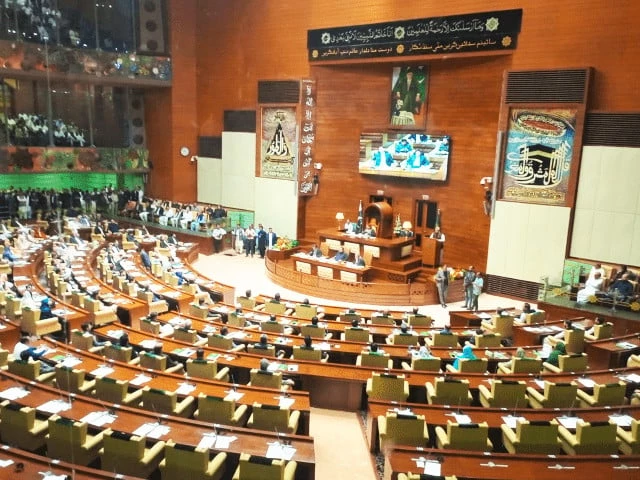
The Sindh Assembly on Friday approved an adjournment motion for debate on the proposed creation of new provinces and administrative units in the country, setting the stage for a two-hour discussion on the politically sensitive issue on Monday.

The motion was moved by senior parliamentarian and Pakistan Peoples Party Sindh President Nisar Ahmed Khuhro, who urged Speaker Owais Qadir Shah to suspend the scheduled proceedings and allow him to raise what he described as an important issue of immediate public concern.

After consulting Law and Parliamentary Affairs Minister Ziaul Hassan Lanjar, the speaker allowed Khuhro to move the motion. Lanjar said he had no objection to taking up the matter, terming it an important issue.

Khuhro said discussions were under way about the creation of new provinces and administrative units in the country, while various reports and speculations were also circulating on the matter. He said the issue was of particular importance to the provinces and that members of the Sindh Assembly also wanted an opportunity to discuss it openly on the floor of the House.

Speaker Owais Qadir Shah admitted the adjournment motion for debate and ruled that the House would discuss it for two hours on Monday. He added that lawmakers could extend the discussion for several more days if they wished.

The motion was subsequently approved by a majority vote, formally paving the way for a debate on the proposed new provinces in the Sindh Assembly on Monday.

During the question hour, which focused on the Law and Parliamentary Affairs and Prosecution Department, Law Minister Lanjar responded to written and supplementary questions from lawmakers.

Replying to a question from PTI lawmaker Shabbir Qureshi, the minister said a scheme for construction of residential facilities for prosecutors, officers and staff in Sindh had originally been scheduled for completion in 2021 but was delayed for various reasons.

Lawmaker Sajjad Soomro asked about the procedure for recruitment of attorneys in Sindh. Lanjar said the position was in Grade 18 and that 67 candidates had passed the test conducted by the Sindh Public Service Commission.

MQM lawmaker Rashid Khan described the Sindh Public Service Commission as a "hot issue" at present. Lanjar responded that the House was currently dealing with questions relating to the Law Department and suggested that the issue be raised when questions concerning the Home Department came up. Saleem Jhandir
COMMENTS (1)

Allahbux Dars | 3 weeks ago | Reply The Sindh Assembly is the unicameral provincial legislature of Sindh Pakistan responsible for making laws representing the people and overseeing the provincial government. Overview The Provincial Assembly of Sindh is a unicameral legislative body located in Karachi the provincial capital 1 . It consists of 168 seats including 130 general seats 29 reserved for women and 9 reserved for non-Muslims as provided under Article 106 of the Constitution of Pakistan 1 . The Assembly s primary responsibilities include law-making budget approval and oversight of the provincial executive 1 . It has been a significant part of Sindh s political history evolving from the colonial-era legislative bodies to its present democratic role 1 . Leadership and Structure Speaker Awais Qadir Shah since 25 February 2024 Deputy Speaker Anthony Naveed since 25 February 2024 Leader of the House Chief Minister Murad Ali Shah PPP since 26 February 2024 Leader of Opposition Ali Khursheedi MQM-P since 31 March 2024 Political composition 117 government seats PPP 46 opposition seats including 37 MQM-P 5 PTI 1 JIP 3 Independents 1 . The Assembly operates a mixed member majoritarian system with 130 members elected directly 29 women elected via proportional representation and 9 non-Muslims elected through proportional representation 1 . The next provincial elections are scheduled for 2029. Historical Background A Legislative Assembly existed in Sindh during British India with the province gaining its own assembly under the Government of India Act 1935 effective from 1 April 1936 1 . The Assembly building in Karachi opened in 1942 with two stories currently accommodates offices of the Chief Minister Speaker Deputy Speaker ministers Secretary and Assembly hall for 168 legislators 1 . Membership and Qualifications Members of the Sindh Assembly must Be citizens of Sindh at least 25 years old and enrolled as voters in Sindh 1 . Be of good character honest and meet Islamic and moral qualifications non-Muslims have corresponding moral standards 1 . Not be disqualified under Articles 63 63A 113 and 127 which include conditions like unsound mind insolvency foreign citizenship corruption criminal convictions or defection from a party 1 . Members enjoy privileges such as freedom of speech within the Assembly under Articles 66 and 127 though discussions about judges are restricted under Article 114 1 . Members Profiles of assembly members include personal biographies political affiliations gender type of seat elected or reserved tenure and performance scorecards. Notable members include Agha Siraj Khan Durrani Murad Ali Shah Syed Awais Qadir Shah among others 1 . The members represent various constituencies across Sindh and serve to enact legislation and oversee government initiatives. Functions The Assembly is responsible for Enacting provincial laws and budgets Exercising oversight on governance and public spending Representing provincial interests in the democratic framework of Pakistan Approving appointments and reviewing provincial policies 2 For official updates legislative proceedings and more information on members the Sindh Assembly s website provides comprehensive resources and announcements 1 . pas.gov.pk Provincial Assembly of Sindh View all The Sindh Assembly is the unicameral provincial legislature of Sindh Pakistan responsible for making laws representing the people and overseeing the provincial government. Overview The Provincial Assembly of Sindh is a unicameral legislative body located in Karachi the provincial capital 1 . It consists of 168 seats including 130 general seats 29 reserved for women and 9 reserved for non-Muslims as provided under Article 106 of the Constitution of Pakistan 1 . The Assembly s primary responsibilities include law-making budget approval and oversight of the provincial executive 1 . It has been a significant part of Sindh s political history evolving from the colonial-era legislative bodies to its present democratic role 1 . Leadership and Structure Speaker Awais Qadir Shah since 25 February 2024 Deputy Speaker Anthony Naveed since 25 February 2024 Leader of the House Chief Minister Murad Ali Shah PPP since 26 February 2024 Leader of Opposition Ali Khursheedi MQM-P since 31 March 2024 Political composition 117 government seats PPP 46 opposition seats including 37 MQM-P 5 PTI 1 JIP 3 Independents 1 . The Assembly operates a mixed member majoritarian system with 130 members elected directly 29 women elected via proportional representation and 9 non-Muslims elected through proportional representation 1 . The next provincial elections are scheduled for 2029. Historical Background A Legislative Assembly existed in Sindh during British India with the province gaining its own assembly under the Government of India Act 1935 effective from 1 April 1936 1 . The Assembly building in Karachi opened in 1942 with two stories currently accommodates offices of the Chief Minister Speaker Deputy Speaker ministers Secretary and Assembly hall for 168 legislators 1 . Membership and Qualifications Members of the Sindh Assembly must Be citizens of Sindh at least 25 years old and enrolled as voters in Sindh 1 . Be of good character honest and meet Islamic and moral qualifications non-Muslims have corresponding moral standards 1 . Not be disqualified under Articles 63 63A 113 and 127 which include conditions like unsound mind insolvency foreign citizenship corruption criminal convictions or defection from a party 1 . Members enjoy privileges such as freedom of speech within the Assembly under Articles 66 and 127 though discussions about judges are restricted under Article 114 1 . Members Profiles of assembly members include personal biographies political affiliations gender type of seat elected or reserved tenure and performance scorecards. Notable members include Agha Siraj Khan Durrani Murad Ali Shah Syed Awais Qadir Shah among others 1 . The members represent various constituencies across Sindh and serve to enact legislation and oversee government initiatives. Functions The Assembly is responsible for Enacting provincial laws and budgets Exercising oversight on governance and public spending Representing provincial interests in the democratic framework of Pakistan Approving appointments and reviewing provincial policies 2 For official updates legislative proceedings and more information on members the Sindh Assembly s website provides comprehensive resources and announcements 1 . pas.gov.pk Provincial Assembly of Sindh View all
Replying to X

Comments are moderated and generally will be posted if they are on-topic and not abusive.

For more information, please see our Comments FAQ