UNDP moves to address liquidity crunch
Updated 1 hour ago

US-Canada trade talks collapsed last week after three days, followed by 50% US tariffs on Canadian goods
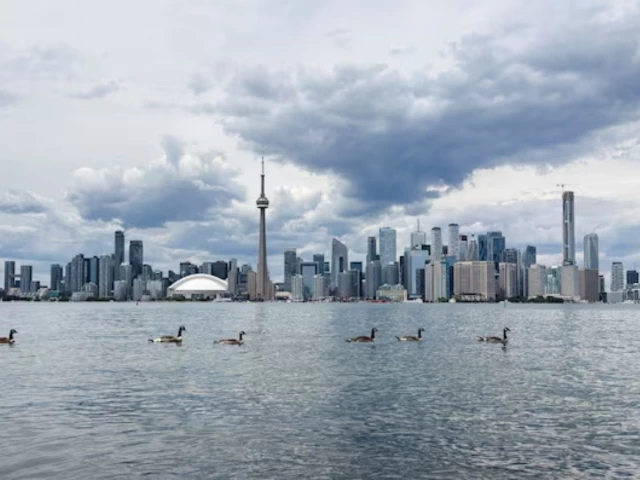
US President Donald Trump on Thursday signed an executive order directing his administration to refer to Lake Ontario as “Lake America,” adding a symbolic point of friction to already strained relations between Washington and Ottawa.
The move comes after three days of trade negotiations collapsed last week and the US imposed 50% tariffs on about $20 billion worth of Canadian goods.
Canada responded with tariffs ranging from 15% to 50% on C$27.6 billion ($20 billion) worth of US imports. The measures, covering about 700 products, are due to take effect Sept. 8.
Why did Trump rename the lake?
Trump first raised the possibility of changing the Great Lake’s name on Tuesday, saying the US was considering the move because it did not expect to be “doing much business with Ontario any longer.”
Trump has long accused Canada of taking advantage of the US on trade and defense, but said the change was not intended to send a specific geopolitical message.
The executive order presents the US as the principal protector of the Great Lakes and emphasizes Lake Ontario’s role in American commerce and history.
It says the lake’s deepest waters and most of its volume are within US territory. While shared between the two countries, however, a slim majority of about 52% of the lake’s surface area on the Canadian side.
What is Lake Ontario and where does its name come from?
Lake Ontario, bordered by the Canadian province of Ontario and the US state of New York, is the smallest and easternmost of North America’s five Great Lakes.
Its waters flow into the St. Lawrence River, forming part of a commercial route connecting the North American interior with the Atlantic Ocean.
The lake’s name has Indigenous origins and is generally traced to the Iroquoian term “oniatari:io,” commonly translated as “lake of shining waters,” though other interpretations include “beautiful lake” and “great lake.”
The name predates both the US and modern Canada. The province of Ontario, established in 1867, later took its name from the lake.
Lake Ontario also had strategic importance during the War of 1812, when Britain and the US built rival naval forces on it to control military supply routes.
Why is the lake important today?
Lake Ontario remains economically and environmentally significant to both countries.
It supports major population centers, industry, commercial shipping, fisheries, recreation and tourism.
Its location at the eastern end of the Great Lakes system also makes it a key link between the North American interior and the Atlantic Ocean through the St. Lawrence Seaway.
Read More: Trump signs order renaming Lake Ontario as Lake America
Because the lake is shared, the US and Canada cooperate on navigation, water levels, fisheries, water quality and environmental protection.
Their management of shared waters is governed in part by the 1909 Boundary Waters Treaty, which established the International Joint Commission to help prevent and resolve transboundary disputes.
Does Trump have authority to change the name?
The executive order can determine how the US federal government refers to the lake, but it cannot require Canada to use the name “Lake America.”
Canadian Industry Minister Melanie Joly said Canada would “always call it Lake Ontario,” while Ontario Premier Doug Ford dismissed the proposal as “a lot of rhetoric.”
The US Board on Geographic Names, which operates under the Interior Department, standardizes geographic names for use by the federal government.
Trump’s order directs Interior Secretary Doug Burgum to update federal maps, documents and databases within 30 days.
The order does not affect Canadian naming practices, and there is no international authority that can impose a single name for a body of water shared by two countries.
As a result, US federal records could use “Lake America” while Canada and other countries continue to refer to the same body as Lake Ontario.
Why does the renaming matter?
The immediate practical effect of Trump’s move is largely confined to US federal usage, but it carries political significance amid fraying US-Canada relations.
In response, Canadian Prime Minister Mark Carney rejected the change, saying: “Canadians also know that naming reality means calling it Lake Ontario – then, now and always.”
It is not the first time Trump has used geographic naming changes to emphasize what his administration describes as American heritage and national identity.
A similar naming controversy followed Trump’s decision to rename the Gulf of Mexico the “Gulf of America” for US federal use.
The move, announced early in his second term, has been rejected by Mexico, which continues to use the Gulf of Mexico.
Trump’s latest order does not alter the international boundary or existing arrangements for jointly managing the lake, but it adds another dispute to increasingly strained relations between Washington and Ottawa.














This material may not be published, broadcast, rewritten, redistributed or derived from. Unless otherwise stated, all content is copyrighted © 2026 The Express Tribune.






COMMENTS
Comments are moderated and generally will be posted if they are on-topic and not abusive.
For more information, please see our Comments FAQ