In China, the AI bubble has already burst
Updated 2 hours ago

Any deal could mark the first big revenue-sharing pact between a Chinese AI firm and a major US cloud company.
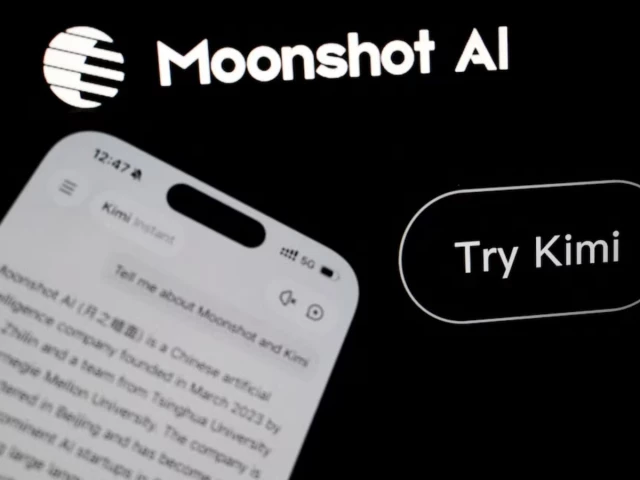
China's Moonshot AI is negotiating revenue-sharing agreements with Microsoft , Amazon and Alphabet's Google that would allow the US cloud giants to host its blockbuster Kimi K3 model, three people familiar with the talks said.
Any deal could mark the first big revenue-sharing pact between a Chinese AI firm and a major US cloud company.
The discussions highlight how China's leading AI models, often far cheaper than Western offerings, are gaining traction in the US, despite national security concerns in Washington that have led to bans on exports of AI chips to China. They are also taking place despite critical comments about Moonshot from senior US officials.
IPO-bound Moonshot is seeking up to a 30% share of revenue generated from K3-related services on Microsoft's Azure, Amazon Web Services and Google Cloud, according to the sources who declined to be identified because the discussions are private.
Read More: EU technology chief warns of AI losing human control
That would be in line with terms that sources have said the startup has outlined for major customers using the open-weight model.
The discussions are at an early stage and there is no certainty they will result in agreements, the sources said.
Moonshot did not respond to a request for comment about the potential deals. Microsoft, Google, and AWS declined to comment.
Moonshot has come under fire from US Treasury Secretary Scott Bessent who said last month that he might add it to a trade blacklist. US officials have accused the Beijing-based company of stealing from Anthropic's most sophisticated model, Fable, to help create Kimi K3 and illegally acquiring Nvidia chips.
Moonshot has rejected suggestions that Kimi K3's performance was achieved via distillation, telling China's National Business Daily last month that its performance gains came from original changes to underlying architecture.
Unresolved issues in the talk
According to one of the sources, unresolved issues in Moonshot's negotiations with the U.S. cloud companies include how revenue might be split, data access and auditing token usage.
Tokens are units of text processed by AI models, and measuring their use is central to calculating revenue under usage-based billing.
Kimi K3 has posted strong results in third-party evaluations.
Arena.ai has ranked it first in a benchmark assessing web interface-building capabilities, while Artificial Analysis says it delivers performance comparable to OpenAI's GPT-5.5 and Anthropic's Claude Opus 4.8, particularly on tests measuring complex, multi-step tasks.
For big AI model providers like Moonshot, major cloud providers are the main route to enterprise adoption.
Although Kimi K3 is an open-weight model that can be downloaded and modified, analysts say few customers are likely to run a system with 2.8 trillion parameters on their own infrastructure because of the huge computing costs involved.
Moonshot has signed similar agreements with some smaller cloud platforms, the sources said, without providing details.
In July, Chinese IT services provider Chinasoft International said it had a revenue-sharing agreement with Moonshot, though it did not disclose how the revenue will be split.
Founded in 2023 by Carnegie Mellon-trained AI researcher Yang Zhilin, Moonshot is backed by several Chinese tech giants including cloud computing giant Alibaba .
The startup raised more than $2 billion in May and is preparing for a potential Hong Kong listing, sources have said.
Alibaba is also seeking revenue-sharing agreements with major users of its new open-source AI model, sources have also said.











This material may not be published, broadcast, rewritten, redistributed or derived from. Unless otherwise stated, all content is copyrighted © 2026 The Express Tribune.




1727268465-0/Untitled-design-(42)1727268465-0-208x130.webp "the reverse renaissance")

COMMENTS
Comments are moderated and generally will be posted if they are on-topic and not abusive.
For more information, please see our Comments FAQ