Regional powers back Islamabad MoU
Updated 8 hours ago

Baghaei says visit to strengthen bilateral cooperation, Field Marshal Munir will hold talks with senior officials
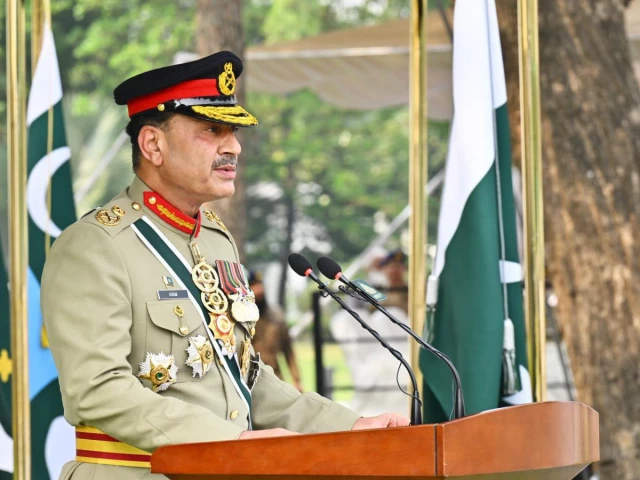
Chief of Defence Forces (CDF) and Chief of Army Staff (COAS) Field Marshal Syed Asim Munir will travel to Tehran on Monday (today) for talks with senior Iranian officials, as Pakistan steps up efforts to ease tensions between Iran and the United States amid growing fears of further escalation and tougher US sanctions.
The visit was announced by Iranian Foreign Ministry spokesperson Esmaeil Baghaei on Sunday. Pakistan, however, has yet to officially confirm the trip.
Speaking to reporters, Baghaei said the Pakistani Army Chief would head an official delegation to Tehran as part of Pakistan's efforts to strengthen bilateral cooperation with Iran and promote peace and security in the region.
"The visit is aimed at strengthening bilateral cooperation between Iran and Pakistan, as well as continuing Pakistan's good offices efforts to help strengthen peace and security in the region," Baghaei said, according to the Iranian Foreign Ministry.
Baghaei said that Field Marshal Munir would hold talks with senior Iranian officials during the visit. The visit comes at a particularly sensitive moment, with US President Donald Trump threatening to impose a new and significantly tougher package of economic sanctions against Iran.
Trump has warned that countries providing what he described as a "lifeline" to Tehran could face severe economic consequences, raising concerns among countries that maintain trade and financial links with Iran. US Treasury Secretary Scott Bessent has described the planned measures as potentially the "toughest sanctions in history".
The CDF's trip will be his fourth visit to Tehran since the conflict between Iran and the United States erupted in February. He previously travelled to Iran in April and May as part of Pakistan's mediation efforts and again in July to attend the funeral of Iran's late Supreme Leader Ayatollah Ali Khamenei.
His repeated engagement with the Iranian leadership underscores the important role Pakistan has sought to play in keeping communication channels open between Tehran and Washington. Pakistan emerged as a key mediator after the conflict escalated earlier this year and subsequently brokered the Islamabad Memorandum of Understanding between Iran and the United States.
The MoU, signed in June, envisaged a 60-day window for negotiations on key issues, including sanctions relief and Iran's nuclear programme. High-level talks were subsequently held in Switzerland under the framework, with Pakistan and Qatar acting as mediators. The process, however, failed to produce a final agreement within the envisaged timeframe.
The 60-day period expired on August 17 without a breakthrough. Iran has disputed the description of the timeframe as a deadline, with Baghaei saying earlier that the MoU contained no mandatory 60-day deadline and that the period could be extended if the parties failed to reach an agreement.
Pakistan has nevertheless maintained that the Islamabad framework remains relevant and could provide a template for renewed negotiations whenever both sides are ready to return to dialogue. The latest visit therefore comes as Islamabad seeks to keep its mediation efforts alive despite the collapse of the initial negotiating timetable.
Field Marshal Munir is also expected to discuss wider regional security issues with the Iranian leadership. The talks are likely to take place against the backdrop of growing concern over the Strait of Hormuz, the continuing confrontation between Tehran and Washington and the potential impact of new US economic measures on Iran and its trading partners.
For Pakistan, the challenge is particularly delicate. Islamabad has close security and diplomatic ties with Iran while also maintaining important strategic and economic relations with the United States and Gulf countries.
The Tehran visit is thus expected to focus not only on bilateral relations but also on preventing further escalation and preserving space for diplomacy at a time when Washington is shifting from military pressure towards an intensified economic campaign against Tehran.






This material may not be published, broadcast, rewritten, redistributed or derived from. Unless otherwise stated, all content is copyrighted © 2026 The Express Tribune.



COMMENTS
Comments are moderated and generally will be posted if they are on-topic and not abusive.
For more information, please see our Comments FAQ