Seven killed as passenger jeep plunges into ravine near Muzaffarabad
Updated 40 minutes ago

PBC disowns the statement issued by the group, calling it 'personal views'
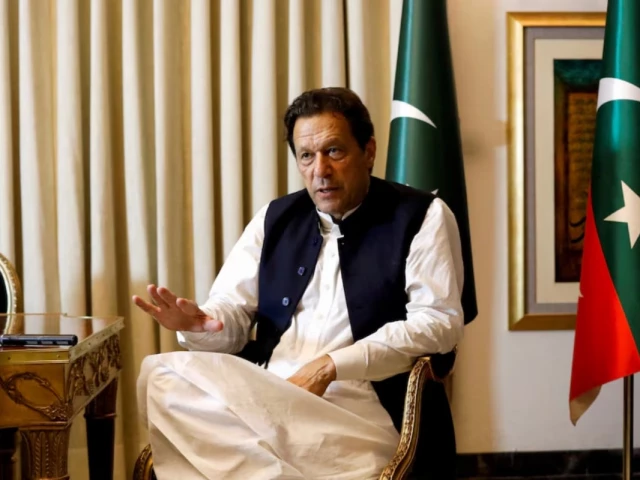
Eight members of the Pakistan Bar Council (PBC) on Saturday strongly condemned “the government’s blatant, willful and deliberate violation” of a Supreme Court (SC) August 18 order concerning the medical examination of former prime minister Imran Khan.
Three days ago, the SC ordered the government to transfer Imran to Shifa International Hospital for examination and treatment by a multidisciplinary medical board. The government instead sent him to the Pakistan Institute of Medical Sciences (PIMS) for treatment, drawing the ire of the Pakistan Tehreek-e-Insaf (PTI) leadership and eventually leading to the filing of a contempt of court petition in the apex court today.
A press release signed and released by the group under the Pakistan Bar Council Member letterhead said, “We, the undersigned, strongly condemn the blatant, willful and deliberate violation by the government and authorities of the order of the Supreme Court of Pakistan dated 18 August 2026 concerning the shifting, medical examination and treatment of Mr. Imran Khan, former prime inister of Pakistan.”
The press release was signed jointly by PBC members Abid Shahid Zuberi, Muhammad Maqsood Buttar, Shafqat Mehmood Chauhan, Munir Ahmed Kakar, Abdul Sattar Khan, Salman Akram Raja, Salahuddin Ahmed and Qazi Muhammad Arshad.
Read: PTI files contempt petition in SC over alleged violation of order on Imran's hospital transfer
The statement further highlighted that the apex court’s August 18 order was “clear, unequivocal and binding”, which was flouted by the executive in “direct defiance” of the court’s directions.
The group emphasised that the executive did not have the authority to defy SC’s directions and orders.
Describing the alleged non-compliance as a serious assault on the independence, authority and dignity of the judiciary, it warned that the abeyance undermined the rule of law and “strikes at the very foundation of constitutional governance".
Detailing its argument, the PBC members said the incident rendered the constitutional separation of powers meaningless.
“Judicial orders are the principal constitutional safeguard against arbitrary state action,” the statement said, adding that failure to comply with SC orders placed the fundamental rights of citizens at risk.
Outlining paragraph 14 of the top court’s order, the lawyers argued that the executive was fully aware of the binding nature of the directions and the consequences of non-compliance.
The group maintained that the filing of a review petition by the government did not suspend the court’s August 18 order and therefore the executive was not authorised to disregard it.
The signatories demanded that those responsible for the alleged violation be identified and prosecuted in accordance with the law.
Read more: Medical board urges concessions for Imran
The statement also criticised the 26th and 27th constitutional amendments, contending that these had eroded the supremacy of the rule of law, the judiciary and the Constitution. It argued that the amendments could not provide constitutional cover for disobedience of a subsisting SC order.
“No constitutional amendment, political consideration or executive decision can place the government above a binding judicial command,” the lawyers stressed in the joint statement.
They said SC orders could not be held in abeyance at the government’s whim.
The statement also drew comparisons between the treatment afforded to other ex-premiers and political leaders facing criminal convictions.
It said a former premier had been allowed to travel abroad for medical treatment pursuant to a court order and an undertaking executed on Rs50 stamp paper, referring to PML-N President Nawaz Sharif's flight abroad from prison.
The lawyers questioned whether constitutional protections relating to life, health, dignity and access to medical treatment were being applied selectively based on the political circumstances of an individual.
In concluding remarks, the members of the PBC called for the complete implementation of the apex court’s August 18 order and urged that those “responsible for defiance be dealt with strictly” in accordance with the law.
Similarly, the Sindh High Court Bar Association Karachi (SHCBAK) also described Imran’s treatment at PIMS as “brazen defiance of the SC’s order by executive and [Adiala] jail authorities”.
In a statement issued on the association’s letterhead, SHCBAK President Muhammad Haseeb Jamali said the executive and government functionaries were constitutionally bound to comply with judicial orders.
He referred to Articles 5 and 190 of the Constitution, arguing that the former obliged citizens to act in accordance with the Constitution and law, while the latter required executive authorities to act in aid of the SC.
The bar association also maintained that access to medical treatment was a fundamental human right that could not be denied to prisoners.
In the context of the aforesaid, the SHCBAK president reminded the government about the principles of “tracheotomy of power” whereby judicial orders are binding on all and lamented that the recent incident of the SC’s order abeyance was not in line with it.
The statement issued by him also alleged that the 26th and 27th amendments to the Constitution rendered the judiciary a “subordinate” of the executive.
He contested that the recent violation of SC directions in Imran’s case was a prime example of it.
Recalling that the judiciary was one of the three pillars of the state, the association called on the executive authorities, including Adiala jail officials, to immediately comply with the SC’s order and ensure Imran’s medical treatment as mandated by the apex court.
It further urged the top court to take “strict legal action against all delinquent officers” found responsible for non-compliance.
PBC VC disowns statement issued by 8-member group
Separately, the PBC distanced itself from the statement issued by eight of its members, stressing that the views solely reflected individual opinions which could not be construed as the collective position of the country’s top representative body of lawyers.
In a statement issued today by the PBC secretary, its vice chairman said, “It is clarified that the statement issued by eight out of the 23 members of the Pakistan Bar Council represents the views of those individual members and cannot be treated as the collective position of the Pakistan Bar Council.”
Also Read: Two specialists from Shifa International Hospital participated in Imran's eye assessment: PIMS
The 23-member council also underscored that it was governed by “democratic principles” that disallowed the minority from dictating the position of the majority.
“The Pakistan Bar Council is an institution of the legal fraternity and must remain above political interests and personal agendas. Neither the platform of the Pakistan Bar Council nor that of the superior judiciary should be politicised or used for any ulterior motives,” the statement read further.
The PBC also strongly condemned a separate statement issued by the Lahore High Court Bar Association, saying it categorically distanced itself from such statements.
“These statements do not reflect the collective views, position, or policy of the legal fraternity and the institution,” it said.
The PBC, which is the largest representative body of lawyers in Pakistan, reiterated that bar representatives should not use the council’s platform to further personal political agendas.
The council said it remained firmly committed to the rule of law, independence of the judiciary, supremacy of the Constitution and the sanctity of constitutional institutions.
The refutation also highlighted that the lawyers’ body expected “all members” to respect these fundamental principles and uphold the dignity and institutional autonomy of the PBC.
Balochistan High Court Bar Association (BHCBA) President Mir Attaullah Lango also slammed the press statement issued by the eight PBC members, calling it “misleading and controversial”.
Advocate Lango said differences and political matters within the lawyers’ community should remain confined to it and should not be allowed to affect or undermine the collective institutions of lawyers.
The BHCBA president said collective platforms of the legal community should not be used to serve the interests of any individual or group.
“Controversial statements in support of a particular person should be avoided,” Lango stressed.
He said that history was a witness that lawyers’ politics had never served the interests of an individual; thereby, the benchmark should not be compromised.
Advocate Lango vowed not to let lawyers’ representative organisation be used for group interests or personal agendas “under any circumstances”.
Punjab legal fraternity exchange barbs after Imran’s treatment sparks row
A stark divide among the members of the Punjab legal fraternity was also observed as an Imran Khan-supporting group warned of protests over what they described as the government’s failure to fully implement the SC’s directions regarding his medical treatment, while the other distanced itself from the statement, maintaining neutrality to allow the courts to determine sub judice matters on their legal merit.
Speaking at a press conference at the Lahore High Court Bar Association (LHCBA), Imran’s counsel Barrister Salman Safdar said the federal top court’s recent order regarding his client’s medical treatment was in accordance with the constitution and law and should be implemented in letter and spirit.
Safdar alleged that despite repeated judicial directions, Imran had been denied basic facilities by the government and kept in isolation.
He also lamented that the former premier’s cases were not being fixed for hearing at a feasible frequency.
Referring to a 2022 meeting with Imran, Safdar said, “The PTI founder had foretold that several cases would be registered against him,” adding that he was appalled that more than 400 cases were filed against the former cricketer turned politician.
“Imran never attempted to evade the legal process, but he is not being provided adequate opportunities to properly defend himself,” the barrister maintained.
Reiterating the claims of prolonged isolation in jail faced by Imran and his wife, the legal counsel submitted that the ex-premier’s health succumbed to circumstances.
“The former prime minister’s eyesight deteriorated during his confinement,” he said while claiming that jail authorities confirmed it, though the government still refutes it.
The barrister argued that the SC’s rulings were not being properly implemented to provide reprieve to Imran.
Appalled by the treatment meted out to the former premier, he reminded the authorities, “Imran Khan is neither a terrorist nor involved in any case against the state.”
Acknowledging that the PTI founder had been convicted in the Toshakhana case, Safdar claimed delayed hearings of Imran’s pending cases. Citing an example, the legal counsel asserted, “A bail petition before the Islamabad High Court had remained pending for around 18 months.”
He warned that a continuous denial of justice would undermine public confidence in the legal system.
During the press conference, LHCBA President Babar Murtaza also seconded Safdar’s opinion, calling it a denial of Imran’s fundamental rights.
He stated that the PTI founder had spent around 10 months in solitary confinement that caused his poor health.
Reverting the discussion towards alleged flouting of the SC order by the government, Murtaza reminded that the top court had passed directions after assessing Imran’s medical summary. He said that failure to comply with the order could amount to contempt of court.
The bar leader warned that the legal fraternity would launch protests and stage a sit-in outside the Punjab Assembly if the court’s directions are not implemented.
Senator Hamid Khan also voiced concerns over the alleged non-compliance with the judicial decision, warning that continued disregard for court orders would fuel unrest and undermine the rule of law.
“Interference in judicial affairs is weakening the independence of the judiciary.”
The senator reiterated the fears expressed by the PTI founder that his health was being compromised in custody.
He also highlighted the possibility of serious consequences if adequate medical treatment was not provided to the former PM.
Separately, Punjab Bar Council Vice Chairman Chaudhry Qaiser Nazir Ahmed Sahi and Executive Committee Chairman Chaudhry Arshad Ali Hanjra said the recent statements issued by “some members of the Pakistan Bar Council and Punjab Bar Council represented their personal views”.
In a joint statement issued to the media, they contested that the statement by a handful of lawyers could not be treated as the collective position of the legal fraternity or the two bar councils.
The council leaders also urged bar councils, bar associations and their representatives to exercise restraint while commenting on matters that were sub judice.
“The Punjab Bar Council stressed that, with regard to matters that are sub judice, bar councils, bar associations and their representatives should refrain from issuing statements that could potentially influence judicial proceedings, undermine institutional independence or affect public confidence,” the statement issued by the council’s secretary, on behalf of the duo, read.
The two officials called upon all stakeholders to respect the judicial process and allow the courts to determine sub judice matters on their legal and constitutional merits.










This material may not be published, broadcast, rewritten, redistributed or derived from. Unless otherwise stated, all content is copyrighted © 2026 The Express Tribune.

1727268465-0/Untitled-design-(42)1727268465-0-208x130.webp "the reverse renaissance")



COMMENTS (3)
Comments are moderated and generally will be posted if they are on-topic and not abusive.
For more information, please see our Comments FAQ