Thousands displaced as Israeli army continues offensive in West Bank's Hebron
Updated 1 hour ago

Trump says Iran wants deal with US, doesn’t want to be hit
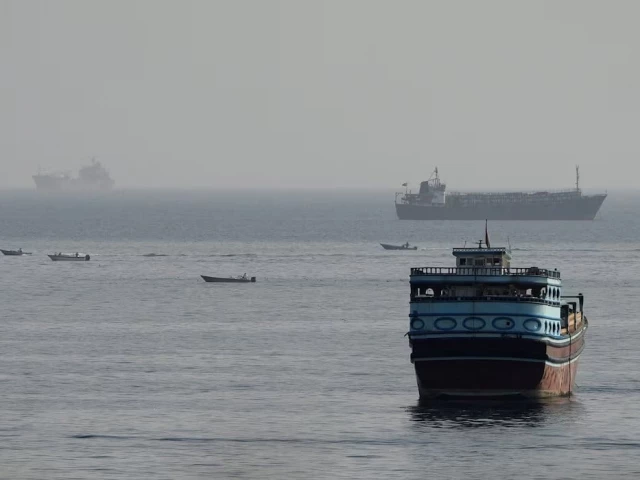
An Iranian official said a preliminary framework of understanding with Oman regarding the Strait of Hormuz has been agreed, with the final text and details to be announced after approval by senior authorities, Al Jazeera reported on Friday.
According to Iran's state news agency IRNA, spokesperson for the Iranian parliament's National Security Commission, Hassan Ghashghavi, said the general framework had been finalised but stressed that the agreement still required approval "at higher levels" before it could be formally announced.
Trump says Iran wants deal with US, doesn’t want to be hit
US President Donald Trump said Iranian officials want to reach an agreement with Washington and “don’t want to be hit,” following months of escalating tensions in the Middle East. “Look, it’s obvious they don’t want to be hit. They want to make a deal. So, we’ll see,” Trump told Punchbowl News in an interview released on Friday.
Washington and Tehran signed a framework agreement on June 18 and began negotiations on a final deal, but the talks later stalled amid disagreements over security guarantees and freedom of navigation through the Strait of Hormuz.
Tensions flared again last month after the US carried out fresh strikes inside Iran, prompting Tehran to launch retaliatory attacks across the region, including in Jordan, Bahrain and Kuwait.
Trump said Thursday that negotiations with Iran were progressing well and that an agreement could be reached soon.
No security for Saudi forces and their backers: Houthi official
Hizam al-Assad, a member of the political bureau of the Houthi movement, threatened Saudi Arabia’s army and its “mercenaries” in a post on X.
“There is no security for the invading Saudi forces, nor for their mercenaries, nor for their camps on our land."
لا أمانَ للقوات السعودية الغازية، ولا لمرتزقتها، ومعسكراتها على أرضنا.
— حزام الأسد (@hezamalasad) August 7, 2026
ومن يُدِن عمليات قواتنا المسلحة، فليفتح بلاده وأراضيه لإقامة معسكراتٍ سعودية، وليسمح باستقطاب وتجنيد مرتزقةٍ من أبناء بلده.
He added that “whoever condemns the operations of our armed forces should open their country and territory to the establishment of Saudi camps, and allow the recruitment and enlistment of mercenaries from among their own people.”
“Our armed forces are compelled to reclaim our rights, lift the siege on our country, and confront every individual who obstructs our people’s path towards attaining their rights, freedom, and independence, regardless of their nationality,” he said in a previous post.
قواتُنا المسلحة مضطرةٌ إلى انتزاع حقوقنا، ورفع الحصار عن بلدنا، ومواجهة كلِّ من يعترض طريق شعبنا نحو نيل حقوقه وحريته واستقلاله، أيًّا كانت جنسيته.
— حزام الأسد (@hezamalasad) August 7, 2026
Two civilians killed in Houthi attacks on Yemen government-held city: minister
Yemen’s Houthis shelled residential neighbourhoods and displacement camps in the government-held city of Marib, killing at least two civilians and injuring 14 others, AFP said, citing the health minister.
“Shelling by the terrorist Houthi militia today, Friday, targeting residential neighbourhoods and displacement camps in the city of Marib, has resulted — according to an initial toll — in the deaths of two civilians and injuries of varying severity to 14 others,” says Health Minister Qasim Buhaibeh in a post on X.
أسفر القصف الذي شنته مليشيا الحوثي الإرهابية، اليوم الجمعة، على الأحياء السكنية ومخيمات النازحين في مدينة مأرب، عن استشهاد مدنيين اثنين وإصابة 14 آخرين بجروح متفاوتة، في حصيلة أولية.
— د. قاسم بحيبح | Dr. Qasim Buhaibeh (@QasimBuhaibeh) August 7, 2026
وفور وقوع الهجوم، وجهنا بالتعميم على جميع المستشفيات والمرافق الصحية برفع حالة الاستنفار… pic.twitter.com/zVsqO2LBGv
Earlier, the Houthi drone attack killed three members of government forces and wounded another four, a Yemeni military source told AFP.
“Three killed and four wounded in a preliminary toll from the Houthi drone attack on the Harib area, in the south of Marib,” the source said.
Trump orders new investigations into leaks over depleted US weapon stockpile: WSJ
The Economic Times reported that Trump ordered new investigations into leaks involving Pentagon munitions stockpiles after reports raised concerns about depleted US weapons inventories following the conflict with Iran, according to The Wall Street Journal (WSJ).
The investigation comes as Trump was reportedly frustrated with reports saying that the US military used up large amounts of weaponry and munitions during the US-Israeli war on Iran. Administration officials have repeatedly maintained that the Pentagon still has sufficient ammunition and military capabilities to respond to potential threats and future operations.
White House press secretary Karoline Leavitt said the United States has “more than enough firepower” to conduct any military mission authorised by the president. She also warned that individuals responsible for leaking classified information about US military stockpiles could face prosecution under federal law.
Trump addressed the issue on Thursday, acknowledging that supplies of certain munitions are tighter than others, but emphasising that the US remained in a strong position and continued to possess substantial ammunition reserves.
The Economic Times reported that, according to the WSJ, Trump privately expressed concern that reports about declining US weapons stockpiles could strengthen Iran’s position and weaken Washington’s efforts to pressure Tehran over its nuclear program.
According to the WSJ, the reports also intensified scrutiny of US military readiness and the Pentagon’s ability to rapidly replace weapons used during major conflicts.
Those concerns reportedly led Trump to hold discussions with Defence Secretary Pete Hegseth and other senior national security officials about the condition of US military arsenals. The talks also covered plans to accelerate munitions production and strengthen the defence industrial base.
Yemen's air defences down a number of Houthi drones over Marib
According to Yemen's state TV, Yemeni air defences took down Houthi drones as they flew over the city of Marib, Al Jazeera reported.
The attacks came after reports that Saudi Arabia expected imminent coordinated attacks from the north and south by Iraqi militias and Yemen’s Houthis, Reuters reported, citing an unnamed senior Saudi official.
Iran's top negotiator slams US’s 'theatre diplomacy on loop'
Iran's parliament speaker and chief negotiator in talks with the United States criticised what he described as US "theatre diplomacy on loop," referring to Trump's pattern of announcing attacks and later calling them off.
"'Massive attack coming … wait, never mind, they want to negotiate.' That’s theatre diplomacy on loop," Mohammad Bagher Ghalibaf wrote on the US social media platform X.
“Massive attack coming… wait, never mind, they want to negotiate.”
— محمدباقر قالیباف | MB Ghalibaf (@mb_ghalibaf) August 6, 2026
That’s theater diplomacy on loop.
Using bullying + broken promises + fake news as leverage is a failed strategy.
Acknowledge the facts and fulfill your commitments. We don’t need more theater.
Ghalibaf said the use of bullying, broken promises and fake news constituted a "failed strategy."
"Acknowledge the facts and fulfil your commitments. We don’t need more theatre," he added.
Trump said Thursday that he is “involved” in the negotiations to reopen the Strait of Hormuz and suggested an agreement could be reached “soon.”
Read: Iran threatens to 'black out' Gulf if power plants hit by US
In recent weeks, the US and Iran have exchanged military strikes, with Washington targeting what it calls military sites belonging to Iran's Islamic Revolutionary Guard Corps (IRGC) and Tehran responding by targeting what it described as US military facilities in several Gulf countries, particularly Jordan, Bahrain and Kuwait.
The escalation came despite a memorandum of understanding signed by the US and Iran in June and the launch of negotiations toward a final agreement.
The talks later stalled over disagreements concerning security guarantees and freedom of navigation through the Strait of Hormuz, one of the world's most strategically important routes for energy supplies and global trade.
Trump last week threatened to hit Iran "very hard," warning he could target energy facilities, bridges and power plants. He later said he halted the strikes because Iran agreed to restart talks.
According to multiple US media outlets, depleted interceptor stockpiles had also factored into his decision to hold off on additional strikes on Iran.
Vessel traffic through Hormuz dwindles this week as markets watch Iran-Oman talks
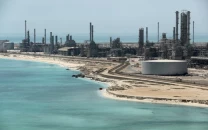
Shipping traffic through the Strait of Hormuz has dwindled to 33 vessels from Monday to Thursday this week, data showed, versus 50 in the week-ago period, as markets watched talks between Iran and Oman for signs of progress in reopening the key waterway.
Four vessels transited the strait on Thursday, including a very large crude carrier, Nissos Kea, carrying about 2 million barrels of Basrah crude loaded in Iraq, Kpler data showed.
Of the rest, two were laden with liquefied petroleum gas, and one was a minor bulk carrier.
Just six crude oil tankers have exited the strait this week, Kpler data showed. A total of 21 vessels have entered it so far, mostly via the Iranian route.
Several Chinese and Indian refiners have sought vessels this week to enter the strait and load crude at Iraq's Basrah Oil Terminal, attracted by steep discounts, shipping sources said.
However, no vessels have been fixed so far as shipowners are wary of entering the waterway, they said.
Read more: Only 'one or two issues' remain unresolved in Iran-Oman talks: senior diplomatic source
Iraq's state oil marketer SOMO offered discounts of close to $30 a barrel for Basrah Heavy and Basrah Medium crude to customers for August loading.
Typically, about 130 to 140 ships would transit the strait before Iran closed the waterway after the US-Israeli war began on February 28.
A proposed deal between Iran and Oman to give Tehran control over ships entering the Gulf through the Strait of Hormuz is not easily workable because of US sanctions and restrictive insurance clauses on payments, industry sources said.
On Thursday, 26 vessels transited the Bab el-Mandeb strait on the Red Sea, up from 19 a day before, Kpler data showed. LSEG counted 28 vessels, using a different tracking system and methodology.
Houthi drone and missile barrage kills 17 Yemeni soldiers: army
Seventeen Yemeni soldiers and officers were killed and several others injured in an attack by the Houthi group involving ballistic missiles and explosive-laden drones, the Yemeni military said early on Friday.
The Joint Operations Command of the Yemeni Armed Forces said the attack targeted forces carrying out operations against terrorism, organised crime and networks smuggling weapons and drugs to the Houthis.
The country’s leadership ordered measures to prevent similar attacks and a “deterrent response,” the statement said, without providing further details.
The new toll came a day after government Emergency Forces reported casualties and material losses in Houthi attacks on several military camps and units, without providing figures.
Local media reported that the attacks targeted government forces in the central Marib and eastern Hadramawt governorates.
The Houthis later claimed responsibility for the attacks, with military spokesman Yahya Saree saying the group carried out a “large-scale” operation against Saudi-backed forces in Al-Ruwaik, Al-Abr and Al-Thaniyah, as well as other military camps.
Saree said the attacks involved a large number of ballistic missiles and drones.
Mossad chief fired 2 senior officials over failed Iran regime-change plan: Israeli broadcaster
Mossad chief Roman Gofman fired two senior intelligence officials after a plan to topple Iran's government failed or was never implemented, according to Israeli broadcaster Channel 12 on Thursday.
The officials were the head of the intelligence directorate, appointed only months ago, and the chief of the agency's Iran division, the broadcaster said. Neither official was identified.
Channel 12 claimed the plan was developed in coordination with the US and sought to fuel internal moves against the Iranian government, including support for opposition groups, under broad Israeli-US military air cover.
The broadcaster, citing assessments, said the plan either failed or never reached the operational stage.
Security sources told Channel 12 that Gofman's relations with the two officials had been strained from the outset, adding that the dismissals came amid a broader shake-up of Mossad's leadership and priorities, particularly regarding Iran.
The broadcaster also cited international reports as saying the plan included scenarios for replacing Iran's leadership and coordination with US officials on a possible "post-regime" phase.
The effort stalled at an early stage, however, leading to the proposal being shelved and those responsible being held accountable, according to the broadcaster.
There was no immediate official Israeli comment on the reported dismissals.
US, Israeli attacks disrupted nearly 230M cubic meters of daily gas output: Iranian president
Iranian President Masoud Pezeshkian said on Thursday that US and Israeli attacks damaged the country’s power plants and disrupted nearly 230 million cubic meters of daily gas production, but that the government largely avoided widespread electricity outages despite the damage, according to the Iranian presidency.
In an address to the nation, Pezeshkian said Iran had energy reserves of 1.2 billion litres when his administration took office and was warned that they would last only until November.
He said the government managed the situation through planning, management and public cooperation.
“When I speak of national unity, I mean the people,” he said, praising Iranians for reducing electricity and gas consumption.
The president said his administration had planned to install 30,000 megawatts of solar power capacity but failed to meet the target because of the war, ongoing conflict and what he described as a blockade.
He noted that Iran’s current five-year development plan calls for 12,000 megawatts of new solar capacity but said the government intends to exceed that figure.
“Although they struck our power plants and nearly 230 million cubic meters of our daily gas production, the public witnessed very few power outages,” Pezeshkian said.
He expressed hope that electricity outages would be eliminated in the future, adding that the government was working to ensure industrial facilities and workshops would not face power cuts.
Pezeshkian also said authorities were preparing for winter despite the daily gas shortfall, with plans aimed at preventing supply disruptions.
The president acknowledged that sanctions remained a reality, saying reduced oil exports limited Iran’s foreign currency earnings and created economic difficulties.
“If we cannot sell oil, we will have less foreign currency, and that creates problems. We must find ways to reduce these problems,” he said.
He added that while sanctions had closed some avenues, Iran was opening others by strengthening relations with neighbouring countries.
Pezeshkian also claimed that one objective during the recent conflict had been to fuel unrest in Iran’s northwestern and southeastern regions, but said neighbouring countries had helped prevent such attempts.
Trump says deal to reopen Strait of Hormuz could come ‘soon’
Trump said on Thursday that he is “involved” in the negotiations to reopen the Strait of Hormuz and suggested an agreement could be reached “soon.”
Asked by reporters at the White House whether an agreement had been reached to reopen the strategic waterway, Trump said: "I don't want to say it has been."
"It's sort of open right now. You know, we have a thing called the blockade, headed up by the US Navy, and we control it," he said.
"They can always shoot something. They always have something, or drop a mine, and if you have one mine sitting out there, you sort of mess things up because people don't want to take their billion-dollar boats and accidentally get hit by a mine," he said.
"I'm involved in the negotiation. I think we're doing fine. It could be soon," he said, referring to a possible agreement with Iran.
Trump also dismissed concerns about US military stockpiles, saying the country has "literally massive amounts of ammunition."
"We have supplies of munitions all over the world, and if we ever needed them, we'd take that. We're supplied all over the world, but we're in very, very good shape," he said.
He said that the war with Iran is going to end "pretty soon", adding that he doesn't think Iran "can go much longer."
Brent oil prices rise 5% amid Hormuz uncertainty
The price of Brent oil increased by around 5% as explosions were heard on Iran's Qeshm Island in connection with operations targeting "hostile objects" at the entrance to the Strait of Hormuz.
The price of a barrel of Brent oil reached $82.3 as of 2240GMT (3:40am PKT), up 4.9%, while the price of West Texas Intermediate (WTI) crude rose 4% to $78.
The price of EU gas, the benchmark index for natural gas, also soared by 11.5% to €58.4 per megawatt.
Explosions in southern Iran linked to operation against ‘hostile targets’: Report
Two explosions heard in southern Iran on Thursday night were linked to an operation against what were described as “hostile targets” near the entrance to the Strait of Hormuz, according to a report by Iran’s semi-official Tasnim News Agency.
Tasnim, citing informed sources, reported that the explosions, heard in Qeshm at around 9.40pm local time, resulted from an operation targeting hostile objects at the entrance to the strategic waterway.
The sources said the results of the operation carried out by Iranian naval forces would be announced in the coming hours.
Separately, Iran’s Mehr News Agency quoted Hormozgan Deputy Governor for Security Affairs as saying no impacts had been reported in either Qeshm or the nearby port city of Bandar Abbas.
According to Mehr, the official said relevant authorities were conducting investigations to determine the source of the explosions.




This material may not be published, broadcast, rewritten, redistributed or derived from. Unless otherwise stated, all content is copyrighted © 2026 The Express Tribune.






COMMENTS
Comments are moderated and generally will be posted if they are on-topic and not abusive.
For more information, please see our Comments FAQ