Ex-CDA officials booked over plot fraud
Updated 4 hours ago

Court asks counsel to cite judgment in which court directs president to discharge his constitutional responsibilities

The Islamabad High Court (IHC) on Thursday indicated that the federal government should first explain the status of the long-pending summary for the appointment of high court judges before the court decides whether a petition challenging President Asif Ali Zardari's inaction on the matter is maintainable.
The petition, filed before the IHC on Wednesday by Advocate Luqman Zafar Chaudhry through counsel Zahid Asif Chaudhry, challenged President Asif Ali Zardari's continued failure to approve the summary forwarded by the prime minister following the Judicial Commission of Pakistan's recommendations for appointments to the Islamabad, Lahore, Sindh and Balochistan high courts.
It argued that the president had "not yet given his assent nor returned the said summary but held it without any legal justification", contending that the Constitution "contemplated no third option of indefinite silence or inaction". The petitioner maintained that the continued delay had disrupted judicial appointments and aggravated the shortage of judges in the superior courts.
The petition sought directions for the Presidency to disclose when it had received the summary and explain the reasons for the delay, besides asking the court to direct the president, through his secretary, to immediately approve the summary.
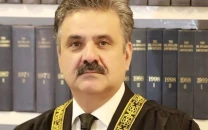
Hearing the petition, Justice Arbab Muhammad Tahir repeatedly questioned whether a constitutional writ could be issued against the president, while also pressing the petitioner's counsel to identify any precedent in which a court had directed the head of state to perform a constitutional duty.
Advocate Zahid Asif Chaudhry, representing petitioner Advocate Luqman Zafar Chaudhry, argued that the summary had already been sent to the president for approval and claimed there were reports that the government was preparing to issue the appointments notification within the next 48 hours.
He urged the court to seek details of the summary from the government, saying, "At least ask the government what the status of the summary is."
Read: IHC petition challenges delay in acting on JCP recommendations
Justice Tahir, however, continued to question the legal basis of the petition.
"We are asking whether a writ can be issued against the president," the judge remarked, asking counsel to cite a judgment in which a court had directed the president to discharge his constitutional responsibilities.
When counsel argued that the office of the president in Pakistan was "ceremonial" and maintained that the president had no discretion beyond granting approval, the court responded that it was looking for a judicial precedent specifically dealing with directions to the president.
The bench also sought clarity on the authority empowered to issue the appointments notification.
Counsel submitted that the Ministry of Law ordinarily issues the notification after the president's approval, but argued that since more than 15 days had elapsed, "the competent authority should issue the notification" if the president had failed to act.
Justice Tahir questioned whether the precedent relied upon by counsel applied to the present circumstances, observing that the cited judgment involved a different situation.
Counsel requested the court to seek replies from the federation, the Prime Minister's Office and the Ministry of Law regarding the status of the summary before deciding the matter.
Referring to reports that the government could issue the notification within 48 hours, he argued that the respondents should first clarify the position before the court ruled on the legal questions raised in the petition.
After hearing arguments, the court reserved its verdict on the maintainability of the petition.
Background
The latest legal challenge came against the backdrop of an increasingly contentious constitutional debate over the president's role in judicial appointments. President Zardari had neither approved the Judicial Commission's recommendations nor returned the summary with objections, prompting questions over whether the Constitution permitted an indefinite delay in acting on judicial appointments.
The federal government was also considering approaching the superior judiciary to seek a constitutional interpretation of the matter. While the Supreme Court had previously ruled that the president did not have the authority to reject nominations made by the Judicial Commission, Article 175A(8) of the Constitution did not prescribe a timeframe within which the president had to act on the recommendations.
Read More: HC judges' appointment matter may land in court
In its meetings on July 20 and 21, the Judicial Commission had recommended the appointment of three additional judges to the Islamabad High Court, 10 to the Lahore High Court, three to the Sindh High Court and three to the Balochistan High Court. It had also recommended the confirmation of four additional judges of the Peshawar High Court and a six-month extension in the tenure of Sindh High Court Additional Judge Justice Khalid Hussain Shahani.
However, Justice Shahani's tenure expired on July 28 before the recommended extension took effect.
Legal experts believed the impasse could ultimately require judicial intervention, particularly on the broader constitutional question of whether a statutory or constitutional deadline should govern presidential action on Judicial Commission recommendations.
Government officials had privately linked the delay to dissatisfaction within the Pakistan Peoples Party (PPP) over the outcome of the Judicial Commission's recent meetings. According to officials, the party's preferred nominees for the Sindh High Court had failed to secure the commission's backing, with both judicial and executive members reportedly agreeing that no candidate below the age of 45 should have been appointed.
PPP leader and Judicial Commission member Senator Farooq H Naek had proposed 33 candidates for appointments across the four high courts. However, commission members had said the party could have secured appointments for other candidates had it not insisted on two preferred nominees for the Sindh High Court.














This material may not be published, broadcast, rewritten, redistributed or derived from. Unless otherwise stated, all content is copyrighted © 2026 The Express Tribune.









COMMENTS
Comments are moderated and generally will be posted if they are on-topic and not abusive.
For more information, please see our Comments FAQ