Ministers renew pledge to stand by Kashmiris
Updated 2 hours ago

PPP unit to be turned into govt company; toll imposed on Mehran Highway
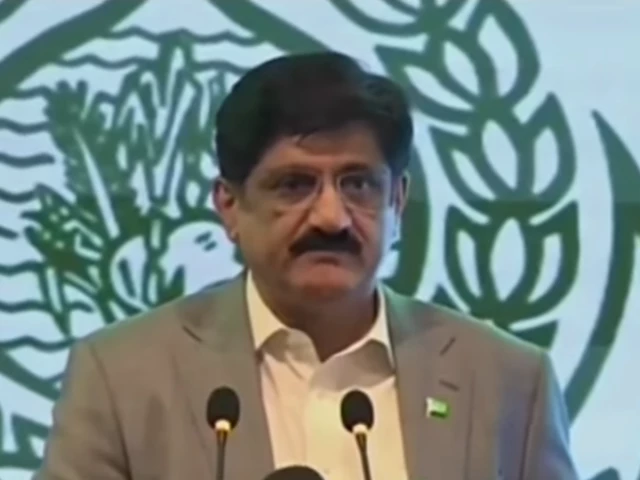
The Sindh cabinet on Wednesday approved a series of key economic and administrative measures, including the import of 500,000 metric tonnes of wheat, a 7.5% increase in the minimum wage, and conversion of the Public-Private Partnership (PPP) Unit into a government-owned company.
The meeting, chaired by Chief Minister Syed Murad Ali Shah at the CM House, also gave the go-ahead for imposing toll tax on the Nawabshah-Ranipur (Mehran Highway) and expanding the Sindh People's Housing for Flood Affectees Programme to Gilgit-Baltistan.
Addressing the cabinet, Murad said the government was pursuing a reform agenda centred on economic stability, infrastructure development, and improved public service delivery. He directed departments to ensure timely implementation so benefits reach the public.
The cabinet approved an increase in the minimum wage from Rs40,000 to Rs43,000 per month for unskilled workers, effective July 1, 2026, with proportionate raises for other categories.
To address a projected wheat shortfall of 1.69 million tonnes, the cabinet allowed import of 500,000 tonnes through the Trading Corporation of Pakistan with federal support.
In a key structural move, the PPP Unit will be converted into a government-owned private limited company under the Companies Act 2017, with Rs8 billion authorised capital. The decision aims to boost institutional capacity and attract private investment.
The cabinet also cleared the imposition of toll tax on the 135-km Nawabshah-Ranipur highway, mainly targeting heavy vehicles, to fund maintenance. The project is expected to generate over Rs2 billion annually.
Expansion of the flood housing programme to Gilgit-Baltistan was also approved, where 196 homes will be rebuilt in collaboration with the National Rural Support Programme.
Among other decisions, the cabinet approved the formation of four high-level reform task forces covering economy, water, climate change, artificial intelligence, and digital transformation.
It also reviewed the proposed Sindh Government Lands Management Bill 2026 to replace the colonial-era 1912 law with a transparent framework for land management.
The cabinet further approved amendments to anti-terrorism laws to improve court efficiency, restored the name of the Communication & Works Department, and designated deputy commissioners as administrators of Evacuee Trust properties.
Murad said the decisions were aimed at ensuring food security, protecting workers, and promoting sustainable development across the province.













This material may not be published, broadcast, rewritten, redistributed or derived from. Unless otherwise stated, all content is copyrighted © 2026 The Express Tribune.






COMMENTS
Comments are moderated and generally will be posted if they are on-topic and not abusive.
For more information, please see our Comments FAQ