Pakistan is protecting Kashmir, says Farooq Abdullah
Updated 22 hours ago

Polling ended in eight Muzaffarabad constituencies and 12 refugee seats as PPP alleged rigging by the PML-N
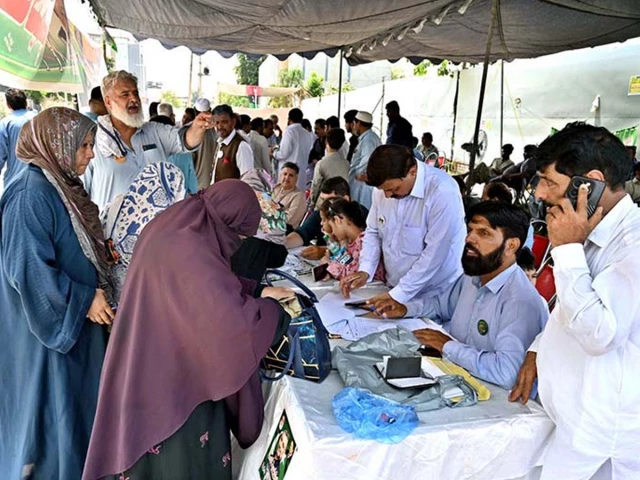
Polling for the second phase of the Azad Jammu and Kashmir (AJK) Legislative Assembly elections concluded on Sunday, as the Pakistan Peoples Party (PPP) accused the Pakistan Muslim League-Nawaz (PML-N) of undermining the electoral process through widespread rigging.
Polling was held in eight of the nine constituencies of the Muzaffarabad division and all 12 refugee constituencies. Vote counting began shortly after polling stations closed.
Following the conclusion of polling, vote counting began at polling stations. According to initial unofficial results, PML-N candidates were leading in several constituencies, with party supporters beginning celebrations despite the Election Commission having yet to announce official results.
Bilawal alleges rigging in AJK polls, demands action
Pakistan Peoples Party (PPP) Chairman Bilawal Bhutto Zardari alleged irregularities during the second phase of the AJK elections, saying the Election Commission had failed to act on the party’s complaints from the first phase.
In a post on X, Bilawal said that despite what he described as an admission by the "rigging party", the Election Commission had not taken action on the PPP’s earlier complaints.
Despite this admission from the rigging party the ECP has still failed to take action on our complaints from phase 1. Had they done so the credibility of today’s phase 2 election would have been restored. The PPP reserves the right to protest and demand reelection in phases where… https://t.co/oZwLFgG7FQ
— Bilawal Bhutto Zardari (@BBhuttoZardari) August 2, 2026
"Had they done so, the credibility of today’s phase-2 election would have been restored," he said.
The PPP chairman said his party reserved the right to protest and demand re-election in constituencies where, he alleged, rigging had taken place and the Election Commission had failed to act.
Separately, PPP chairman also condemned an alleged attack on PPP MNA Salahuddin Junejo in constituency LA-31 Khaoreh of AJK, which he said was the constituency of Legislative Assembly Speaker Chaudhry Latif Akbar.
آزاد جموں و کشمیر میں چوہدری لطیف اکبر کے انتخابی حلقے ایل اے 31 کھاوڑہ میں ایک اور افسوس ناک واقعے میں پاکستان پیپلزپارٹی کے رکن قومی اسمبلی صلاح الدین جونیجو پر حملہ ہوا ہے جس کی میں مذمت کرتا ہوں اور مطالبہ کرتا ہوں کہ ذمہ داروں کو فی الفور گرفتار کیا جائے، مصطفی آباد کے پولنگ…
— Bilawal Bhutto Zardari (@BBhuttoZardari) August 2, 2026
He demanded the immediate arrest of those responsible, saying the incident was "extremely alarming".
He accused that the individuals affiliated with the PML-N who had allegedly occupied a polling station in Mustafa Abad, came outside and opened fire on PPP workers. He alleged that party workers sought police assistance but did not receive help.
He also accused the PML-N of resorting to "despicable tactics", claiming that the party could not win elections on merit.
Marriyum Aurangzeb rejects rigging allegations
Senior Punjab Minister Marriyum Aurangzeb said the people of Mirpur had expressed confidence in the PML-N by voting for the party's election symbol, the lion. She added that similar enthusiasm had been witnessed in Muzaffarabad and Punjab, expressing confidence that the party would also secure victory there.
She said the large turnout at the PML-N's polling camps reflected the party's anticipated victory. Criticising a rival political party, Aurangzeb said it had resorted to allegations of rigging after facing defeat and urged political parties to abandon the politics of accusations.
"Elections are not won through complaints, threats or allegations," she said, adding that they were decided by performance, voter turnout and ballots cast. She said the party was fully prepared for the next phase in Poonch and expressed confidence that the PML-N would emerge victorious.
Aurangzeb also said polling for the refugee seats had ended, while polling hours had been extended in Muzaffarabad. She maintained that the PML-N believed in democracy and the power of the vote.
PML-N leader Barrister Daniyal Chaudhry said Kashmiris had voted for the narrative of Muhammad Nawaz Sharif. He added that there had been considerable enthusiasm at the party's polling camps.
PPP alleges irregularities in Lahore AJK polling
Meanwhile, Pakistan Peoples Party (PPP) leader Faisal Mir alleged widespread irregularities during polling in Lahore, claiming that PPP polling agents were forcibly removed from polling stations before the commencement of vote counting.
"Votes were cast on photocopies of national identity cards in Lahore polling stations," Mr Mir alleged, adding that "B-Forms and expired identity cards were used with the alleged collusion of polling staff."
He also claimed that non-Kashmiri individuals had cast fake votes and alleged that "anyone claiming to be a PML-N voter was somehow able to cast a ballot".
Calling the exercise "large-scale electoral fraud in the name of AJK elections in Lahore", Mir said, "The PPP will not accept the PML-N's alleged open rigging under any circumstances."
Separately, unrest was reported after polling concluded at Chishtian High School in Chauburji. Supporters of independent candidate Saba Diwan alleged that police had forcibly obtained the presiding officer's signatures and claimed the election result had been deliberately altered.
Earlier, the polling began at 8:00am on Sunday morning in 21 constituencies, including nine general seats in Muzaffarabad Division and 12 refugee constituencies for Kashmiris residing in different cities across Pakistan.
In Muzaffarabad Division, 208 candidates were contesting nine seats, with 809,621 registered voters. A further 143 candidates were contesting in 12 refugee constituencies.
A total of 1,483 polling stations had been established across the districts of Muzaffarabad Division, with heavy security deployed at locations designated as highly sensitive.
Read: Coalition allies PML-N and PPP at each other's throats over AJK election claims
Constituencies LA-28, LA-29 and LA-31 had been declared highly sensitive, with closely contested races expected among prominent political figures, including Pakistan Muslim League-Nawaz (PML-N) leader Shah Ghulam Qadir, Istehkam-e-Pakistan Party leader Sardar Tanveer Ilyas, former prime minister Raja Farooq Haider and Legislative Assembly Speaker Chaudhry Latif Akbar.
In the Rawalpindi Division, 35 candidates were contesting three refugee seats, where 27,907 voters are registered.
For security, 4,000 police personnel had been deployed, while 31 of the 175 polling stations had been declared sensitive.
In Khyber-Pakhtunkhwa (K-P), 41 polling stations had been established across 21 districts for LA-45 Kashmir Valley-VI, where 7,655 registered voters wee eligible to cast their votes.
Polling hours extended to 6:00pm in Muzaffarabad division
The AJK Election Commission extended polling hours by one hour in Muzaffarabad Division.
Under the revised schedule, polling continued until 6:00 pm, instead of ending at 5:00 pm.
The extension was granted in view of the large number of voters.
Polling for AJK refugee constituencies in Rawalpindi sees slow start
Polling for the three AJK refugee constituencies in Rawalpindi began on Sunday, with polling staff reaching polling stations before the start of voting.
At the central polling station at Islamia High School No. 1 on Murree Road, polling staff and security personnel were present when polling opened, but no voters arrived during the first five minutes. No polling camps had been established and polling agents representing political parties or candidates had not reached the station.
A similar situation was reported at polling stations on Murree Road, Liaquat Road, Syedpur Road and Khayaban-e-Sir Syed, where polling camps had initially not been set up. Heavy police deployment was present, while security and cleanliness arrangements were reported to be satisfactory.
A polling officer at Islamia High School No. 1 said polling would continue until 5:00 pm regardless of voter turnout.
At the Wadi-4 polling station at Makha Singh Estate Government Boys School, 11 votes had been cast, while nine votes had been cast at the Wadi-5 polling station at Government Boys Primary School. Polling camps were later established at girls' and boys' schools in Millat Colony.
By 8:50 am, no voters had arrived at the polling station at Islamia High School No. 1, and polling camps had still not been established.
Polling officials said turnout remained minimal during the early morning hours due to the Sunday holiday but expected voting activity to increase after 12:00 noon.
Later in the morning, polling camps began appearing outside polling stations on Murree Road, Liaquat Road, Syedpur Road and Khayaban-e-Sir Syed.
Four hours after polling began, voter turnout remained low at several polling stations.
By 12:00 noon, only 14 votes had been cast at the joint polling station established at Daniyal High School, Saddar, for Jammu-6, where the total number of registered voters is 125.
At another polling station for Jammu-6, established at FG Technical School, Tariqabad, the total number of registered voters is 23. By noon, only two voters — one male and one female — had cast their votes.
At the FG Quaid-e-Azam School, Chaklala, also in Jammu-6, the polling station has 117 registered voters, but no vote had been cast by 12:00 noon.
With one hour remaining before polling closed, 33 votes had been cast at the Category C joint polling station established at Daniyal High School, Saddar, where the total number of registered voters was 125.
With 40 minutes remaining before the scheduled close, 14 votes had been cast at the Category C joint polling station at FG Quaid-e-Azam Public School, Chaklala Scheme-III, which had 117 registered voters.
With 30 minutes remaining before polling closed, only three votes had been cast at the Category C joint polling station at FG Public School No. 2, Tariqabad, where 23 voters were registered, including 16 men and seven women.
The three votes cast at the Tariqabad polling station were all cast by members of the same family, a husband, wife and their son.
AJK Election Commission postpones polling at 50 LA-28 stations
Polling was postponed at 50 polling stations in LA-28 Muzaffarabad-II (Lachharrat) due to bad weather and landslides, the AJK Election Commission said.
The Election Commission said polling in the affected areas was deferred until August 4, 2026, after election staff and polling material could not reach the designated polling stations.
Polling could not take place at specific polling stations in Noseri Nosada, Panggaran, Dewliyan and Panjkot due to road closures and adverse weather conditions.
The Election Commission postponed polling at the affected polling stations following a report submitted by the Returning Officer.
Polling was deferred at polling stations No. 55 to 67, 107 to 118, 119 to 130 and 159 to 173 in LA-28 Muzaffarabad-II.
Re-polling at the affected stations will be held on August 4, 2026, from 8:00 am to 5:00 pm.
The Returning Officer had received the sealed polling bags of the postponed polling stations back from the Presiding Officers.
An Election Commission spokesperson said polling could not be conducted according to the scheduled timetable in the affected areas due to bad weather and blocked routes.
Elections held amid rigging allegations in first phase
Despite the extensive security arrangements, election day was overshadowed by allegations of rigging and sporadic violence, as coalition partners at the centre — the PML-N and the PPP — traded accusations of electoral interference throughout the day.
The PML-N first alleged pre-poll rigging in Kotli's LA-10 constituency after party leaders claimed polling staff and election material had been found at a private residence instead of the designated polling station. The Election Commission later confirmed it had arrested and suspended two presiding officers over the incident, replacing them with new officials and initiating legal proceedings under election laws.
The PPP, meanwhile, repeatedly accused the federal government and the PML-N of using state machinery to influence the polls, alleging armed supporters attempted to disrupt voting at several polling stations and demanding immediate intervention by the Election Commission. The party also complained that polling at one station in Kotli remained suspended for nearly two hours, depriving voters of their right to cast ballots.
Read more: Kashmir's future should be decided by the people of Kashmir: Bilawal
Tensions escalated further in LA-9 Kotli-II (Nikyal), where PPP worker Mukhtar Younus was killed during polling. The PPP alleged he was shot during incidents involving armed supporters of a PML-N candidate, while PML-N leaders disputed the party's account of the incident. Local authorities confirmed one person had died and two others, including the victim's father, were injured.
As the accusations intensified, senior leaders from both parties held competing press conferences. The PPP accused the federal government of interfering in the elections through development announcements and misuse of official resources, while the PML-N alleged the PPP was itself attempting to manipulate the vote, claiming ballot papers had been recovered from the residence of a rival candidate.
Throughout the day, the Election Commission maintained that strict action would be taken against any violations of the electoral code of conduct, saying irregularities and negligence would not be tolerated. Despite the controversies, polling concluded after the one-hour extension before vote counting began.






This material may not be published, broadcast, rewritten, redistributed or derived from. Unless otherwise stated, all content is copyrighted © 2026 The Express Tribune.






1727268465-0/Untitled-design-(42)1727268465-0-208x130.webp "the reverse renaissance")

COMMENTS
Comments are moderated and generally will be posted if they are on-topic and not abusive.
For more information, please see our Comments FAQ