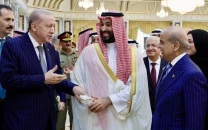
Tehran says Iran, Türkiye, Pakistan among major Muslim states responsible for advancing unity
Updated 1 hour ago

'I am close to making a decision. We are all set for it,' says US president
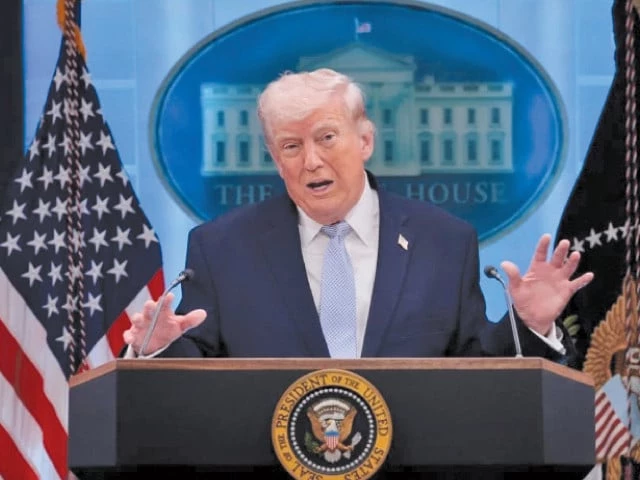
United States President Donald Trump is considering launching a new military operation against Iran that could surpass the scale of the US strikes from Operation Epic Fury earlier this year, Axios reported on Thursday.
In an interview with the outlet, Trump said he was nearing a decision on a potential major attack but stressed that no final determination had been made. Two US officials also told Axios that no new military orders have been issued.
"I am considering a massive attack. Bigger than ever before. I am close to making a decision. We are all set for it," Trump said.
🚨🇺🇸🇮🇷Exclusive: President Trump told me he is "close" to decision on "massive attack" against Iran, but stressed he hasn't made final determination. My story on @axios https://t.co/2JHkinmNXr
— Barak Ravid (@BarakRavid) July 23, 2026
He also said Israel could join the operation almost immediately if requested, but maintained that the US would not require assistance from another country to carry out a new campaign against Iran.
According to Axios, Trump said Iranian officials wanted to negotiate but have not yet agreed to the latest proposal presented through mediation efforts.
"They haven't received enough pain yet," he claimed.
Citing two regional sources familiar with the mediation efforts, Axios reported that Iran's leadership had not accepted the latest proposal.
One source said: "We are trying, but the Iranians are not being helpful."
US will hold Iran accountable if Houthis attack ships: Trump
United States President Donald Trump said on Thursday that Washington would hold Tehran accountable if the Yemeni Houthis attacked commercial vessels.
“A year ago the United States of America attacked, very powerfully, the Houthis, for their interference with commerce and trade, by shooting at ships,” Trump wrote on his Truth Social platform.
“Since that time, and during our conflict with Iran, they have acted very responsibly. Unfortunately, now they are starting up again, shooting at two Saudi Arabian ships last night,” he added.
“Please let this truth serve to represent that if they do this again, the US will hold Iran responsible, in that the Houthis are a surrogate and/or proxy of Iran, and major military punishment will be inflicted upon Iran and, of course, the Houthis, themselves, who I am very disappointed with in that they have, until now, acted very professionally and smart.”
— Rapid Response 47 (@RapidResponse47) July 23, 2026
Iran warns US troops against carrying out ‘manifestly unlawful’ orders
Iran’s Foreign Ministry spokesman Esmaeil Baghaei warned US service members on Thursday against carrying out orders to attack civilian infrastructure, saying such actions could amount to war crimes.
In a post on the US social media platform X, Baghaei said citing superior orders does not absolve individuals of criminal responsibility for war crimes.
"Do Not Commit War Crimes for Anyone; citing superior orders to justify war crimes does not absolve the perpetrators of criminal liability."
Do Not Commit War Crimes for Anyone; citing superior orders to justify war crimes does not absolve the perpetrators of criminal liability.
— Esmaeil Baqaei (@IRIMFA_SPOX) July 23, 2026
The U.S. ruling establishment intends to sacrifice whatever remains of international humanitarian law and the foundations of human ethics…
“A policy that calls for the destruction of bridges and power plants is manifestly unlawful and criminal. It constitutes reprisal and collective punishment,” he said.
Baghaei also cited US domestic law, including the War Crimes Act, as well as military legal standards requiring service members to refuse “manifestly unlawful orders.”
Primary focus of US is a denuclearised Iran: Rubio
US Secretary of State Marco Rubio said on Thursday that the United States' primary focus is “a denuclearised Iran”.
“They cannot have nuclear weapons; I mean, imagine what they would do to the world.”
Speaking at the sidelines of the ASEAN conference in Manila, Rubio added that the US had kept its end of the deal with Iran, but Tehran kept reneging on agreements while suffering major losses.
"These people make deals, and then they break it almost immediately or they decide, 'oh, let's change the deal'. That's not how deals work," he said.
"So now they're paying the price for it. And maybe they'll change their mind here over the next few days as they continue to suffer great losses."
The US secretary of state says Iran “is a country run by radical clerics”, calling them “oblivious” to economic issues.
“They are destroying their country,” he said, adding: “Iran can be the richest country in the Middle East if they wanted to be.”
He added: “But instead they take their money, and they use it and they give it to Hezbollah, they give it to Hamas, they give it to the Houthis. They give it to Shia militias. They give it to sponsored terrorism all over the world.”
US Secretary of State Rubio said Thursday that Houthis should “stay out of” the Iran conflict, claiming that they were “suckered into” the war in the Middle East by Tehran.
“I hope that they'll stop. They shouldn't really do that. They got suckered into this by the Iranians,” Rubio told reporters in the Philippines.
“You know, the Houthis largely were smart and stayed out of all this throughout the conflict, but they now apparently have gotten themselves suckered into this, going after Saudi Arabia and their ships,” Rubio said.
He expressed his hopes for the situation to de-escalate, saying that the Houthis “should stay out of it, and they should stop. We'll see what happens there. Obviously, it's not a positive development. We'll see what happens.”
The top US diplomat claimed that every time Iranians make a deal, “the people that are in charge there, they either break it or they want to change it,” saying that Tehran is “not ready to make a deal.”
Saying that “Iran is begging” to hold talks with the US and make a deal, Rubio noted that “the problem is, every time these people do a deal, they either break it or after they make it, they want to change the deal.”
“They're probably not ready to do a deal yet, but they will be soon because the price they're paying is very high,” Rubio said, adding that US President Donald Trump’s policy “is a head for an eye.”
“The price will continue to get higher every single night until they come to their senses. Right now, apparently, they haven't come to their senses,” Rubio said, adding that Tehran is already “paying a very heavy price.”
Oman says working with Saudi Arabia, UN envoy to resume Yemen road map amid Red Sea tensions
Oman said on Thursday that Muscat is currently coordinating with Saudi Arabia, relevant parties, and the UN special envoy for Yemen to resume the political process and road map in a way that achieves security and stability in the region.
In a statement, Oman’s Foreign Ministry said it is closely following the latest developments related to the situation in the Red Sea, calling for avoiding escalation and any threats that could worsen the situation or endanger freedom of navigation.
Earlier on Thursday, Yemen’s Houthi group said that they carried out a military operation targeting two Saudi oil tankers with ballistic and cruise missiles, as well as drones.
Houthi military spokesman Yahya Saree said the operation targeted the Saudi oil tankers Encelia and Layla for violating what the group described as its maritime blockade, claiming the strikes scored direct hits.
He said the group’s armed forces would continue maritime operations against Saudi Arabia and maintain a “blockade-for-blockade” equation.
Bahrain activates sirens amid possible Iranian attack
Sirens were activated across Bahrain on Thursday amid a possible Iranian attack, according to the country's Interior Ministry.
"The siren has been sounded," the ministry said in an alert, urging citizens and residents to "remain calm and head to the nearest safe place."
No immediate information was provided about casualties or damage.
Jordanian army says air defences intercept multiple missiles, drones
Jordan’s air force intercepted three Iranian missiles and six drones targeting the kingdom over the past 24 hours, while a fourth missile landed in an uninhabited area, the state-run Petra news agency reported Thursday, citing a military source.
The military source at the General Command of the Jordanian Armed Forces-Arab Army said air defences intercepted and downed three missiles Thursday morning.
The fourth missile landed in a remote, uninhabited area, the source added.
Six Iranian drones were also intercepted and downed Wednesday evening, the military said, adding that the incidents caused no casualties or material damage.
Teams from the Royal Engineers Corps were dispatched to the sites where the missile and debris landed and secured the areas in accordance with established technical and security procedures.
The source said the armed forces continued to monitor Jordanian airspace and maintained “the highest level of operational readiness” to respond to any threat to the kingdom’s security or the safety of its citizens in line with applicable rules of engagement.
The military urged residents to avoid sites where missiles, drones or debris had fallen, report any such objects immediately and rely on official sources for information.
It also warned against circulating rumours and unverified reports.
Houthis say they attacked Saudi tankers in Red Sea as US concludes 12th day of strikes on Iran
Yemen-based Houthis said on Thursday they struck two Saudi oil tankers as part of a naval blockade on Saudi Arabia, threatening to create a second chokepoint on global oil supplies alongside Iran's near-closure of the Strait of Hormuz.
Meanwhile, the US military said on Wednesday it launched a new round of strikes on Iran at President Donald Trump's direction, marking a 12th successive night of American attacks.
— U.S. Central Command (@CENTCOM) July 23, 2026
The group, which controls areas near the Bab el-Mandeb Strait on the opposite end of the Arabian Peninsula from the Strait of Hormuz, said on Monday they were imposing a naval blockade on Saudi Arabia in what some analysts have viewed as a tactical move by Iran to seek leverage.
Even before the renewed threats to shipping traffic in the Red Sea, Iran's near-total blockade of the Strait of Hormuz had stoked inflation around the world, pushing up oil prices and squeezing US gasoline consumers at a time when the unpopular war has put Trump's Republican allies under pressure ahead of congressional elections in November.
Five tankers changed course in the Red Sea to avoid the Bab el-Mandeb Strait on Wednesday, and three tankers loaded with Saudi oil for China and India made U-turns on Tuesday.
The Houthis said their forces carried out missile and drone strikes on two Saudi oil tankers in the Red Sea, identifying them as the Encelia and the Layla.
Saudi state news agency SPA cited an official source as saying the Encelia was struck, causing a fire at the bow. The attack on the Layla remained unconfirmed.
A maritime security source said Encelia had transmitted a distress call, reporting it had been struck by a missile near the Saudi port of Jizan in the Red Sea late on Wednesday. Millions of barrels per day of Saudi oil have been heading to the kingdom's Red Sea port of Yanbu to avoid the Strait of Hormuz. If shipments cannot pass through the Red Sea's southern strait, they have only the northern route through the Suez Canal, adding weeks and costs to the journey.
The Houthi threat to impose a naval blockade against Saudi Arabia could significantly widen the war and strain the US military, current and former US officials said.
Two Chinese very large crude carriers carrying a combined 4 million barrels of Saudi Arabian oil were heading toward the Bab el-Mandeb Strait on Thursday, shipping data showed.
Iran warns of ‘new strategies’ if US attacks on southern infrastructure continue
Brigadier General Amir Mohammad Akraminia, a spokesperson for Iran’s army, said that the country’s security forces will “implement new strategies and scenarios to make the war impossible for the aggressors to continue” should US attacks on Iran’s southern infrastructure persist, according to Al Jazeera.
“Following the American side’s violation of the memorandum of understanding, we are now witnessing a new phase in the war,” he told Iran’s Defence Press news agency in an interview.
Akraminia said Iran’s armed forces were carrying out retaliatory strikes in response to what he described as US aggression, adding that these operations “will continue as long as US attacks against the country’s infrastructure and coastal areas persist”.
He also said “We took full advantage of the ceasefire opportunity to improve our situation and combat capability," and that "today, we are better prepared than in the past."
Iran claims more attacks on Jordan
Iran’s Islamic Revolutionary Guard Corps (IRGC) claimed attacks on US assets in Jordan, saying it “destroyed a radar of the American THAAD missile defence system with lightning strikes”, according to Al Jazeera.
It said a “Patriot system and a C-RAM radar were also targeted and destroyed, and the fuel tanks of the American base were set on fire”.
It added that “a large helicopter equipment warehouse and a helicopter repair and maintenance shed were also set on fire and destroyed”.
The IRGC, addressing the Jordanian people, insisted that its actions do not violate Jordanian sovereignty, arguing that US military presence infringes on local authority and that targeting American forces is a legal and necessary response.
There was no immediate comment from Jordan.
IRGC claims attacks on Kuwait, says it is US, not Iran that violates sovereignty
Iran’s Islamic Revolutionary Guard Corps (IRGC) claimed more attacks on US military assets in Kuwait and said the strikes were retaliation against Washington, not the Kuwaiti people, according to Al Jazeera.
The IRGC said it “attacked and destroyed a large warehouse of military equipment, a Patriot missile defence system, and a hangar of American MQ9 drones” at Ali al-Salem airbase.
It also claimed attacks on US forces’ accommodation and two helicopter hangars at the Al-Adiri barracks, saying the attacks caused casualties and inflicted heavy damage on helicopters and drones.
The IRGC added that its fighters “targeted a telecommunications tower in response to US attacks on telecommunications towers in Iran”.
Addressing the Kuwaiti people directly, the IRGC said it is the United States, not Iran, that “violated your territorial integrity and sovereignty”.
It said its attacks are aimed at US bases, territory it described as beyond the control of Kuwait’s own border guards, and where Americans and anyone they want, including prisoners from other countries, enter and leave freely.
“So it is America that has violated your territorial integrity and sovereignty, not us. We are attacking lands occupied by the American army, an army that knows nothing but crime,” it said.
Thai survivors of ship attack in Hormuz sue owners for ignoring Iranian warnings
Three sailors who survived an attack on the Thai cargo ship Mayuree Naree began suing the vessel’s owners, alleging that Iranian warnings were ignored ahead of the strike, according to Al Jazeera.
The ship was hit on March 11 in an attack that killed three crew members.
“The moment I heard the explosion, I thought that was it. I knew something serious had happened. No ordinary explosion would have been that loud – so loud that it completely shocked me,” said Panithi Tumkaew, one of the three sailors.
He said he can no longer face returning to sea and was forced to leave his job, receiving just $5,000 in back pay.
US agencies warn of Iranian-affiliated cybersecurity threats
US government agencies such as the Cybersecurity and Infrastructure Security Agency and the FBI issued an advisory, warning US organisations of “ongoing Iranian-affiliated cyber activity targeting” internet-connected devices.
“Iranian cyber actors continue to target US critical infrastructure, and the FBI is committed to identifying, disrupting, and imposing costs on those responsible,” assistant director of the FBI’s cyber division, Brett Leatherman, claimed in a statement.
“This advisory provides network defenders with the information they need to identify malicious activity, strengthen their defences, and reduce opportunities for Iranian cyber actors to disrupt the essential services Americans rely on,” Leatherman said.
US advises ‘Americans worldwide to exercise increased caution’
The US State Department renewed a security alert advising Americans “worldwide to exercise increased caution” due to “heightened tensions in the Middle East”, as per Al Jazeera.
“The security environment remains complex with the potential for unforeseen escalation,” the department said in an update.
The alert said that “US diplomatic facilities, including outside the Middle East, have been targeted”, and added, “Iran and groups supportive of Iran may target other US interests overseas or at locations associated with the United States and Americans throughout the world, including US businesses and other institutions”.
The alert advised Americans in the Middle East to be aware of potential flight and other travel disruptions
"Americans outside the Middle East should reconsider travel to and through the region.”
Hormuz closure creating ‘serious risks’ for food production in Bangladesh, WFP says
The UN’s World Food Programme (WFP) stated that Bangladesh is at “severe risk” of a “potential fertiliser crisis” due to rising urea prices following the closure of the Strait of Hormuz, according to Al Jazeera.
Bangladesh relies on imports from Saudi Arabia, Qatar, and the UAE for nearly 80% of urea fertiliser supply and currently only has enough in storage to last until October, the WFP said in a new report.
The price of urea has now risen by approximately 50%, while three of Bangladesh’s five state-owned urea fertiliser factories have been forced to shut down production due to gas shortages, the WFP added.
The ongoing crisis is contributing to estimates that as many as 18.1 million people will experience acute food shortages, the WFP added.
Trump threatens infrastructure
Before the Red Sea flare-up, Trump vowed on Wednesday to destroy an Iranian bridge or power plant every time Iran shoots at a ship in the Strait of Hormuz.
Iran's joint military command in turn warned that if Trump's threat against infrastructure was carried out, Iranian forces would target regional oil, gas, electricity and economic infrastructure and prevent the export of "even a single drop of oil," Iranian state media reported.
Hours later, Iran's Revolutionary Guards reported an explosion in what it called a mined route south of the Strait of Hormuz, saying one of three oil tankers had caught fire while the other two turned back. The Guards said the strait was under their control and "completely closed," warning that no tanker would be allowed to enter or leave without coordination with Iran.
In 12 straight days of attacks since a June ceasefire fell apart, American strikes have widened from the south to western and central areas of Iran. The US military's Central Command said it would continue to "further degrade" Iran's ability to threaten ship traffic.
Read more: Trump says US will strike reported Iranian nuclear site at Pickaxe Mountain 'very heavily'
Iranian media reports said the US twice on Thursday attacked a military target in Bushehr, near the country's only operating commercial nuclear power reactor, marking three strikes there in two days.
State TV reported two people were killed and 11 wounded in what a Khuzestan provincial official described as a US missile attack on the Shalamcheh border crossing with Iraq.
Despite claims from Washington that it has destroyed Iran militarily, Tehran has demonstrated it retains missile and drone capabilities.
Iran struck US military assets in Kuwait, Bahrain and in Jordan, as well as a water desalination plant in Kuwait.
Each side has also reported an escalating human toll.
An Iranian health ministry official said 53 civilians had been killed and 592 wounded since late last month. Since the US and Israel launched the war on February 28, thousands of people have been killed and millions displaced.
The US military has said it never targets civilians, which could violate the 1949 Geneva Conventions on humanitarian conduct in war. Trump, however, has repeatedly threatened to attack civilian infrastructure, which may be targeted if it is also being used for military purposes, provided the civilian harm is not excessive.
The war has also led to the deaths of 18 US service members and injured more than 450 troops. Trump attended a ceremony on Wednesday at Dover Air Force Base in Delaware for four US service members killed in Iranian attacks on military bases over the last few days — three in Jordan and one in Iraq.
"For me it's one of the hardest things to do as a president. But it has to be done," Trump said before leaving for the ceremony.
Later, at a speech in Georgia, Trump struck a different tone, saying of the war, "I call it a skirmish."
Several oil tankers alter course in Red Sea following Houthi threats
Several oil tankers altered course or turned back in the Red Sea following threats and attacks by Yemen’s Houthi group, vessel-tracking data showed on Thursday.
Some tankers changed direction Wednesday to avoid the Bab al-Mandab Strait, with two heading north toward the Suez Canal.
The move followed U-turns by the Xin Long Yang and Rodos on Tuesday. The tankers had reversed course before reaching the southern entrance of the Red Sea.
Other vessels changing course included the New Champion, Xin Tong Yang, New Prime, and Desh Viraat, while the vehicle carrier Liu Jiang Kou also turned back.
US positions B-1 bombers against Iran
The US military deployed a B-1 long-range bomber to target positions linked to Iran's Islamic Revolutionary Guard Corps (IRGC), Axios reported on Thursday, citing US officials.
The mission marked the first use of a B-1 bomber since hostilities with Iran intensified 12 days earlier.
Known for its supersonic speed at low altitude and its ability to carry the largest payload of any US bomber, the aircraft significantly expands strike capabilities, the report said.
As the US continues to reinforce its military presence in the region, President Donald Trump is reportedly weighing the possibility of resuming large-scale combat operations against Iran. According to US and Israeli officials, such action could begin within days.
The bomber departed from a US airbase in the UK and was tracked by aviation enthusiasts using publicly available flight-monitoring websites.
However, officials have not disclosed the specific targets struck or whether the operation achieved greater success than recent airstrikes.
During Operation Epic Fury which marked the start of US strikes in Iran, B-1 bombers carried out multiple missions against missile launch sites, command-and-control facilities, weapons depots, and air defense systems.
Oil prices climb to $96 a barrel
Oil prices are extending their gains, with Brent crude futures rising $1.93 as of 00:11 GMT (05:11 PKT), or 2%, to reach $96 a barrel, marking their highest level since June 8.
US West Texas Intermediate (WTI) crude went up $1.44, or 1.7%, to trade at $88.27.
The increases came after US forces launched a new round of strikes on Iran and Yemen’s Houthis attacked oil tankers in the Red Sea. In the previous session, Brent had settled more than $3 higher at $94.07 a barrel, while WTI rose nearly 3% on Wednesday.
Missiles hit Iran’s Shalamcheh, near Iraq border, killing two and wounding 11
Two people were killed and at least 11 wounded after US forces attacked the Shalamcheh border crossing with Iraq, the deputy governor of Iran’s Khuzestan province said to the IRIB state broadcaster, as per Al Jazeera.
The official said the border remained open as relief operations continue on site.
US missiles struck the area around a passenger terminal in Shalamcheh, a western city near the Iraqi border, a local official told the Mehr news agency, as per Al Jazeera.
The attack did not result in any injuries, and people are continuing to travel without issues, the agency reported.








This material may not be published, broadcast, rewritten, redistributed or derived from. Unless otherwise stated, all content is copyrighted © 2026 The Express Tribune.






COMMENTS (1)
Comments are moderated and generally will be posted if they are on-topic and not abusive.
For more information, please see our Comments FAQ