Kristen Stewart praises wife Dylan Meyer’s talent behind 'The Wrong Girls'
Updated 31 minutes ago

Spain lifted the FIFA World Cup, but not the original trophy. Here's its history, value and the man behind it
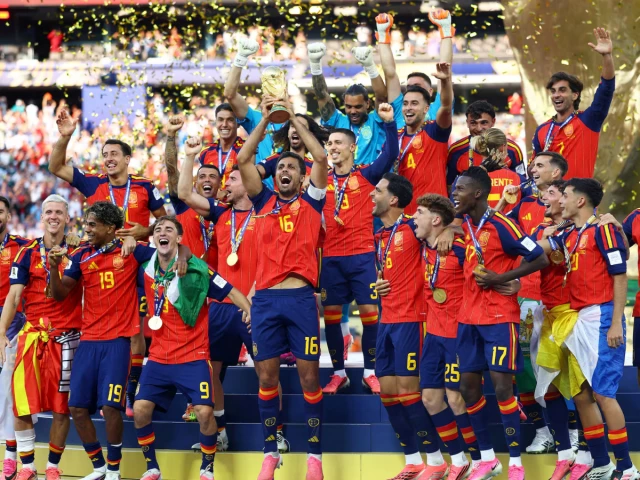
Spain lifted the FIFA World Cup trophy after defeating Argentina 1-0 in the 2026 final at MetLife Stadium, but while the celebrations belonged to the Spanish squad, the iconic gold trophy once again took center stage.
Despite lifting football's biggest prize, Spain will not keep the original FIFA World Cup trophy. Under FIFA rules, the original remains the property of FIFA and is returned to the FIFA World Football Museum in Zurich after the tournament. The winning nation instead receives a gold-plated replica to keep.
The current FIFA World Cup trophy has been used since 1974. It is made from 18-karat gold, stands 36.8 centimeters tall, weighs 6.175 kilograms and features two human figures lifting the Earth. Based on the value of its gold, the trophy is estimated to be worth hundreds of thousands of dollars, though its historical and symbolic significance places its estimated value at well over $20 million.
The trophy was designed by Italian sculptor Silvio Gazzaniga, whose concept was selected after FIFA launched a worldwide design competition following the 1970 World Cup. Brazil had earned permanent possession of the original Jules Rimet Trophy after becoming the first nation to win the tournament three times, prompting FIFA to commission a new design.
Working from his studio in Milan, Gazzaniga created the now-famous sculpture depicting two athletes triumphantly raising the globe. More than 50 designs were submitted to FIFA, but his model was ultimately chosen and has remained one of the most recognizable trophies in world sport.
After Gazzaniga's death in 2016, his son, Giorgio Gazzaniga, has continued preserving his father's legacy, including the original sketches, prototype and wax model used during the design process.
The current trophy replaced the Jules Rimet Trophy, first introduced in 1930. Named after former FIFA president Jules Rimet, the original depicted the Greek goddess Nike and was famously stolen twice. It was recovered after the first theft in England in 1966 by a dog named Pickles, but after being stolen again in Brazil in 1983, it was never recovered and is widely believed to have been melted down.
Spain's victory over Argentina marked the latest chapter in the trophy's rich history, as the nation became the newest team to lift one of the most prestigious and recognizable prizes in global sport.
















This material may not be published, broadcast, rewritten, redistributed or derived from. Unless otherwise stated, all content is copyrighted © 2026 The Express Tribune.






COMMENTS
Comments are moderated and generally will be posted if they are on-topic and not abusive.
For more information, please see our Comments FAQ