Terrorist killed in joint police, CTD operation in K-P's Bannu
Updated 4 hours ago

Rising temperatures, prolonged heatwaves, erratic rainfall, and shrinking grazing lands are affecting animal health, r
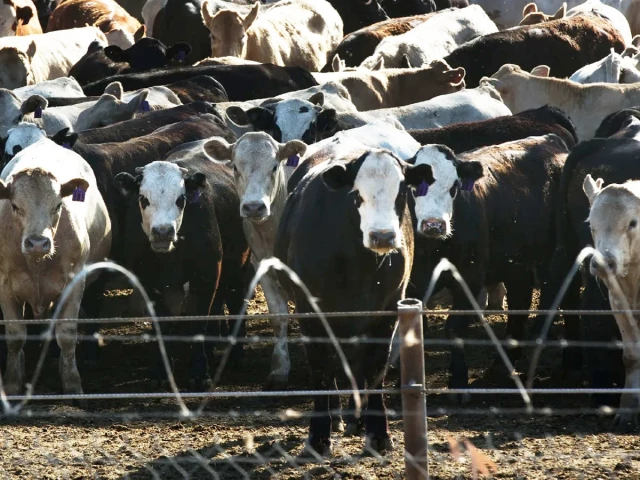
Climate change is rapidly emerging as one of the biggest threats to Pakistan's livestock sector. From the plains of Khyber-Pakhtunkhwa (K-P) to the high-altitude pastures of Upper Chitral, rising temperatures, erratic weather, and shrinking grazing lands are reducing livestock productivity, increasing diseases, threatening farmers' livelihoods, and putting rare species such as the yak at risk.
One of the clearest examples of climate change's impact can be seen in Broghil Valley in Upper Chitral, home to Pakistan's rare yak population. Officials from the Khyber-Pakhtunkhwa Livestock Department say the yak population has declined sharply over the past 15 years. Around 5,000 yaks once roamed the valley's pastures, but their number has fallen to just 1,923 because of shrinking grazing lands, declining grass availability, and changing seasonal weather patterns.
Speaking to The Express Tribune, Dr Safeer Khan, Project Director of the Yak Conservation Project, said climate change is severely affecting livestock, wildlife, and birds across Khyber-Pakhtunkhwa. "The provincial government has approved a Rs300 million Yak Conservation Project under which a Yak Conservation and Breeding Centre will be established in Broghil. The survey for the project has already been completed."
Dr Safeer added that yak milk contains more fat than cow or buffalo milk, while yak meat is richer in protein than that of many other livestock species. Adapted to altitudes above 6,000 feet, yaks are an important source of livelihood for mountain communities. A team of livestock experts will soon visit Chitral to implement conservation measures and study the effects of climate change on the species.
The Food and Agriculture Organization (FAO) says climate change affects livestock through rising temperatures, droughts, irregular rainfall, and floods, causing heat stress, disease outbreaks, shortages of water and fodder, and lower milk and meat production.
The Intergovernmental Panel on Climate Change (IPCC), in its Sixth Assessment Report (AR6), warns that if global temperatures rise by around 2 degrees Celsius, livestock production could decline significantly by 2050, resulting in billions of dollars in economic losses. Climate-related pressures could reduce global livestock populations by seven to 10 per cent.
According to the Pakistan Bureau of Statistics (PBS) Agricultural Census 2024, Pakistan has approximately 251.3 million livestock. Punjab has the largest livestock population, with more than 104 million animals, while Khyber-Pakhtunkhwa has around 48.7 million.
Livestock farmers in Charsadda, Dera Ismail Khan, Nowshera, and Peshawar say rising temperatures have significantly reduced milk production, forcing many to abandon livestock farming after suffering financial losses. Arshad Khan, who invested nearly Rs250 million in a dairy farm in Tarnab on the outskirts of Peshawar, said he was forced to close the business after just two years because of soaring fodder prices, heat-related diseases among buffaloes, and declining milk yields.
"Every year, temperatures continue to rise in Khyber-Pakhtunkhwa," Arshad Khan told The Express Tribune. "Climate change is affecting not only humans but also livestock. Lower milk production, expensive fodder, and the conversion of farmland into housing societies have made livestock farming increasingly unprofitable."
Senior Research Officer Dr Hameed Ullah Khan noted that global warming is affecting animals across both the plains and mountainous regions of Khyber-Pakhtunkhwa. "The Livestock Department has introduced the heat-tolerant Bhagnari cattle breed from Sibi, Balochistan, to Dera Ismail Khan, where it is being studied to improve milk production and develop climate-resilient livestock. Researchers are also developing improved vaccines to combat the growing incidence of seasonal livestock diseases."
Experts believe Pakistan must adopt climate-smart livestock management, including heat-resilient breeds, improved fodder production, expanded vaccination programmes, better water management, and scientific adaptation strategies. Without these measures, the country's livestock sector will become increasingly vulnerable to the accelerating impacts of climate change.













This material may not be published, broadcast, rewritten, redistributed or derived from. Unless otherwise stated, all content is copyrighted © 2026 The Express Tribune.







COMMENTS
Comments are moderated and generally will be posted if they are on-topic and not abusive.
For more information, please see our Comments FAQ