
For decades, Japan has been among Pakistan's most dependable partners, one that has invested in the country's infrastructure, financed development projects, supported economic reforms and largely stayed away from the bitter politics of South Asia. Tokyo cultivated a reputation as a friend to both Islamabad and New Delhi, preferring economic diplomacy over geopolitical confrontation.
It was therefore highly unusual when Pakistan recently lodged a formal diplomatic protest with Japan.
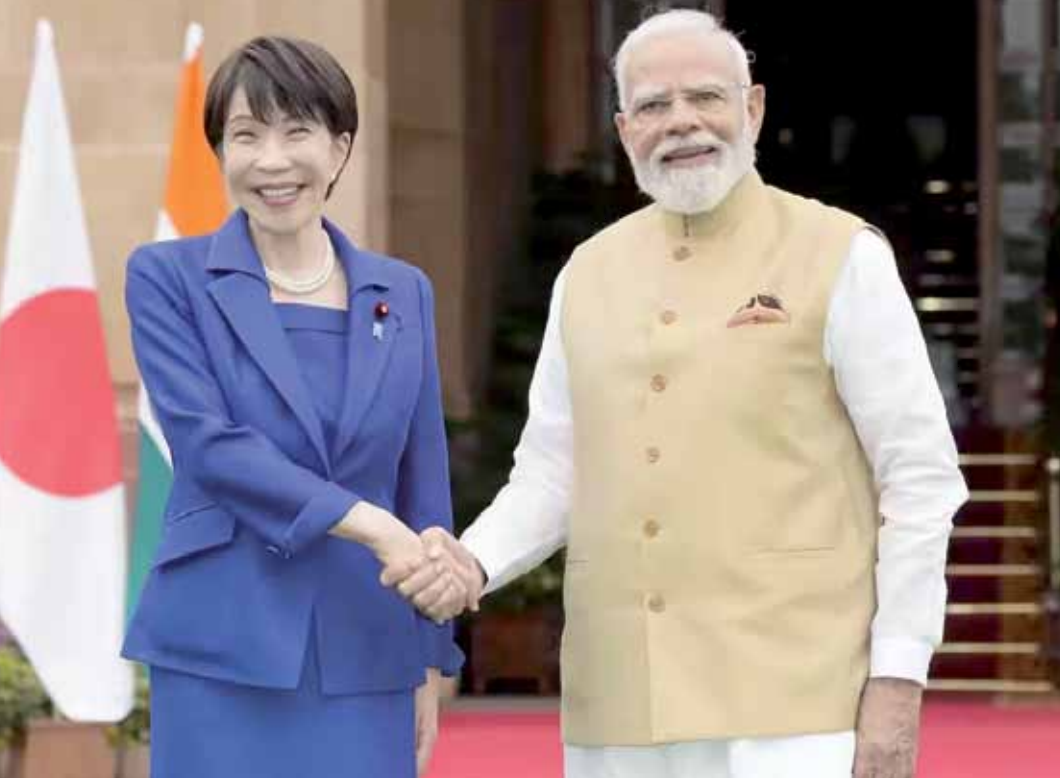
The protest never made headlines. Neither Islamabad nor Tokyo publicised it. Both governments appeared determined to prevent a disagreement from spilling into the public domain. Yet behind closed doors, Pakistani diplomats conveyed their concerns in unusually strong terms following Japanese Prime Minister Sanae Takaichi's visit to India and the language contained in the joint statement issued after her talks with Prime Minister Narendra Modi.
The quiet diplomatic exchange underlined an uncomfortable reality: while Pakistan and Japan continue to value their bilateral relationship, strategic shifts across Asia are beginning to place that relationship under strain.
Pakistan's protest came only weeks after Japan expressed its displeasure over Pakistan-China joint statement.
During Prime Minister Shehbaz Sharif's visit to Beijing in May, Pakistan and China issued a joint statement that included a paragraph stating: "Both sides agreed that it is essential to firmly uphold the victorious outcomes of World War II, and oppose any attempt to revive fascism and militarism. The two sides expressed support for the postwar international order underpinned by international legal documents such as the Cairo Declaration and the Potsdam Proclamation and other principles of international law for the maintenance of world peace and security and safeguard historical truth and international justice."
To most Pakistani readers, the paragraph appeared routine diplomatic language. But in Tokyo it was interpreted very differently.
Japanese officials believed the wording echoed China's longstanding criticism of Japan's evolving defence posture and implicitly questioned Tokyo's post-war strategic direction. Pakistan may not have intended to target Japan directly, but by associating itself with Beijing's narrative, it inevitably became entangled in one of Asia's most sensitive historical disputes.
The shadow of history
Understanding Tokyo's reaction requires revisiting one of the darkest chapters in Asian history.
During the Second World War, Imperial Japan occupied large parts of China, committing atrocities that remain deeply embedded in Chinese national memory. The 1937 Nanjing Massacre alone resulted in the deaths of hundreds of thousands of Chinese civilians according to Chinese accounts, while historians differ over the exact numbers. Throughout the occupation, Japanese forces were accused of widespread killings, forced labour and other war crimes.
For Beijing, the legacy of Japanese militarism is not simply history; it remains an integral part of contemporary diplomacy. Chinese leaders frequently invoke the lessons of World War II whenever Japan expands its military capabilities or debates constitutional reforms.
Following Japan's defeat in 1945, however, the country fundamentally transformed itself.
Its new constitution, particularly Article 9, renounced war as a sovereign right and prohibited the maintenance of offensive military forces. For nearly eight decades Japan embraced pacifism, focusing on economic development while relying largely on the United States for security.
That transformation enabled Japan to become one of the world's largest economies and one of Asia's leading development partners.
Today, however, Tokyo is once again reassessing its security posture.
China's rapid military modernisation, North Korea's expanding missile programme and an increasingly uncertain regional security environment have persuaded successive Japanese governments that the country can no longer rely solely on its post-war pacifist doctrine.
Japan has significantly increased defence spending, acquired long-range strike capabilities, strengthened military cooperation with the United States and expanded strategic partnerships with countries across the Indo-Pacific.
To Beijing, these changes resemble a gradual abandonment of Japan's post-war restraint. For Tokyo, they represent necessary adjustments to an increasingly dangerous neighbourhood. Pakistan unexpectedly found itself caught between these competing narratives.
Then came the India-Japan declaration
If the China-related paragraph unsettled Tokyo, the subsequent India-Japan joint statement alarmed Islamabad.
A single paragraph in the declaration received relatively little international attention amid numerous regional developments, yet within Pakistan's diplomatic circles it generated considerable concern.
For the first time in recent years, Japan explicitly associated Pakistan with cross-border terrorism in an official summit declaration with India.
The statement noted that the two leaders "unequivocally and strongly condemned terrorism and violent extremism in all its forms and manifestations, including cross-border terrorism from Pakistan."
The wording represented a significant departure from Japan's previous approach.
Following the April 2025 Pahalgam attack, Japan had condemned terrorism and expressed solidarity with India but deliberately refrained from naming Pakistan. Tokyo instead called for restraint, dialogue and regional stability while avoiding endorsement of India's accusations against Islamabad.
This time, however, Japan accepted language that New Delhi had long sought from its international partners. That prompted Islamabad's formal diplomatic protest.
Although both governments chose to keep the matter confidential, Pakistani officials conveyed that such wording did not reflect the traditionally balanced Japanese position on South Asian disputes and risked undermining bilateral goodwill.
Why Tokyo's language changed
The shift is less about Pakistan than about Japan's changing strategic priorities.
Prime Minister Sanae Takaichi belongs to the conservative wing of Japanese politics and has consistently advocated stronger defence capabilities, constitutional reform and closer strategic cooperation among countries concerned about China's growing influence.
Under Tokyo's broader Indo-Pacific strategy, India has emerged as one of Japan's most important strategic partners.
The two countries now cooperate across an expanding range of sectors—from defence technology and maritime security to semiconductors, resilient supply chains, digital infrastructure and clean energy.
Military exercises have become more frequent. Defence dialogues have intensified. Intelligence cooperation has grown.
The relationship increasingly resembles a comprehensive strategic partnership rather than a purely economic one.
Against that backdrop, accommodating some of India's diplomatic priorities may have appeared a relatively small concession for Tokyo.
India, meanwhile, has invested significant diplomatic capital in persuading foreign governments to publicly endorse its position on terrorism following the Pahalgam attack.
Many countries condemned terrorism but stopped short of explicitly naming Pakistan, partly because New Delhi publicly presented no conclusive evidence linking Islamabad to the attack.
Securing such language from Japan therefore represented an important diplomatic success for India.
Joint statements between heads of government are negotiated word by word. Every sentence reflects careful discussion between diplomats from both countries.
The inclusion of "cross-border terrorism from Pakistan" was therefore almost certainly deliberate rather than accidental.
Does this signal a policy shift?
Probably not—at least not entirely.
Japan continues to attach considerable importance to Pakistan.
Few countries have contributed as consistently to Pakistan's development over the past seven decades.
Diplomatic relations between the two countries were established in 1952.
Since then, Japan has emerged as one of Pakistan's largest development partners through concessional loans, grants and technical cooperation.
The Japan International Cooperation Agency (JICA) has financed major infrastructure projects across Pakistan, including roads, transport systems, energy projects, water supply schemes and disaster management programmes.
Japanese assistance has supported education, healthcare, vocational training and human resource development.
Thousands of Pakistani professionals have benefited from Japanese technical training programmes.
Japan also played a significant role in Pakistan's economic stabilisation following natural disasters, including the devastating 2005 earthquake and the 2010 floods.
Whenever Pakistan faced humanitarian crises, Tokyo was often among the earliest countries to provide emergency assistance.
Unlike many Western donors, Japan generally avoided attaching overt political conditions to its development assistance.
Its engagement was driven primarily by economic cooperation and regional stability.
An economic partnership built over decades
Perhaps nowhere is Japan's influence more visible than on Pakistan's roads.
Toyota, Honda and Suzuki have dominated Pakistan's automobile industry for decades.
Millions of Pakistanis drive Japanese vehicles or locally assembled Japanese models.
Japanese engineering standards have become synonymous with reliability and durability in Pakistan.
The automobile sector alone has generated thousands of jobs while creating an extensive network of suppliers, vendors and service industries.
Japanese companies have also invested in pharmaceuticals, chemicals, electrical equipment and manufacturing.
Consumer electronics produced by Japanese firms became household names long before many other international brands entered Pakistan.
Although Japanese investment has slowed in recent years due to Pakistan's economic difficulties and policy uncertainty, Tokyo continues to view Pakistan as an important emerging market with long-term potential.
Trade volumes remain modest compared to Japan's commerce with India, but the economic relationship retains considerable depth.
The China factor
Yet economics no longer defines Asian diplomacy.
Strategic competition increasingly shapes relationships across the region.
China's rise has fundamentally altered Asia's geopolitical landscape.
Pakistan enjoys an "all-weather strategic cooperative partnership" with Beijing, anchored by the China-Pakistan Economic Corridor (CPEC), defence cooperation and deep political trust.
Japan, meanwhile, increasingly views China's growing military and economic influence with concern.
Its partnerships with India, Australia and the United States have acquired greater strategic significance.
Consequently, Pakistan's close relationship with China inevitably affects how Tokyo views developments involving Islamabad.
The World War II reference in the Pakistan-China joint statement illustrated precisely this dilemma.
Pakistan was primarily reaffirming its strategic partnership with China.
Japan interpreted the same language through the lens of its own difficult historical relationship with Beijing.
Neither interpretation was entirely incorrect.
Walking a diplomatic tightrope
For Islamabad, the challenge is becoming increasingly complex.
Pakistan has no interest in alienating Japan.
Tokyo remains an important source of development financing, technology and investment.
Nor does Pakistan wish to dilute its strategic partnership with China, which remains central to its foreign and security policies.
Balancing both relationships will require careful diplomacy
The recent protest demonstrates that Islamabad is prepared to defend its interests when it believes longstanding partners have crossed diplomatic red lines.
At the same time, the decision to keep the disagreement private also reflects maturity.
Neither side wanted a temporary disagreement to overshadow decades of cooperation.
That restraint suggests both governments recognise the broader value of the relationship.
Looking ahead
The larger strategic picture, however, cannot be ignored.
Japan's foreign policy is increasingly shaped by China's rise, Indo-Pacific competition and closer alignment with countries such as India.
Pakistan's foreign policy, meanwhile, remains deeply intertwined with China.
As competition between Beijing and Tokyo intensifies, Islamabad will inevitably find itself navigating increasingly difficult diplomatic terrain.
The latest India-Japan joint statement may contain only a single sentence referring to Pakistan.
Yet diplomacy often turns on individual sentences.
Similarly, a seemingly routine paragraph in the Pakistan-China joint statement generated concern in Tokyo because historical memory and contemporary geopolitics remain deeply interconnected in East Asia.
Neither episode suggests that Pakistan-Japan relations are entering a period of confrontation.
The foundations of the bilateral partnership remain strong, built upon seven decades of development cooperation, mutual respect and economic engagement.
But they do indicate that Pakistan can no longer assume Japan will automatically remain insulated from broader strategic realignments sweeping across Asia.
For Islamabad, the lesson is straightforward.
As geopolitical competition deepens, maintaining productive relations simultaneously with China, Japan and other major Asian powers will require more sustained political engagement, more frequent strategic dialogue and greater diplomatic agility than ever before.
The recent exchange between Islamabad and Tokyo may have remained behind closed doors, but it offers an important glimpse into how rapidly Asia's strategic landscape is changing and how even longstanding friendships are increasingly being tested by the region's evolving balance of power.