
Remember Blue Bloods, the popular police procedural that was unceremoniously cancelled last year after 14 seasons? Fans were angry when they learned there would be no more family Reagan family is back, and the Silvers have returned with them.
While some spin-offs rely on nostalgia and others follow the tried-and-true formula, Boston Blue combines both in a way that feels fresh. Instead of New York, the city the Reagans and the Silvers are sworn to protect is Boston, where they encounter cunning criminals and recurring characters from the original series. What makes Boston Blue such a pleasant surprise is not only the continuation of the family dinner tradition but also how it has been woven into the spin-off.
As the first season draws to a close, the series has accomplished what many spin-offs struggle to achieve: it has justified its existence. Rather than merely capitalising on Blue Bloods' popularity, the show has built on its predecessor's foundation while developing its own identity. It honours the original series’ legacy without being trapped by it, offering viewers a familiar world alongside fresh stories and characters. It also demonstrates that spin-offs can succeed when they are created with a clear understanding of what made the original successful and what needs to evolve for a new audience.
What is Boston Blue all about?
Boston Blue centres on two Reagan family members -- Danny (Donnie Wahlberg) and Sean (Mike Amonsen) -- who settle in Boston, with the son first, followed by the father. Like Blue Bloods, Boston PD is run by Sarah Silver (Maggie Lawson), whose stepsister, Lena (Sonequa Martin-Green), is a Boston PD detective, and stepbrother, Jonah (Marcus Scribner), is a patrol officer. While Lena and Jonah partner with Danny and Sean, their mother, Mae (Gloria Reuben), is the city’s District Attorney. Her father, Reverend Edwin Peters (Ernie Hudson), is not only her kids’ grandfather but also the sanest voice in a room full of law enforcers. Together, they have taken an oath to rid the streets of Boston of grime and crime, in their own way. Sometimes they succeed; sometimes they need to try harder.
While the family hierarchy seems to be on the same lines as Blue Bloods, there are more skeletons in the closet here than in the original series. The way Boston Blue handles the religious and racial angles is impressive as well and teaches you a lot as a viewer. Family remains the most important factor in the series, since it was his son’s on-duty injury that brought Danny to Boston and kept him in the city where he permanently shifts after accepting an offer from the Boston PD.
As in Blue Bloods, the family strives to serve the city and make friends along the way, including Ryan Broussard’s Detective Brian Rodgers, who is not only a competent cop but also Lena’s boyfriend. Fans of the parent series are treated to regular visits from Grandpa Henry Reagan (Len Cariou), ADA Erin Reagan (Bridget Moynahan), and Detective Maria Baez (Marisa Ramirez), Danny’s former partner and current girlfriend. One hopes to see Tom Selleck’s Commissioner Reagan in the second season, which is currently in production.
Some fans might disagree with casting Mike Amonsen as Sean instead of Andrew Terraciano, who played the character in the original series for 14 years. However, since the character was central rather than supporting in Boston Blue, the producers made the right call.
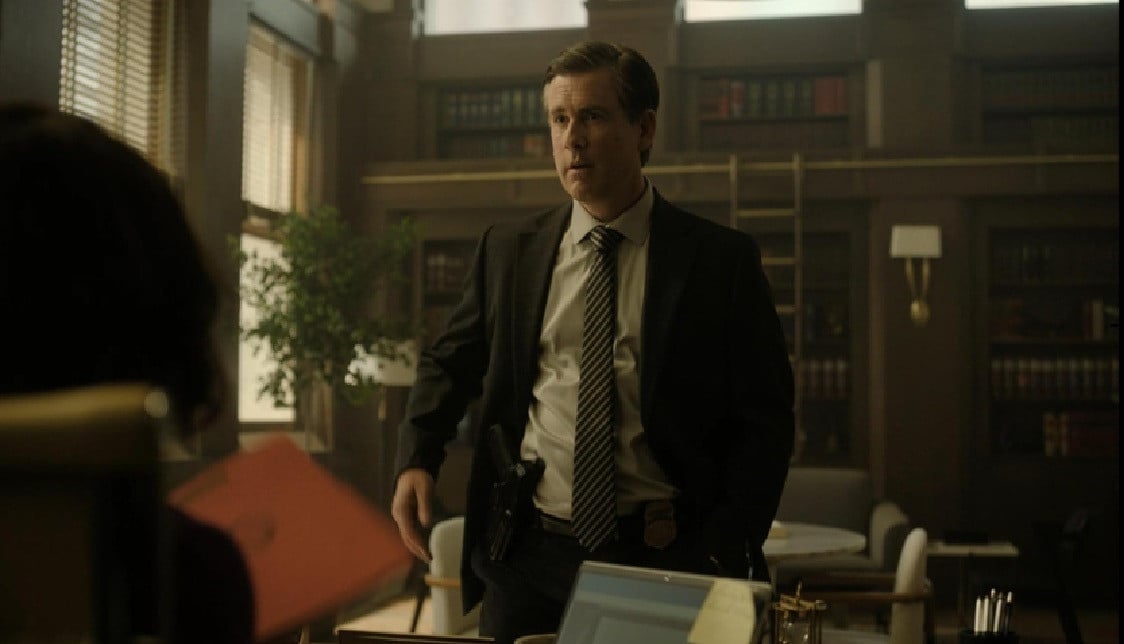
Familiar faces without forced nostalgia
One of the biggest challenges facing any spin-off is deciding how much of the original series to carry forward. Too many callbacks can make a show feel creatively bankrupt, while too few can alienate long-time fans. Boston Blue strikes a commendable balance and even lays down a blueprint for potential spin-offs to follow.
Throughout the season, characters from Boston and NYC are at ‘loggerheads’ regarding their cities, which is a healthy debate. Secondly, the way Danny was included in the series gives both Blue Bloods fans and potential filmmakers something to remember. He came to Boston to meet his injured son and ended up apprehending one of the suspects, without realizing that it wasn’t his jurisdiction.
The presence of Blue Bloods’ characters also helps maintain continuity between the two series and reminds viewers that this world extends beyond the immediate story. More importantly, the show never allows legacy characters to overshadow its new leads. Instead, they serve as bridges between the old and the new, enriching the viewing experience without diverting attention from the central narrative.
The result is a series that rewards loyal fans without making newcomers feel as if they have arrived late to the party. That balance is not easy to achieve, yet Boston Blue manages it with remarkable confidence. It starts as a spin-off but carves out a place for itself as a network TV hit, which is quite hard in today's world of OTT shows.
Reinventing an iconic tradition
Few television traditions were as closely associated with Blue Bloods as the Reagan family dinner scenes. Week after week, viewers watched the family gather around the table to discuss everything from police work and politics to morality and personal struggles. These scenes often served as the show’s emotional core, reminding audiences that family was at its heart.
Attempting to recreate such a beloved feature could easily have felt like imitation. Fortunately, Boston Blue understands that the significance of those scenes was never about the table itself but about the conversations around it. It cleverly incorporates similar gatherings, but instead of using them merely as nostalgic callbacks, it uses them as effective storytelling devices. These moments reveal character motivations, strengthen relationships, and provide emotional context for events unfolding elsewhere in the episode.
What makes these scenes work is that they feel earned. They are not included because audiences expect them; they are included because the story benefits. In doing so, Boston Blue preserves one of its parent TV show’s most cherished elements while adapting it to its own identity. It is a subtle but important distinction that illustrates the show's understanding of how to honour a franchise without simply copying it.
Casting that serves characters
A spin-off can have excellent writing and strong production values, but if audiences fail to connect with the characters, none of it matters. Casting, therefore, is one of the most critical factors in determining whether a new series succeeds.
Fortunately, Boston Blue appears to have approached casting with care. Not only have they included the main protagonist, Danny Reagan (Donnie Wahlberg), from the parent series, but they have also brought back Psych alum Maggie Lawson in a mature role. She played the protagonist Sean Spencer’s girlfriend, Juliet O’Hara, in the former series and now plays the Superintendent of Detectives in Blue Bloods with the same flair.
Casting Ernie Hudson is also a smart choice, given that he is one of the most recognisable and trusted actors in the business. Since the cancellation of Quantum Leap, his fans have been worried about the Ghostbusters’ next appearance, and there he is, as the grandfather of the Silver clan. Former ER actress Gloria Reuben and Sonequa Martin-Green play her daughter and granddaughter, who are perfectly cast, since they look like an accomplished mother-daughter duo.
Even though Detective Brian Rodgers’ fate hangs in the balance as the first season ends on a cliffhanger, the season keeps the audience engaged with its engrossing storylines and perfect portrayals. The actors’ chemistry further strengthens the show. Whether the scenes involve professional partnerships, family relationships, or personal conflicts, the interactions feel natural rather than manufactured.
As a result, viewers become invested not because these characters belong to the Blue Bloods universe, but because they are compelling in their own right. That is ultimately what every spin-off needs: characters capable of standing on their own feet. Boston Blue has found them.
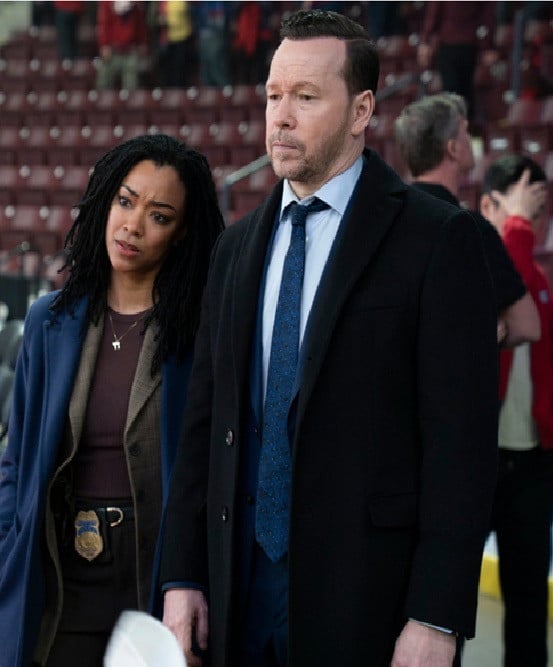
Better with every episode
Perhaps the most impressive aspect of Boston Blue is the way it grows over its first season. The first episode interests you even if you aren’t a fan of the parent series, and it builds on that interest as the season progresses. Like every family, the Silvers have their issues, which they resolve by discussing them in private, just as they should.
The writers must be commended for crafting stories that have the soul of the parent series but the heart of a new one, which is why they succeed. As the series progresses, individual episodes begin to connect more effectively, creating a sense of momentum that keeps viewers invested.
By the latter half of the season, Boston Blue feels considerably more confident. It no longer seems concerned with proving its place within the Blue Bloods universe; instead, it focuses on telling compelling stories within it.
This evolution is crucial because it demonstrates that the series has ambitions beyond simply extending a popular franchise. It wants to be judged on its own merits, and by the season's conclusion, it largely succeeds.
Blueprint for future spin-offs
The success of Boston Blue offers an important lesson for television producers looking to expand established franchises. Audiences do not necessarily want a carbon copy of the original series, nor do they want something that ignores its roots. What they want is a show that respects the past while embracing the opportunity to tell new stories.
That is precisely what Boston Blue achieves by staying true to the original series while carving out a distinct niche. By incorporating familiar characters without relying on them, reimagining one of Blue Bloods' most iconic traditions, casting actors who embody their roles, and delivering a season that grows more engaging with each episode, the show has established itself as more than a spin-off.
In an era when franchise expansion often feels driven by corporate strategy rather than creative inspiration, Boston Blue stands as evidence that spin-offs can still be worthwhile. More than that, it proves that when handled thoughtfully, they can enrich a television universe rather than merely extend it.
The writer is a freelance contributor who writes about film, television, and popular culture
All facts and information are the sole responsibility of the writer