
The slogans echoed through the deserted corridors where generations of Sukkur's children had once sung the national anthem. Teachers who had spent decades in the classrooms stood outside locked gates demanding six months of unpaid salaries, while parents wondered where their children would study next. By the afternoon, one of Sindh's oldest Christian schools had effectively ceased to exist.
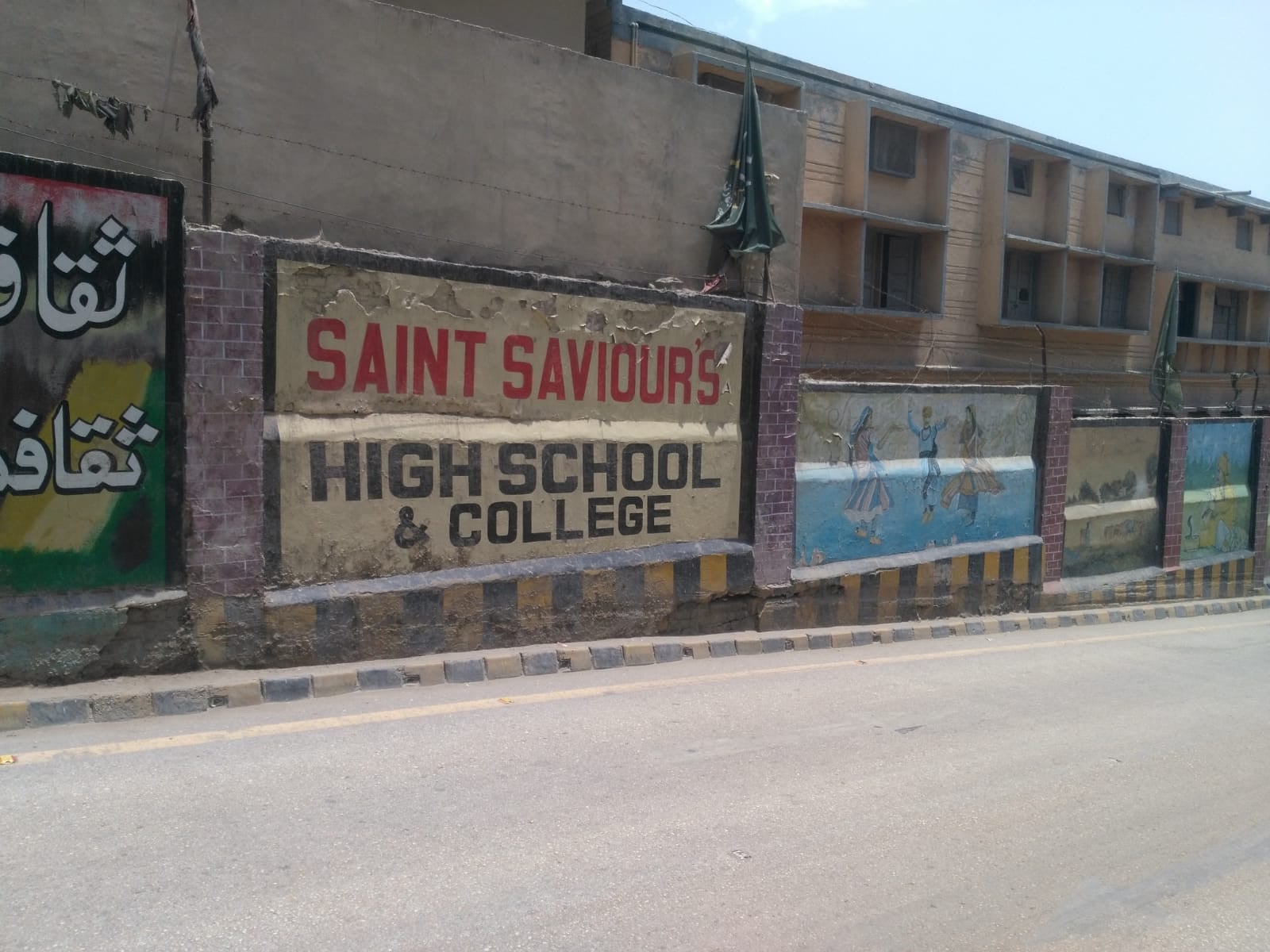
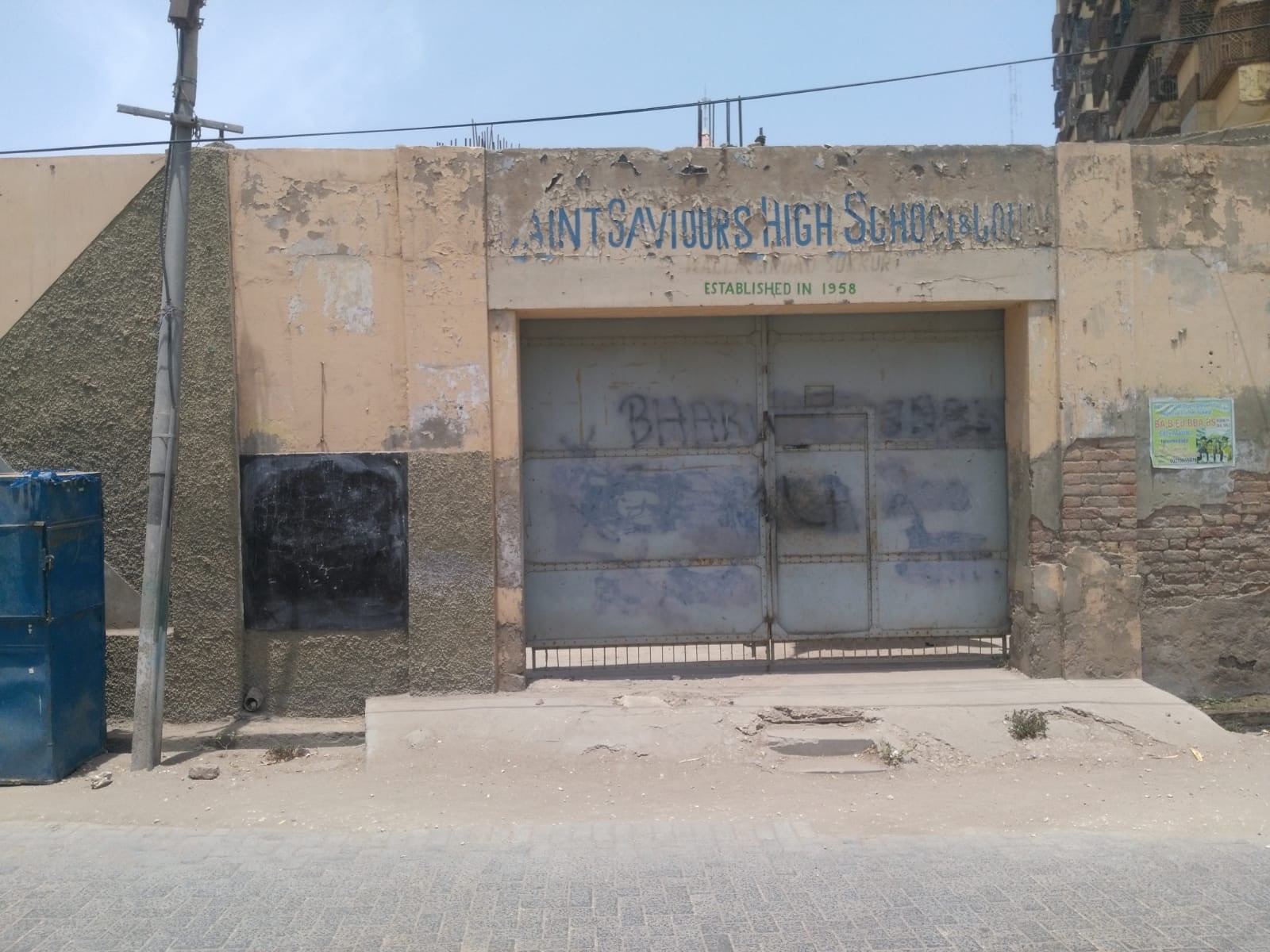
Saint Saviour’s High School & College, founded in 1958 and once among Sukkur's most respected educational institutions, had shut its doors.
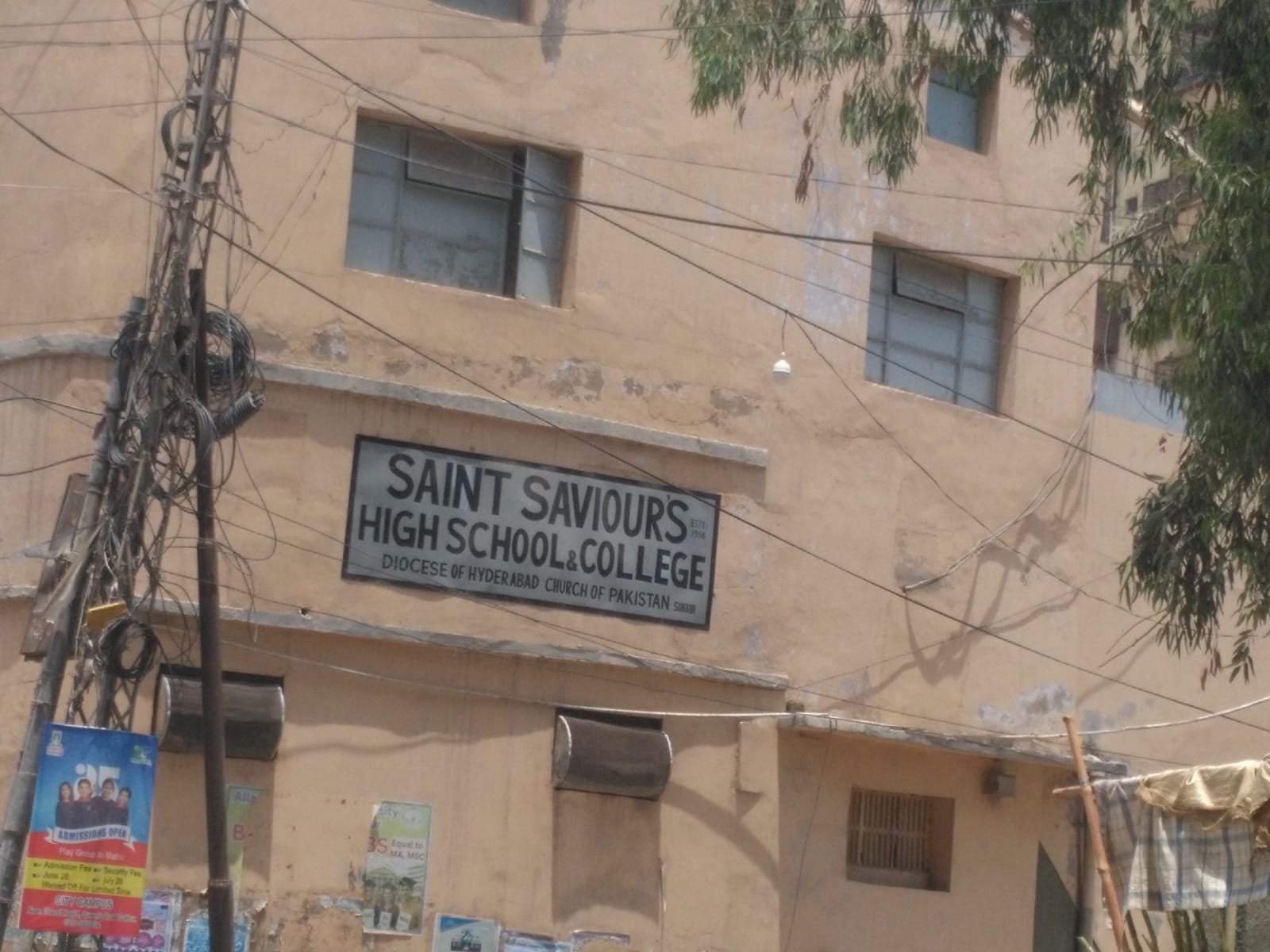
In March this year, the future of hundreds of students was thrown into uncertainty following the sudden closure of Saint Saviour’s High School & College, Sukkur. Once regarded as one of the pioneers of quality education in the city, alongside Modern High School and Saint Mary’s High School the institution inspired generations of alumni to proudly declare, “We are Saint Saviour’s students.”
St Saviour’s alumni included former Chief Justice of Pakistan Iftikhar Mohammad Chaudhry, Ghous Bux Khan Mahar, Sindh Local Government Minister Syed Nasir Hussain Shah and many other prominent figures, along with generations of Sukkur's residents.
Without fulfilling the legal requirements, the sudden closure of the renowned Saint Saviour’s High School & College, Sukkur, sent shockwaves through the school community. Teachers, support staff, parents and students were left stunned by the decision, which quickly gave way to anger and resentment. On the day of closure, demonstrators gathered to denounce the management, much of their outrage directed at Pastor Waris Emmanuel, the school administrator.
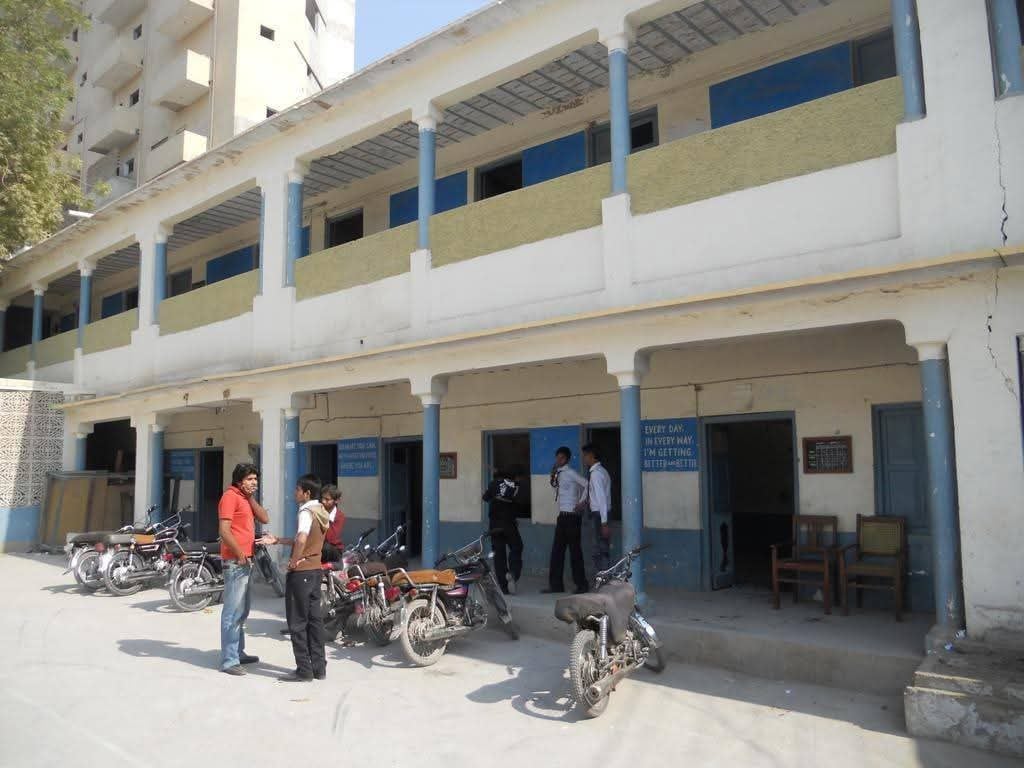
At the forefront of the protest were senior teachers Naveed Patrus and Sobia, flanked by fellow teachers and support staff, all struggling to come to terms with the abrupt closure of the institution they had served for years. They struggled to register the closure of a school with a legacy as rich as Saint Saviour's.
“The sudden closure has come as a huge setback for the entire school -- the support staff, students and their parents,” said Naveed Patrus, who has diligently served the school since 2010 “We demand the school to be reopened even if we have to take online classes initially.”
As the protest continued, the conversation shifted from the school's legacy to the hardships of those who had kept it running. The teachers said they had not been paid their salaries for the past six months, while the administration had refused to provide details of their General Provident Fund, a legitimate entitlement of every employee. A female teacher, who requested anonymity, said that in an era of soaring inflation she had been working for a salary of just Rs7,000 a month. “Even that modest amount has not been paid for the past six months,” she said. “We are all in financial crises. Mr Asif, the former principal of the school resigned due to the Pastor Emmanuel’s negative attitude, who still insists that the school is in the process of closure but in reality, it is already closed.”
According to CPBT, more than a dozen Christian schools, hostels and community institutions across Sindh—including Saint Stephen's, Saint Barnabas, Saint Peter's and Saint Mary's schools—have either been closed, leased or outsourced over the past several years.
Reverend Munawar Masih, National Coordinator of the Church Property Bachao Tehreek (CPBT), alleged that the Diocese had followed a pattern of closing or leasing Christian educational institutions across Sindh. According to CPBT, more than a dozen Christian schools, hostels and community institutions across Sindh—including Saint Stephen's, Saint Barnabas, Saint Peter's and Saint Mary's schools—have either been closed, leased or outsourced over the past several years.
He claimed that Saint Saviour's was the latest casualty and accused diocesan officials of outsourcing church properties in exchange for financial gain—an allegation strongly denied by the Diocese. "Now they want to outsource Saint Saviour’s High School & College, Sukkur, after allegedly accepting a hefty bribe," said Reverend Masih. "To prevent the school from being outsourced, we have written to and held meetings with the Commissioner of Sukkur and other government officials, who have assured us they will do everything within their power to stop it."
Reverend Masih further alleged that the Hyderabad Diocese had a turnover of more than Rs577 million up to 2026, yet its audited accounts submitted to the concerned registrar reflected only Rs2.7 million. He claimed that diocesan records pointed to financial corruption and the illegal sale of church properties without the mandatory no-objection certificates from the relevant authorities.
"Unfortunately, the misappropriation of charitable funds by Bishop Kaleem and the management of the Hyderabad Diocese has led to the closure of numerous public institutions and community facilities across the province," he said, citing the Sir Henry Holland Mission Hospital in Shikarpur as one such example, alleging that it had also been misappropriated by the same diocesan management. According to Reverend Masih, the Sindh High Court later intervened by issuing directives and taking measures to facilitate the hospital's restoration.
In a letter to the Chief Secretary of Sindh, the Commissioner of Sukkur Division urged the provincial government to intervene to prevent the closure of Saint Saviour’s High School & College, considering the public importance and the sensitivity of the matter. He further recommended that, subject to legal and administrative feasibility, the institution be placed under the management of the Sindh Education Foundation or another suitable public-sector body to ensure its revival, continuity and proper administration in the larger public interest.
Acting on the commissioner's request, the Chief Secretary directed the Secretary, Education and Literacy Department, to take the necessary measures in this regard.
The Diocese, however, strongly rejected the allegations, insisting that the school was neither being shut down nor outsourced.
Responding to questions about the closure of the school, Pastor Emmanuel categorically denied that the institution was being shut down. "We are not going to close the school," he said. "We are carrying out major repair and maintenance work, and the school will reopen either in August 2026 or August 2027."
When asked why the school administration had issued a notice in February 2026 stating that the institution would close indefinitely from March 31, Pastor Emmanuel insisted the notice referred only to repair and maintenance work and did not signify the school's permanent closure.
Responding to allegations that the Diocese of Hyderabad had shut down several Christian institutions across Sindh, he argued that no institution could continue operating at a financial loss. He said Saint Saviour's School & College was no exception, claiming that enrolment had fallen from around 2,200 students to just 180.
Pastor Emmanuel attributed the sharp decline in enrolment to what he described as the mismanagement of the former principal, Asif Masih, who, he said, had already resigned. However, when asked what he had done as the school's administrator to prevent the institution from reaching this stage, he said that although he had come to Sukkur in 2014, maintaining enrolment was not his responsibility, but that of the principal and the teaching staff.
Criticising the role of the CPBT, Pastor Emmanuel said it had nothing to do with Saint Saviour's School & College or any other property under the Diocese of Hyderabad. According to him, the Bishop of Hyderabad is the custodian of these properties and makes all decisions in consultation with the Diocesan Education Board.
A question of legacy
When asked about the Diocesan Education Board's December 2025 decision to shut down Saint Saviour's High School & College, Sukkur, by the end of March 2026, Pastor Waris Emmanuel responded with a question: "Who will run an institution at a loss?"
Whether this meant the school had been closed permanently, he replied, "No. We will run it again in partnership with another entity."
To the suggestion that his remarks appeared to support the CPBT's allegation that the school had been outsourced after a commission was allegedly accepted, Pastor Emmanuel responded by dismissing the claim outright. He described the organisation's members as "a bunch of blackmailers" and accused them of misleading government officials and the Sindh government.
A different perspective
Not everyone within the Christian community, however, agrees that financial constraints should determine the fate of a historic educational institution.
Father Mario Rodrigues, Principal of St Patrick's High School, Karachi, said education should be viewed as a service rather than a commercial enterprise. While acknowledging that church-run schools often faced financial and administrative challenges, he argued that such difficulties should not become a reason to shut down or outsource an institution.
"Imparting education is not a business through which people make money. It is a service to humanity, especially for those who cannot afford expensive education," said Father Mario.
Father Rodrigues said his own institution had faced numerous challenges over the years, but successive administrations had chosen to address them rather than abandon the school.
"My predecessors and I have often confronted challenges while running these schools, but instead of giving up, we face them and sort them out," he said. "As Catholics, we would never think of shutting down or outsourcing an institution. We continue to sustain it through good times and bad."
For now, the future of Saint Saviour's High School & College remains uncertain. While the Diocese insists the closure is temporary and the institution will reopen under a new management arrangement, teachers, former students and church activists remain unconvinced, fearing that another historic missionary school may have been lost.
Whatever the outcome, the controversy has raised broader questions about the future of Christian educational institutions in Sindh, the stewardship of church-owned public assets, and the delicate balance between financial sustainability and a legacy built over generations.
For the people of Sukkur, Saint Saviour's was more than a school. For nearly seven decades, it educated thousands of children irrespective of faith and became part of the city's social and educational fabric. Whether its gates reopen or remain closed, the debate surrounding its future has already become about far more than one institution. It is about preserving a legacy of service, trust and educational excellence that many believe cannot simply be measured on a balance sheet.
Sarfaraz Memon is a freelance journalist and contributor based in Sukkur
All facts and information are the responsibility of the writer