Two moderately strong earthquakes rock Costa Rica
Updated 25 minutes ago

Trump confirms high-level meeting in Qatari capital White House says Witkoff and Kushner to join talks Tehran denie
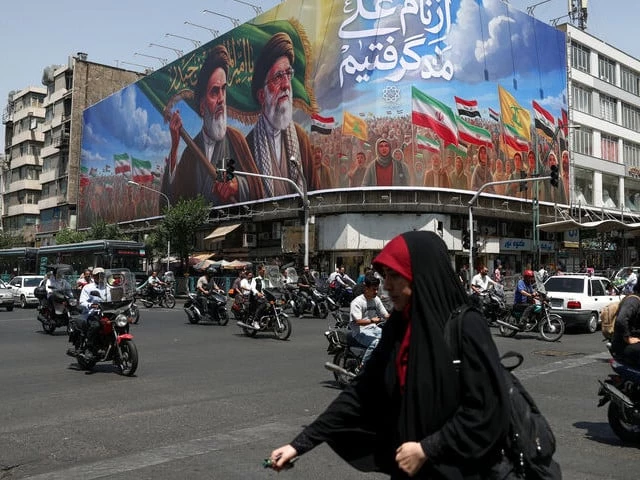
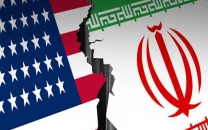
The United States and Iran are set to hold high-level talks in Doha on Tuesday (today) in an effort to preserve a fragile ceasefire after days of renewed military exchanges threatened to derail an interim peace agreement reached earlier this month, even as the two sides offered conflicting accounts over the scope of the discussions.
US President Donald Trump confirmed that a meeting would take place in the Qatari capital, telling reporters in the Oval Office that it would be "perhaps important, perhaps not". Earlier, he had said on social media that Iran had requested the meeting, while the White House announced that Special Envoy Steve Witkoff and Jared Kushner would lead the US delegation.
White House Press Secretary Karoline Leavitt said the high-level discussions would be held alongside technical talks on implementing the June 17 memorandum of understanding that halted four months of conflict.
"Special Envoy Witkoff and Jared Kushner will be flying to Doha for high-level meetings this week... On the sidelines of those high-level talks, will be the technical talks," she said, adding, "As far as we're concerned, we're holding up our end of the ceasefire. Violence will be met with violence."
Tehran, however, denied that technical working group meetings had been scheduled for this week. Deputy Foreign Minister Kazem Gharibabadi said consultations with Qatar on implementing the agreement were continuing, while a senior Iranian source maintained that a meeting was expected on Tuesday with the focus shifting from previous technical discussions to managing the Strait of Hormuz and reducing tensions.
Sources familiar with the negotiations said that mediators had established communication channels to prevent further escalation and deal quickly with any incidents that could undermine the interim accord.
Signed on June 17, the 14-point memorandum of understanding ended four months of conflict, restored navigation through the Strait of Hormuz and opened a 60-day window for negotiations on more contentious issues, including Iran's nuclear programme and the phased implementation of the agreement.
Iranian President Masoud Pezeshkian described the accord as "a great victory for the Iranian people" and announced that $6 billion of Iran's $12 billion in frozen assets held in Qatar would be released under the agreement. A senior Iranian source said Doha and Tehran were finalising technical arrangements for the transfer of the funds in two instalments.
The planned talks follow several days of tit-for-tat attacks after an Iranian projectile struck a cargo vessel in the Strait of Hormuz last Thursday, prompting both Washington and Tehran to accuse each other of violating the ceasefire.
Iran later launched missiles and drones at US military sites in Kuwait and Bahrain, while its Islamic Revolutionary Guard Corps accused the United States of breaching the truce and warned that American bases in the region would "experience hell in the coming days".
French President Emmanuel Macron said France was working with Oman to help de-escalate regional tensions and would cooperate with partners to clear mines from the Strait of Hormuz to ensure the safe passage of commercial shipping.
The uncertainty surrounding the US-Iran ceasefire has also cast a shadow over a separate US-brokered agreement between Lebanon and Israel. Lebanese Parliament Speaker Nabih Berri rejected the proposed arrangement, warning that it could divide Lebanon and declaring that it would not be implemented.
Tehran has insisted that ending the conflict in Lebanon and securing the withdrawal of Israeli troops from southern Lebanon remain integral to any broader settlement with the United States.








This material may not be published, broadcast, rewritten, redistributed or derived from. Unless otherwise stated, all content is copyrighted © 2026 The Express Tribune.





COMMENTS
Comments are moderated and generally will be posted if they are on-topic and not abusive.
For more information, please see our Comments FAQ