Iraq wins Iran nod for tanker passage in Hormuz
Updated 17 hours ago

Textiles stagnate while IT surges, but deeper constraints remain unaddressed
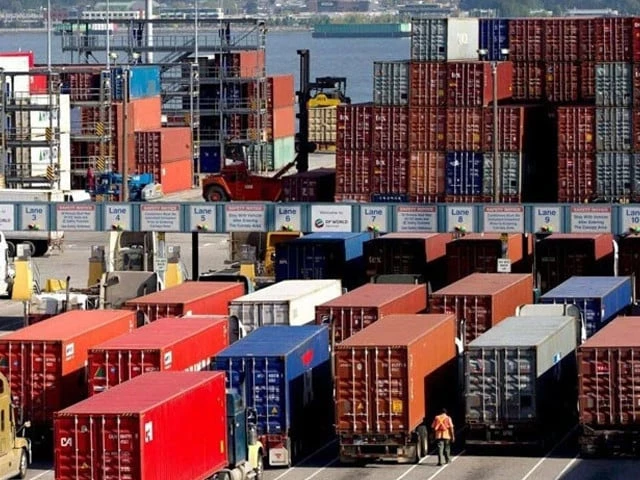
The current fiscal year has been marked by significant strain on the external account, driven in large part by the US-Iran conflict and its spillovers into capital flows and sovereign spreads. With peace now expected to return to the region, policymakers' attention should turn to the domestic constraints that continue to hold exports back. On a cumulative basis, the current account posted a modest surplus of $72 million in the first nine months of FY26, before slipping into a single-month deficit of $276 million in April and then rebounding to a surplus of $459 million in May 2026. This left a cumulative surplus of $255 million over the first 11 months (July-May), but much lower in comparison to the roughly $1.6 billion surplus recorded in the same period a year earlier. For context, the previous fiscal year closed with a current account surplus of $1.8 billion.
The strength earlier in the year was concentrated in the surplus run of consecutive months, with March alone exceeding $1.1 billion, propelled largely by Eid-related remittance inflows. That remittance momentum has persisted as workers' remittances reached a record $4.3 billion in May 2026, taking the July-May total to $38.1 billion, up 9.2% over the $34.9 billion received in the same period of FY25.
The goods trade balance, however, tells a less favourable story. The merchandise trade deficit widened to roughly $35 billion through May FY26, which was about 17.5% higher than the corresponding FY25 figure, as exports fell around 6% to $28 billion. Rising imports alongside stagnant, declining exports have together driven this widening. The services trade deficit, though far smaller in magnitude, moved in the opposite direction, narrowing by about 17% to $2 billion over the first 10 months. The services export was led by a surge of more than 20% in IT and digital services exports. Indeed, technology exports reached a record $4.2 billion in the first 11 months of FY26, a 20% year-on-year increase, with full-year exports expected to exceed $4.5 billion. The IT sector is fast emerging as an export powerhouse, generating critical foreign exchange at a moment when other sectors remain hampered by weak competitiveness and persistent export stagnation.
The textile sector in Pakistan is a case study for a country that lacks export diversification but at the same time faces significant challenges in terms of losing its global competitiveness. The textile sector, the most important export-oriented sector in Pakistan as it contributes to more than 60% of its exports, surpassed $15 billion in the first 10 months of FY26 but has reported a relatively flat trajectory. Further, the growth, what little there was, came from value-added apparels while the basic and intermediate textile exports witnessed a decline in their numbers. In essence, the textile sector with its heavy effective rates of protection and more than generous subsidy programmes in terms of export financing and historic zero-rating tariffs has failed to increase its competitiveness as real constraints such as productivity challenges and rising costs put a chokehold on its export growth. Unfortunately, the government incentives handed out to such industries have often masked the challenges rather than fix them. Hence, the industry continues to face mounting challenges even though the government continues to push towards stabilising the external accounts.
With the overall trade deficit widening, the increase in remittances has provided a major cushion to policymakers as they struggle to increase the much-needed foreign exchange reserves. Remittances rose to an all-time high in May 2026, with $4.25 billion flowing into the country. With $38 billion already reported, remittances are likely to surpass $41 billion in this fiscal year, providing crucial support to the government as increasing instability in the Middle Eastern region increases pressure on the current account. The foreign exchange reserves are expected to hover around $18 billion by the end of the fiscal year. The US-Iran conflict may have provided a boost to remittance earnings from the diaspora in the Gulf region. However, it is expected that the growth in remittances may simmer in FY27. The increase in reserves has also been manufactured by borrowings and purchases of dollars from the market. With the current account deficit expected to widen, the accumulation of dollars becomes ever more dependent on inflows from more productive activities, such as exports and foreign direct investment (FDI). Unfortunately, the stagnancy in the two sources creates more challenges than it resolves.
The government has provided targeted relief to the textile sector in an attempt to overcome this weakness. It has abolished the advance tax, while increasing the minimum tax from 1% to 1.25%, collapsing the aggregate tax from 2%. However, the government has kept the normal tax regime rather than restoring the advance tax regime, a long-standing demand of the textile exporters, as exporters are liable for full corporate tax on declared profits. It has also abolished the super tax on exporters and the Export Development Surcharge, easing cash flow for exporters while lowering the effective tax rate. The IT sector's final tax regime at 0.25% concessionary rate was set to expire at the end of the current fiscal year, which has been extended for three more years. The withholding tax on foreign credit card and digital transactions has been reduced from 5% to 0.5%, significantly reducing the burden of payments on freelancers and IT entrepreneurs. It is clear from these incentives that the government wants to increase the export revenue generated by the two key export sectors, textile and IT. However, unless and until the deeper constraints that erode the competitiveness of domestic businesses are tackled, the fiscal sweeteners will be unable to reduce the high cost of doing business in Pakistan.
In essence, diversification of exports is key for industrial growth in Pakistan. Otherwise, the strategy will remain confined to targeted incentives to particular sectors, while ignoring the fiscal challenges that other sectors face as they continue to incur higher costs of doing business in Pakistan.
THE WRITER IS AN ASSISTANT PROFESSOR OF ECONOMICS AND RESEARCH FELLOW AT CBER, IBA











This material may not be published, broadcast, rewritten, redistributed or derived from. Unless otherwise stated, all content is copyrighted © 2026 The Express Tribune.






1727268465-0/Untitled-design-(42)1727268465-0-208x130.webp "a tale of two ledgers")



COMMENTS (1)
Comments are moderated and generally will be posted if they are on-topic and not abusive.
For more information, please see our Comments FAQ