Govt raises petrol price by 39 paisas, HSD by Rs2.40 per litre for Aug 25
Updated 36 minutes ago

US-Iran technical talks stalled
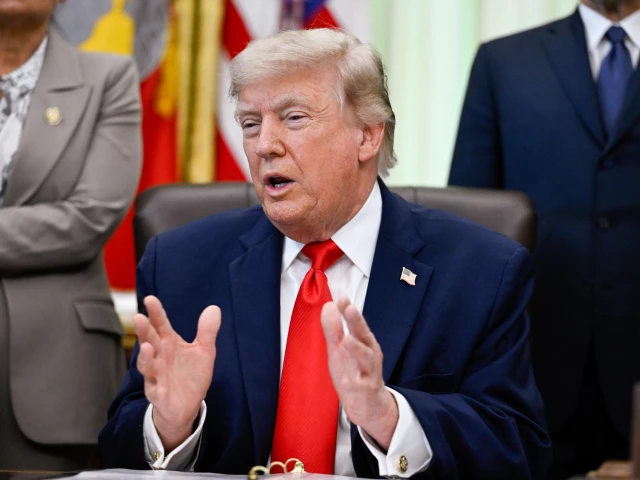
The formal signing ceremony for the United States-Iran agreement at Switzerland's Bürgenstock Resort was cancelled on Friday, while planned technical-level talks between the two countries were postponed after Iran linked further negotiations to a ceasefire in Lebanon.
The ceremony lost its significance after US President Donald Trump, Iranian President Masoud Pezeshkian and Prime Minister Shehbaz Sharif electronically signed the Islamabad Memorandum of Understanding (MoU) aimed at ending the war in the Middle East.
Following the electronic signing, technical-level negotiations between the United States and Iran were scheduled to begin at the Bürgenstock Resort. US Vice President JD Vance had prepared to attend the talks, while advance teams from the United States and Iran, along with officials from Pakistan's Foreign Ministry and Prime Minister's Office, had already arrived in Zurich.
However, Iran maintained that further progress depended on the implementation of the 14-point Islamabad MoU and insisted that negotiations could not proceed until a ceasefire was established in Lebanon.
According to Iranian officials, the first point of the memorandum requires an immediate and permanent cessation of military operations on all fronts, including Lebanon. Tehran argued that technical negotiations could not move forward until that commitment was fulfilled.
The delay came as fighting intensified in Lebanon, creating uncertainty around negotiations considered vital to consolidating the broader US-Iran understanding reached earlier this week.
A statement issued by the Swiss Foreign Ministry confirmed that the talks had been postponed, adding that Switzerland remained ready to facilitate negotiations and that preparatory work would continue. Vice President Vance subsequently postponed his visit to Switzerland after criticising the Israeli government's actions in Lebanon.
Later on Friday, Israel and Hezbollah agreed to a ceasefire following mediation efforts involving the United States, Qatar and Iran, according to officials familiar with the negotiations. A senior US official said the ceasefire came into effect at 4pm Lebanon time after an exchange of fire.
Two Hezbollah sources and a senior Israeli official also confirmed the agreement to Reuters. President Trump later told NBC News that he had spoken with Israel and urged it to accept the ceasefire. "You just gotta calm down sometimes and use your head," he said.
Lebanese security sources said Israeli airstrikes continued during the first hour of the ceasefire, but no further strikes were recorded afterwards. Lebanon's health ministry said 18 people were killed and 33 wounded in airstrikes across southern towns on Friday, while the Israeli military reported that four soldiers were killed in Lebanon.
The memorandum of understanding signed this week leaves discussion of Iran's nuclear programme and other difficult issues for future negotiations, giving both sides 60 days to reach a permanent agreement or extend the interim arrangement.
Iranian Foreign Minister Abbas Araqchi, during a telephone conversation with Pakistan's foreign minister, said the United States would bear responsibility for ensuring compliance with commitments contained in the agreement, including provisions relating to Lebanon.
Observers said Pakistan's diplomatic initiative had succeeded in bringing the two long-time adversaries to an MoU after 47 years, creating an opportunity for both sides to convert the interim framework into a long-term settlement over the next 60 days.
They also credited Prime Minister Shehbaz Sharif, Field Marshal Asim Munir, Deputy Prime Minister Ishaq Dar and Interior Minister Mohsin Naqvi for their roles in the peace effort and in securing the agreement.
Pakistani officials who had travelled to Switzerland have meanwhile begun preparations to return home following the postponement. However, with a ceasefire now in place in Lebanon, expectations have risen that technical-level negotiations will resume in the near future.












This material may not be published, broadcast, rewritten, redistributed or derived from. Unless otherwise stated, all content is copyrighted © 2026 The Express Tribune.




COMMENTS
Comments are moderated and generally will be posted if they are on-topic and not abusive.
For more information, please see our Comments FAQ