Keti Bunder: Zardari urges integrated plan
Updated 6 hours ago

Bets on services tax to drive Rs690b provincial revenue in fiscal 2026-27
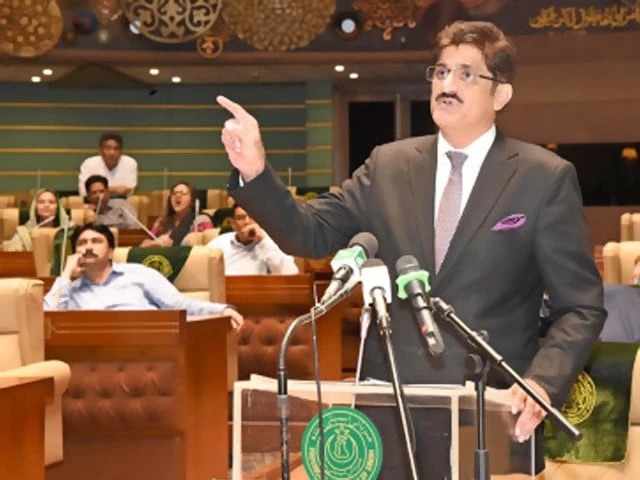
The Sindh government has set an ambitious target of collecting Rs450 billion from the Sindh Sales Tax on Services in fiscal year 2026-27, representing a significant escalation in its efforts to bolster provincial own-revenue and ease reliance on federal transfers.
According to the CM's budget speech, this marks a sharp increase from the Rs388 billion budgeted for 2025-26 and the Rs360 billion revised estimate for the same year. Actual collections in 2024-25 stood at Rs284.22 billion, highlighting the scale of the challenge and the government's confidence in the Sindh Revenue Board's capacity to expand the tax base through better compliance and digital tools.
The sales tax on services target forms the backbone of Sindh's provincial tax revenue projection of Rs690.06 billion for FY27, up from Rs676.06 billion in the previous year's budget estimate and the revised Rs623.73 billion.
Within the broader indirect taxes category, which is estimated at Rs535.41 billion, the services tax dominates alongside provincial excise at Rs15 billion, stamp duty at Rs40 billion, and motor vehicle receipts at Rs30.41 billion. Other indirect taxes, including the Sindh Development and Maintenance of Infrastructure Cess, are projected to contribute Rs146.65 billion.
Direct taxes are budgeted at Rs8 billion, mainly from agricultural income tax, while non-tax revenue is estimated at Rs85 billion. Together, these push the total provincial revenue (tax plus non-tax) to Rs775.06 billion.
When combined with federal transfers of approximately Rs2.26 trillion, including revenue assignment of Rs2.08 trillion, straight transfers, and other grants, Sindh's total general revenue receipts are forecast at Rs3.03 trillion. This contributes to the overall provincial consolidated fund (revenue plus capital) of Rs3.71 trillion.
The emphasis on services tax reflects a push to capture growth in the services sector, which includes IT, telecom, banking, logistics, hospitality, real estate, and professional services, amid efforts to document the provincial economy more effectively.
The higher target is expected to intensify compliance requirements for businesses operating in Sindh. Companies will likely face stricter reporting, audits, and invoicing obligations under the Sindh Revenue Board's digital platforms. While this could raise the cost of doing business in the short term, successful implementation may generate resources for priority sectors.
The budget allocates Rs583.21 billion for education and Rs338.21 billion for health, areas where improved provincial revenues could support better service delivery. However, the overall fiscal picture shows current revenue expenditure rising to Rs2.56 trillion, while development spending has been trimmed to Rs720.39 billion, including the Annual Development Plan (ADP) of Rs385 billion and a sharply reduced District ADP of Rs15 billion.
A notable feature in the expenditure side is the surge in "transfers" head to Rs283.87 billion, which may indirectly benefit local economies through grants to districts. On the receipts side, foreign project assistance loans are budgeted at Rs256.06 billion, providing additional capital inflows. The fiscal framework projects total revenue at Rs3.04 trillion against expenditure of Rs3.28 trillion, leading to a financing mix that includes net capital receipts and a modest closing balance of Rs19.29 billion.
Economists see the Rs450 billion services tax goal as bold yet critical for fiscal sustainability, though the achievement will depend on economic growth, enforcement rigour, and minimal disruptions in key services sectors.
Business stakeholders are anticipated to monitor implementation closely and seek assurances on smooth input tax credits and grievance redressing. Any significant shortfall in services tax collections could force adjustments elsewhere, such as further expenditure rationalisation or additional federal support requests.
As Sindh moves into FY27, monthly sales tax performance will serve as a key indicator of both the province's revenue mobilisation success and the business environment's resilience. The government maintains that these measures will strengthen provincial finances while funding essential development and social priorities in the coming year.













This material may not be published, broadcast, rewritten, redistributed or derived from. Unless otherwise stated, all content is copyrighted © 2026 The Express Tribune.









COMMENTS
Comments are moderated and generally will be posted if they are on-topic and not abusive.
For more information, please see our Comments FAQ