An inch towards Pakistan
Updated 14 hours ago

The US-Israeli war on Iran has realigned regional and intercity urban spaces
The US-Israeli war with Iran has realigned regional and intercity urban spaces, deeply influencing the way an economic system functions. The war has converted several business advantages into disadvantages, and vice versa, in the cities in the Persian Gulf and its vicinity. These include, but not limited to, drastic variations in geographical advantages in terms of high or low endowments of raw material, production factors and transportation costs.
The new turn of events has placed Dubai at a highly disadvantageous position. As inexorable rise in transportation costs remains central in relocating regional businesses, Karachi's case as an alternative to Dubai merits an informed analysis. However, it is not just about having more air traffic or an increase in Pakistan's western maritime trade by bypassing the Strait of Hormuz, it is about creating meaningful urban spaces by diligently managing politico economic power, order and disorder in the city congruous enough to bypass Dubai.
Spatialisation of Karachi will, therefore, be an intellectually deeper project aimed not only at merely erecting physical infrastructure but also meaningfully revitalising socioeconomic struggle, urban mobilisation of economic opportunity, justice and civic order in the city. The literature shows that cities of a region compete on various political, economic, social, spatial and aesthetic fronts aimed at generating urbanism. The notion and concept of urbanism is, therefore, discursively exhaustive and inclusive in its inherent nature. Professor A Roy's 2011 article "Urbanisms, worlding practices and the theory of planning" treats urbanism as an ecological order "characterized by size, density and heterogeneity".
The war in the Persian Gulf could prove to be an economic 'quantum leap' for Karachi provided the city could come up with a business plan congruous with the creation of urban spaces. The urban spaces sought to be produced may not be perceived as a traditional capitalist political economy product but must incorporate a business-friendly urban ideology revolving around Karachi's financial patterns, gregarious behaviour, informal practices and other complexities of urbanism. That means the business opportunities created by the war must be jointly planned by local chambers of commerce, macroeconomic experts, anointed regional planners and business administrators through dialogue-led processes. The role of civil or military bureaucracy may be eschewed in the planning processes so that the policy and planning assertions do not hijack the practical requirements of long-term economic growth of Karachi as an alternative of Dubai. This strategy is necessary not only to understand the deeper meanings of urbanism but also to produce a halcyon space compatible with international business and urban requirements.
In this context, Roy highlights French planner Lefebvre's three rudimentary questions: what practices define the urban? What is the discipline of urbanism? And do such practices give rise to the politics of space? Based on these questions, the article juxtaposes four mutually conjoined processes that could effectively be applied in Karachi's peculiar context.
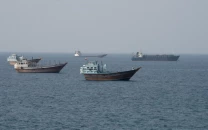
Firstly, urbanism in Karachi may not be deemed merely as a territorial loop of late capitalism. Per Lefebvre's model, the notion of spatialising Karachi may not simply include objects in space but also emphasise the creation of space in the context of ongoing regional and local power struggle and politics. The blockade of Hormuz could be treated as an object in the city's ineffable business space. Another object is the transportation challenges of oil from the Middle East and Karachi's untouched maritime access. However, these objects are not enough to produce space in Karachi as it requires a systematic policy confluence of local and regional power politics through which capitalism is confronted and consolidated. This dimension treats Karachi's law and order situation, surging crime rate and lack of an effective business and real estate regulatory framework as major impediments countering the production of urban space in the city.
Secondly, social struggles define another dimension of urbanism in Karachi. Transport injustice in terms of severe traffic congestion, long commuting hours and illegitimate occupation of space by the powerful reflect such social struggles giving rise to esoteric contradictions and antagonisms because of unbalanced urban power relations in the city.
Thirdly, urbanism remains a formally constructed object in some cases in which the city's planning is extrapolated through government planners and public apparatus. In producing space in Karachi, this dimension is particularly critical because it will challenge the city's powerful class by redefining order, occupation and control of space. In this regard, meaningful engagement of stakeholders is necessary to address the challenges related to infrastructure, public services, good governance and environmental degradation.
Fourthly, urbanism must be global. This dimension explains how restructuring of space repositions the city's scale as the venue of capital accumulation and good governance. It has a greater focus on varying cultural values and norms from different investors from different parts of the world. Karachi, therefore, needs necessary planning to produce space on the 'world scale' rather than confining itself locally as the largest city and financial capital of Pakistan.
The policymakers in Pakistan must acknowledge that production of urban space is a new form of capital necessary to aggrandise Karachi's economic growth and transform it into an international trade hub. It is all about creating space not merely as a mode of late capitalism but rather a means of production by placing power and politics at the core of the city's urban planning. The flow of capital from Dubai to Karachi will largely depend simultaneously on globalism and urbanism as part of wider global urban strategy. The modernisation and gentrification of Karachi's real estate sector will inevitably attract more capital as a 'pivotal sector of new urban economies'. After the May 2025 conflict with India, Pakistan's international credibility has exponentially increased strengthening the narrative of safety for the foreign investments. The same naturally gets clubbed with the notions of both urbanism and ease of doing business. Not just the state but the nation-state will play a defining role in the public production of space in Karachi – a necessary condition for the city to act as Dubai's alternative in the region.









This material may not be published, broadcast, rewritten, redistributed or derived from. Unless otherwise stated, all content is copyrighted © 2026 The Express Tribune.
COMMENTS (1)
Comments are moderated and generally will be posted if they are on-topic and not abusive.
For more information, please see our Comments FAQ