'The Odyssey' sparks Sicily tourism boom with $500m boost
Updated 36 minutes ago

As the more than three-month conflict nears an end, both sides are expected to sign a memorandum on Friday in Geneva
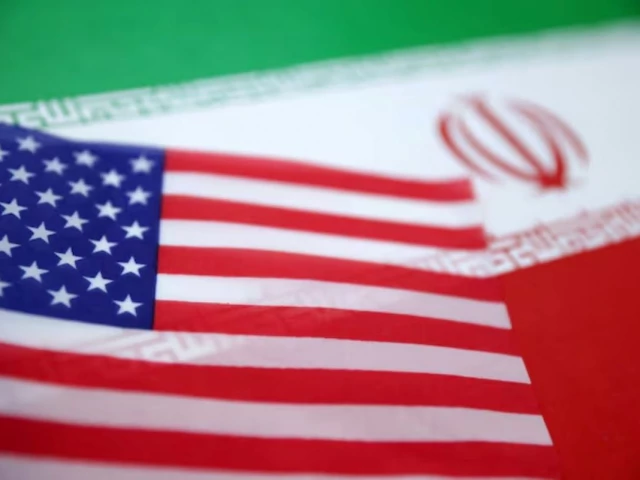
After 108 days of war, Iran and the US have announced reaching a preliminary agreement to end the conflict.
The deal, brokered by Pakistan, is expected to be formalised through a memorandum of understanding signed in Geneva, Switzerland, on Friday.
US President Donald Trump said the agreement includes reopening the Strait of Hormuz to toll-free shipping and lifting the US naval blockade of Iran, while talks continue on nuclear limits and sanctions relief. Iranian officials said the deal also provides for an immediate suspension of hostilities across multiple fronts, including Lebanon — though Israel says its forces will remain deployed in southern parts of the country.
Here is a timeline of the key moments in the 2026 US-Israel war with Iran, a conflict that has killed thousands and upended both regional security and global trade.
February 28-March 2
The US and Israel launched nearly 900 coordinated air strikes across Iran in under 12 hours, targeting government buildings, military sites, missile infrastructure and air defences. Iran’s Supreme Leader Ali Khamenei, alongside dozens of senior military and political officials, was killed in the opening strikes. Iran responded with missile and drone attacks on Israeli targets and US bases across the region.
The strikes also killed around 168 people at a girls’ primary school in the southern Iranian city of Minab, in what became one of the most contested incidents of the war.
On March 1, six American soldiers were killed in an Iranian drone strike on a US military base in Port Shuaiba, Kuwait — the first US military deaths of the conflict. Three US F-15 fighter jets were also lost to friendly fire from Kuwaiti air defences.
Iran declared the Strait of Hormuz closed to international shipping. Before the war, roughly 25% of the world’s seaborne oil and 20% of its liquefied natural gas passed through the strait daily. The closure triggered a global energy shock, sent oil prices surging and halted flights across the Middle East.
The conflict also rapidly expanded as Hezbollah fired projectiles toward Israel from Lebanon. Israel responded with air strikes across Lebanon, including the capital, Beirut, opening a second major front in the war.
March 3
The Israeli army officially declared a ground incursion into southern Lebanon, with the aim of establishing a “security zone”.
March 9
Iran named Mojtaba Khamenei, son of the assassinated supreme leader, as the country's new paramount leader.
Late March
Heavy bombardment continued on Iranian energy, military and command sites, with hundreds of schools, hospitals and civilian infrastructure damaged. Iran, in retaliation, repeatedly launched barrages of missiles on Gulf countries that are home to US assets. Attacks on oil depots and infrastructure led to toxic “black rain” in Tehran and other areas, raising serious health and environmental concerns.
Yemen's Houthi movement formally joined the war, resuming ballistic missile attacks on Israel after a pause that had followed a ceasefire in Gaza.
April 3
Iranian forces shot down a US F-15E Strike Eagle over southwestern Iran, triggering a large-scale US combat search-and-rescue operation involving special forces and aircraft. One crew member was rescued quickly, while the second was recovered after an extended search, with additional US aircraft lost during the operation.
April 7
Hours before a self-imposed deadline for Iran to reopen the Strait of Hormuz or face strikes, Trump posted on Truth Social: "A whole civilisation will die tonight, never to be brought back again."
The warning, condemned by UN officials and legal experts as potential incitement to war crimes, came hours after US forces struck Kharg Island — Iran's main oil export terminal.
Shortly after, Pakistan helped broker a fragile two-week ceasefire under which Iran agreed to reopen the Strait of Hormuz.
April 8
After 40 days of continuous fighting, Pakistan brokered a fragile two-week ceasefire between the US and Iran. Israel was notably excluded from the negotiations and continued operations in Lebanon, a move Iran and Pakistan described as a violation of the agreement's spirit.
With the greatest humility, I am pleased to announce that the Islamic Republic of Iran and the United States of America, along with their allies, have agreed to an immediate ceasefire everywhere including Lebanon and elsewhere, EFFECTIVE IMMEDIATELY.
— Shehbaz Sharif (@CMShehbaz) April 7, 2026
I warmly welcome the…
April 11-13
High-level talks in Pakistan between US and Iranian officials broke down. US Vice President JD Vance led an American delegation to Islamabad for direct talks with Iranian counterparts — the most senior face-to-face engagement between the two governments since the 1979 Islamic Revolution. After 21 hours, the talks collapsed without a deal. The US responded by imposing a naval blockade on Iranian ports, further straining the country's economy.
April 17
A US-brokered ceasefire went into effect between Israel and Lebanon. Israeli operations in southern Lebanon continued amid accusations of violations.
Mid-late May
Trump visited Beijing seeking Chinese mediation but returned without a breakthrough.
Backchannel diplomacy intensified between the US and Iran through Pakistan and Oman, focusing on stabilising earlier ceasefire arrangements. Talks centred on nuclear restrictions, sanctions relief and the reopening of the Strait of Hormuz, while intermittent strikes continued.
June
On June 3, the US and Iran exchanged heavy strikes in one of the most intense rounds of fighting since April’s fragile truce. Iranian forces targeted Kuwait with a barrage of missiles and drones, striking the international airport, killing one person and wounding more than 60 others.
On June 9, Iran downed a US Army Apache helicopter near the Strait of Hormuz, prompting immediate US retaliatory strikes and threatening to derail ongoing negotiations. US airstrikes hit two drinking water reservoirs in Iran's southern Hormozgan province, cutting off water to over 20,000 residents.
Trump cancelled planned further strikes on Iran, stating that negotiations had reached an advanced stage.
On June 14, he announced that Washington and Tehran had reached an agreement to end the war. Prime Minister Shehbaz Sharif confirmed both sides had declared “the immediate and permanent termination of military operations on all fronts, including in Lebanon”.
We are closer to a peace deal than ever before. With finalisation likely expected in the next 24 hours, Pakistan is preparing for the electronic signing of the peace deal immediately after, followed by technical level talks next week.
— Shehbaz Sharif (@CMShehbaz) June 13, 2026
We would like to thank United States of…
The agreement establishes a 60-day negotiation window to permanently settle the fate of Iran’s nuclear stockpile, international sanctions, and frozen assets.






This material may not be published, broadcast, rewritten, redistributed or derived from. Unless otherwise stated, all content is copyrighted © 2026 The Express Tribune.
1723626381-0/BeFunky-collage]____-(92)1723626381-0-208x130.webp "unsc holds first straw poll for new un chief")





COMMENTS
Comments are moderated and generally will be posted if they are on-topic and not abusive.
For more information, please see our Comments FAQ