Microdramas boom in a shrinking Hollywood as studios chase a TikTok audience
Updated 1 hour ago

Singer claims forged documents were used to transfer rights to his iconic song before it appeared in 'Jugjugg Jeeyo'
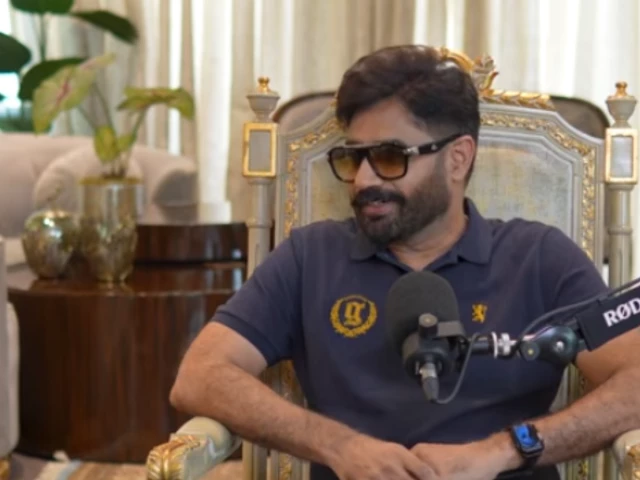
Singer Abrarul Haq has alleged that the rights to his iconic song Nach Punjaban were taken through forged documents and later used without his permission in the Bollywood film Jugjugg Jeeyo.
Appearing on a podcast hosted by Mubashir Hashmi, Haq revisited the long-running copyright dispute surrounding the song, claiming that a company falsely obtained the rights before selling them on.
"Unfortunately, someone stole the rights to the song in London. I did not sell them, but they assumed that I had," Haq said. According to the singer, when he challenged the claim, he was told that fellow musician Haroon Rashid had granted permission on his behalf.
Haq rejected the assertion and alleged that a Bollywood-linked company created fraudulent paperwork to facilitate the transaction. "They made fraudulent documents with forged signatures. They have done the same with other artists as well," he alleged.
Discussing the use of Nach Punjaban in Jugjugg Jeeyo, produced by Karan Johar, Haq said the song became the foundation of the film's promotional campaign without the rights holders being compensated. "They made a whole film based on the song and did not give us our rights. We did sue them, and that case is ongoing," he said.
The singer further alleged that those involved approached his team through a company that had changed its name and was previously known as Moviebox. Haq maintained that the dispute should be straightforward because, according to him, no written agreement exists transferring the rights.
Beyond the copyright dispute, Haq reflected on his decades-long career, his breakthrough in the 1990s, and the enduring popularity of songs such as Billo De Ghar.
Recalling the early days of his career, the singer said he was preparing for the CSS examinations while also interviewing for a teaching position at Aitchison College after completing his master's degree and law degree. "The breakthrough is something you never forget," he said, describing a period when music had yet to become his primary focus.
Haq also reflected on the extraordinary success of Billo De Ghar, claiming the song sold around 60 million copies on cassettes and CDs. Speaking about its origins, he said the lyrics emerged unexpectedly during a walk after overhearing a group of men casually exchanging phrases on a street in Karachi.
The singer acknowledged that many of his songs attracted controversy, claiming religious scholars criticised some of his work and that Billo De Ghar became the subject of public backlash.
Despite those disputes, Haq said he remains grateful that his music continues to resonate with younger audiences. "I'm honoured that my music is still relevant among Gen Z listeners," he said, praising a new generation of Pakistani artists for their contribution to the industry.








This material may not be published, broadcast, rewritten, redistributed or derived from. Unless otherwise stated, all content is copyrighted © 2026 The Express Tribune.










COMMENTS
Comments are moderated and generally will be posted if they are on-topic and not abusive.
For more information, please see our Comments FAQ