
An unfolding national security, public health, and survival challenge – Pakistan’s climate crisis is no longer a distant environmental warning. From melting glaciers in the north to rising seas in the south, from choking smog in Punjab to chronic water scarcity in Balochistan and Karachi, the country’s ecological stresses are colliding with rapid population growth, poor governance, and outdated infrastructure. The consequences are not abstract. They threaten the most basic foundations of human life: food, water, shelter, energy, and breathable air. While Pakistan’s contribution to global emissions remains relatively small, its vulnerability is immense — and vulnerability does not absolve responsibility.
The central question is no longer whether climate disruption will reshape our cities, but whether the state and society can recognise the scale of the danger, and respond before a crisis becomes collapse.
As the cliche goes, Pakistan is one of the most vulnerable countries on the planet when it comes to the disastrous consequences of the climate and ecological emergency. It is one of the most, if not the single-most glacier dense country in the world. With an exploding population, currently at 250 million (around 30 million in 1947), it is on track to double within 35-40 years, within the lifetime of most people in Pakistan.
With melting glaciers to the north, threatening our northern communities, we have the ocean at our southern tip, threatening our coastal communities, with the ever unpredictable Indus river running through the middle, often sweeping away entire communities during monsoon. Karachi relies on water tankers just to get clean water to its residents, while Lahore is unbreathable in the winter, all the while our indulgent rulers purchase expensive and needless airplanes.
Each city has a unique threat that it faces with respect to the climate crisis, but there’s one threat that every city faces, and that is the one threat which is the historic nightmare of civilisations and states, and that’s food shortage. Climate crisis is not merely about losing species like the great Indus dolphins or the polar bears, it strikes at the heart of our civilisation and our livelihood: Food and water.
According to the much quoted former Chief Scientific Advisor to the British Government, Sir David King, “what we do in the next 3-4 years, I believe, will determine the future of humanity”. In Pakistan, we often go to sleep at night, satisfied that our country’s contributions to the global crisis are minor. However, this has no implications for the responsibility of the state and its citizens with respect to the protection of our population. The ultimate responsibility for our protection falls on us, the people and the state, and one can only solve a problem by first diagnosing it correctly. Below, is an estimation of the threats we face in all important cities in Pakistan, and what we can do about it.
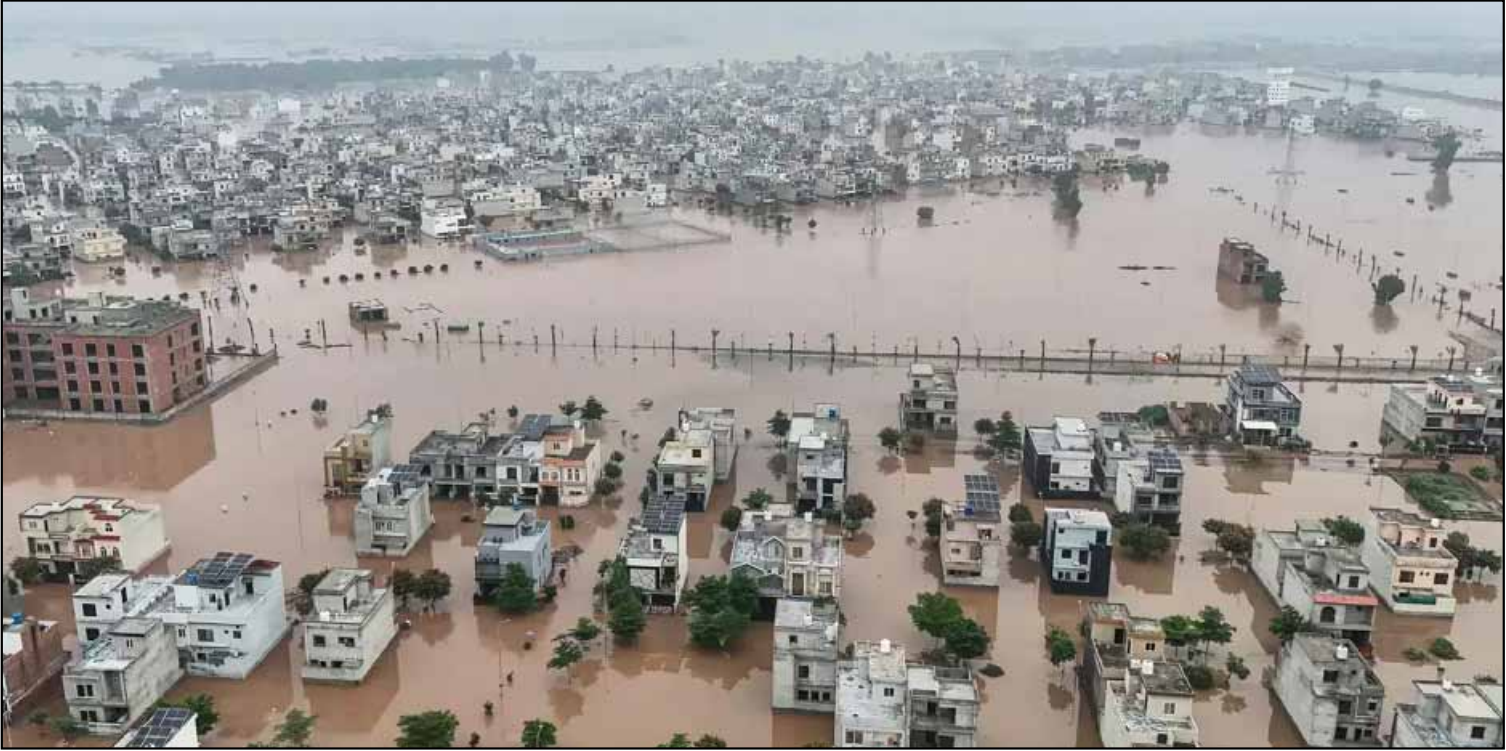
Quetta’s falling water table
Just a quick google search reveals the extremely concerning fact that the ground water supply of Quetta has depleted sharply since the late 1990s. It sed to be just 50 metres below the surface in the area around Quetta at the start of the century, whereas today you would have to dig at least 150 metres before you come across water. This is according to the International Union for Conservation of Nature, as reported in multiple publications a few years ago. According to the organisation, the water supply is also reduced by 2-5 metres every year. This poses a fundamentally existential threat to the city’s consistently increasing population.
Population pressure
According to Pakistan’s Bureau of Statistics, the population of Quetta has continued to increase at a rate of 7.8% (approximately). In the broader district of Quetta, it is somewhere around 2.5 million, which may sound small compared to major cities like Karachi, or Lahore, but it is also growing at a rapid rate, with the national population growth rate reportedly being around 2.5%. In 15 years Quetta’s district population could be closer to 8-9 million approximately. As the population continues to expand, without the government building appropriate infrastructure, planning, and ensuring water supply, to accommodate the growing population, the city could face an acute water shortage in future.
In order for the readers to reach their own projections for their respective cities, this is the formula by which any city’s future population can be estimated:
Multiply the current population of the city with the annual growth rate + 1, and raise the latter to the power of the number of years into the future that you are projecting to.
There are apparent efforts underway to build small dams throughout Balochistan that can deal with the water supply issue, as well as efforts to have rainwater harvesting. However, there is a void between policy and effective implication, considering that the thousands of illegal tubewells built in the larger area, further deplete water, and are not appropriately accounted for.
When 1.5°C Becomes 5°C
One of the more misunderstood aspects of the climate crisis is the drastic increase in temperatures. The only statistic we hear is the global average increase (currently at 1.5 degrees), however, we are seldom told what that means for us on the ground, which is the only thing that matters. For non-coastal cities like Quetta, Tehran, Delhi, and Lahore, a 2 degrees increase in global average temperatures could mean a 5 degrees average increase. This could mean that within the next 10-15 years a hot day in Quetta during the summers could range between 41-46 degrees celsius. The only saving grace being a lower humidity level compared to places like Karachi or Gwadar.
What to do
Alternative water sources for Balochistan and Quetta must be developed through serious investment in desalination. For a country with an extensive coastline along Sindh and Balochistan, persistent water shortages in these provinces are increasingly difficult to justify. At the same time, a coordinated federal and provincial family planning initiative is essential to ease long-term pressure on resources and infrastructure.
Another priority should be the widespread adoption of heat pumps — a solution relevant to virtually all of Pakistan’s major cities, where rising temperatures are becoming a universal challenge. Beyond improving resilience to heat, heat pumps can also reduce winter heating costs and make energy use more efficient. In parallel, Pakistan should explore tapping underground river-bank aquifers in Punjab to help supply water-stressed regions of the country.
The water-sparse Karachi
Water shortage is already a significant issue. Unlike parts of Punjab, Karachi does not have underground water storage. A huge chunk of Karachi’s water comes from the Hub River, from the Balochistan-Sindh border region, around 125 km away from the main city. The city, the province, or the federal government have not made a meaningful effort to build desalination plants to harness the enormous and sustainable sea water. The government has been claiming to work on the K4 plan to take water out of the Keenjhar lake, to supply to Karachi, a project that was supposed to be completed by 2019, but still hasn’t as of yet.
Sindh has also not made a meaningful effort to control the population of Karachi. The interior of Sindh suffers continuous neglect, further worsened by the climate crisis. It is hard for traditional communities to sustain themselves through fishing and farming, due to irregular monsoons, and rising temperatures that make farming harder. Sea water encroachment which impacts farming and fishing.
The wet bulb effect
The heat factor is a greater threat in Karachi than in most cities in Pakistan. Although temperatures seldom rise as high as they do in Quetta or Lahore, the reality on the ground is quite different.
Karachi, being a coastal city, has a much higher level of humidity, as a result, it poses a much more serious threat to life, due to the “wet bulb effect.” This is when the heat and the humidity form a deadly combination (quite literally), such that temperatures reach approximately 36 degrees celsius or more, combined with near 100% humidity. This means that the human body cannot cool down. In these circumstances, all things being equal, a person can die within six hours. Such temperatures have already reached cities like Jacobabad, Sindh.
According to an opinion piece in the The New York Times (December 19, 2025) “How did a City of 10 Million People Nearly Run Out of Water?”-- several major cities almost reached “day zero” over the past few years, meaning they almost ran out of water within the municipality. In particular, it mentioned Tehran, Chennai, Sao Paulo, Cape Town, and other major cities. It may not be long before Karachi is on that list, if not already. Currently, people in even the most affluent neighbourhoods of Karachi, like DHA, have to rely on water tankers to provide water. The city claims to be working on finding alternative sources of water, but so far that has not yielded results. This is despite 17 years of governance by the same political party, the PPP, which ironically became popular in the 1970s on the promise of “Roti, Kapra, Aur Makaan.”
The coming food shock
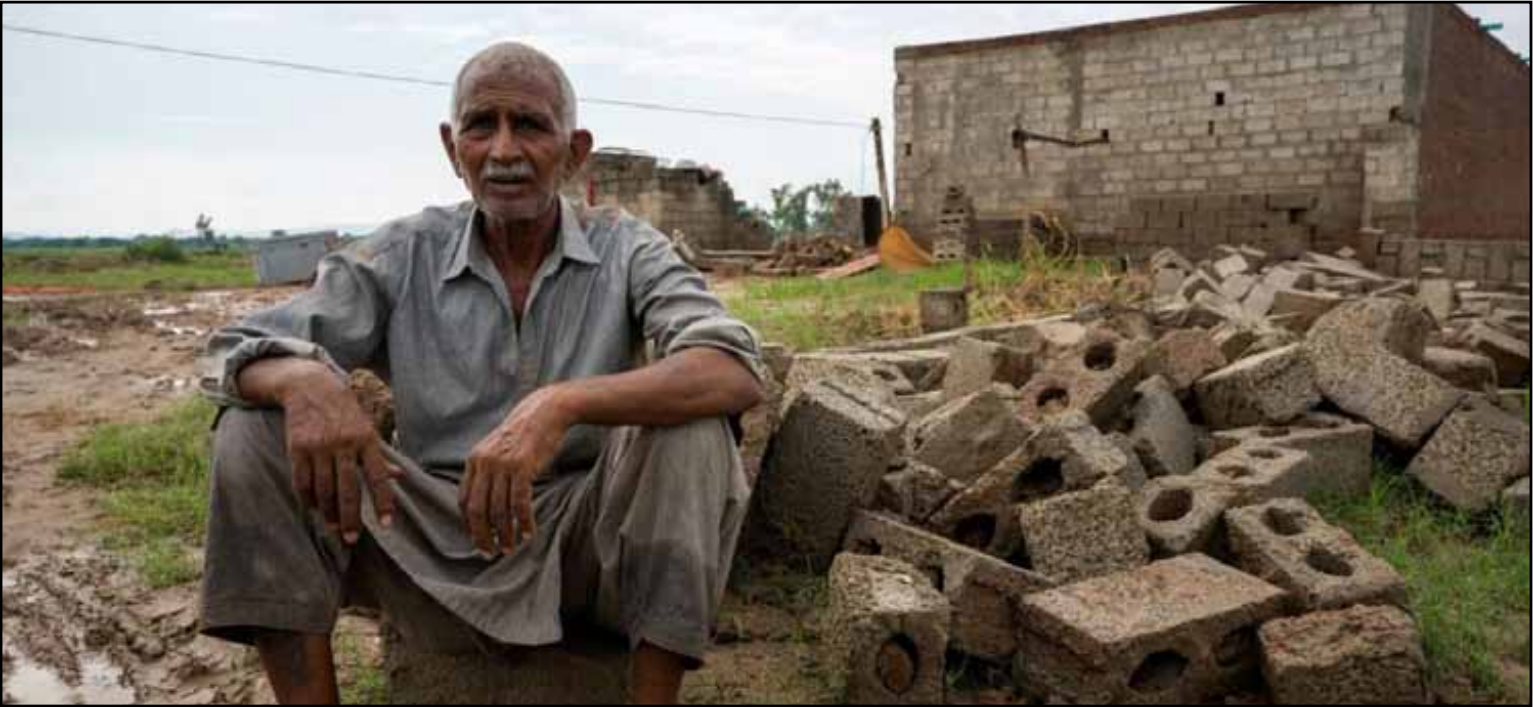
The other crisis that Karachi faces is that of an impending food shortage and crisis. In the 2023 floods, Pakistan lost 90% of its crops, which in part worsened inflation in the country. For 2026, the National Disaster Management Agency has claimed that the monsoon is supposed to be 26% worse compared to last year. This trend is predicted to worsen over the coming decades. Cities do not grow their own food and rely on the country-side to provide them with food. However, with an increasingly unstable and unpredictable climate and weather patterns, food production could be seriously disrupted. We have already seen a universal increase in food prices, in part due to climate change, in addition to the war on Ukraine.
Way forward
All non-native trees planted by KMC must be replaced with native trees. This will reduce the urban heat island effect and provide shade for many residents, labourers, and commuters. During extreme heatwaves, announce a public holiday, and compensate for lost income, to avoid deaths related to heat.
Centralise decision-making through provincial legislation. There needs to be a greater centralisation of power within the KMC and the mayor’s office, so that the mayor can be held accountable. This will reduce the excuses that are usually provided by the mayor’s office. This is also entirely possible to accomplish right now, given the fact that the same people’s party in power in Karachi, is also in power in the provincial assembly – leaving them with no excuse.
The city and the province need to reintroduce the family planning initiative that was nominally launched under Benazir Bhutto. Create economic opportunity for the poorest regular citizens by asking them to clean up drains, and riverbeds, and deliver the trash to the city, in exchange for food, proportionate to the garbage collected. Following the model of “Garbage Cafe”, which has been successfully implemented in Ambikapour, Chhattisgarh Province.
The city’s exploding population and depleting water supply necessitates that the government must deliver a desalination plant for Karachi within five years, or resign from public office. Karachi has a vast coastline and an acute water mismanagement issue, whichever government delivers a solution to this issue through desalination will be remembered for decades to come.
 The consumerism crocodile of the twin cities
The history of Pakistan and its beauty is a picture of consumerism that makes even the worst kind of consumerism in the west look harmless. Islamabad used to be the site of a forested area at the foothills of the Himalayas, when Ayub Khan decided to make that the new capital of Pakistan. Islamabad was designed by a renowned urban planner, Constantinos Apostolou Doxiadis, who designed it as a modern, neatly planned city, with protected forested sections meant to maintain the beauty of the city. However, as Islamabad kept growing, especially in the last two decades, those green areas are beginning to be encroached upon. Many people claim that Islamabad has changed significantly during this time, and the profit model has gotten in the way of serving the public.
Inland city warming
Average temperatures have risen in Islamabad by 2.5 degrees celsius, reportedly. This is greater than the global average, which is often not understood properly. Similar to the case in Quetta, the global average increase since pre-industrial times (1.5 degrees currently), is much lower than it otherwise would be due to the cooling effect of oceans and “in-land” temperatures, 1.5 looks more like 2 or greater for Islamabad. Inland areas like Islamabad (unlike coastal areas like Karachi) will be warming faster than coastal areas.
As a result, the risk of heatwaves in Islamabad will increase dramatically, and deaths associated with people who are more impoverished and cannot afford air conditioning, nor coolers. It will also disproportionately impact the elderly, who could be more sensitive to very high temperatures.
For those who can afford air conditioning, they will see much higher costs for cooling, for both home and car based cooling. This will impact industry as well, as the cost of air conditioning in offices will also go up dramatically. This is likely to become increasingly unaffordable with the increasing inflation within the country, and as we see right now in the world, an increasing cost of oil.
Rain
Rain is something that Islamabad is very much used to, and to a great extent, the historical drainage system in Islamabad is much better than other urban centres in the country. However, that has been changing, and will continue to change dramatically. According to reports, rain in Islamabad has declined by 15%, whereas many older residents will remember that it was a regular occurrence in Islamabad in days gone by, not merely a seasonal occurrence. However, even though the overall rain has declined, it has become more intense. This is likely due to the slowing down of the "jetstream", which is a system of air currents and patterns that are impacted by the temperature differences between the polars and the equator. But with that difference reducing due to the warming up of the poles, the air currents also slow down. This means that a weather system such as rain, or snow, or heat, could stay in one place for longer than it otherwise would.
This could also mean shorter but more intense winters as well, despite an overall warming of average temperatures. This too, will add to energy bills.
Green spaces under pressure
The government should invest in retrofitting buildings, improving insulation, and expanding the use of heat pumps to significantly boost energy efficiency while making heating and cooling more affordable for households and businesses alike. Islamabad’s protected green spaces must be preserved, the city’s master plan updated, and more indigenous trees planted to maintain ecological balance and urban livability.
Urban sprawl should be curbed through greater use of high-rise development. While this may present security and planning challenges, it deserves serious consideration in order to protect Islamabad’s natural landscape and planned character. Governance reform is equally essential. The Capital Development Authority should broaden its mandate, regularly revise its planning framework, and place public welfare above revenue generation by bringing the institution under appropriate municipal oversight.
The cultural capital
Lahore’s underground water supply has been depleting. An increasing population due to urbanisation and poor family planning not only stresses the existing water supply, but the construction of more settlements is making it more difficult to replenish some of the ground water.
However, the hydrologist and water expert, Hasan Abbas, believes that the issue with Pakistan is not water scarcity and that the country has an abundance of water through riverine aquifers. “The main issue is water management, not a natural water shortage,” Abbas says, highlighting that the solution to Pakistan’s problems is not more but less dams, to allow for the water to flow naturally and replenish ground water. “Poor farming practices like flood irrigation, requires us to use over 90% of our freshwater, much of which is wasted.”
According to a Punjab irrigation department bureaucrat requesting anonymity, East Punjab will run out of water faster due to the slope than west Punjab. However, this is primarily with respect to ground water. East Punjab has a better capacity to store more water due to the fact that it is an upper riparian zone of the Indus.
The apocalyptic Cholistan
As things stand, Cholistan is a cultural zone that is marked for extinction in all but name. The people of the Cholistan section of the greater Thar desert (the part in West Punjab) are already living under apocalyptic conditions.
Smogged
Smoke is the headlining issue in Punjab, whether we are in central Punjab, or on the edges of it in Islamabad or New Delhi. There are several factors that come together to make the “smog” issue so seemingly insurmountable. For one, farmers in the Punjab still practice an outdated form of clearing the field for beginning the cycle of farming again, by burning all of it.
Unlike Karachi, which is situated on the coast of Sindh and despite significant pollution, benefits from regular wind that keeps the pollution moving and the air relatively fresh, Lahore doesn’t have that advantage, since the city is landlocked.
Rethinking crop residue
Instead of burning crop residue, the province could invest in reusing crop residue as compost which can then be used as an organic fertiliser (this would be especially useful considering that much of the world’s fertiliser comes out of the Strait of Hormuz, an incredibly vulnerable chokepoint for essential good such as food). Crop residue can also be crushed, ground, and new seeds can be planted directly into the soil. Other uses of crop residue include reuse to create bioenergy.
The vulnerable Peshawar
Peshawar is a valley, which carries with it some unique vulnerabilities with respect to the climate crisis, along with its proximity to rivers in the region.
Air trap
Similar to parts of Canada and the US where wildfires are common, valleys can become a place where poor air quality can hover around for a long time. Peshawar, being a valley, can trap air for prolonged periods, and this includes both heat and poor air quality.
Flooding
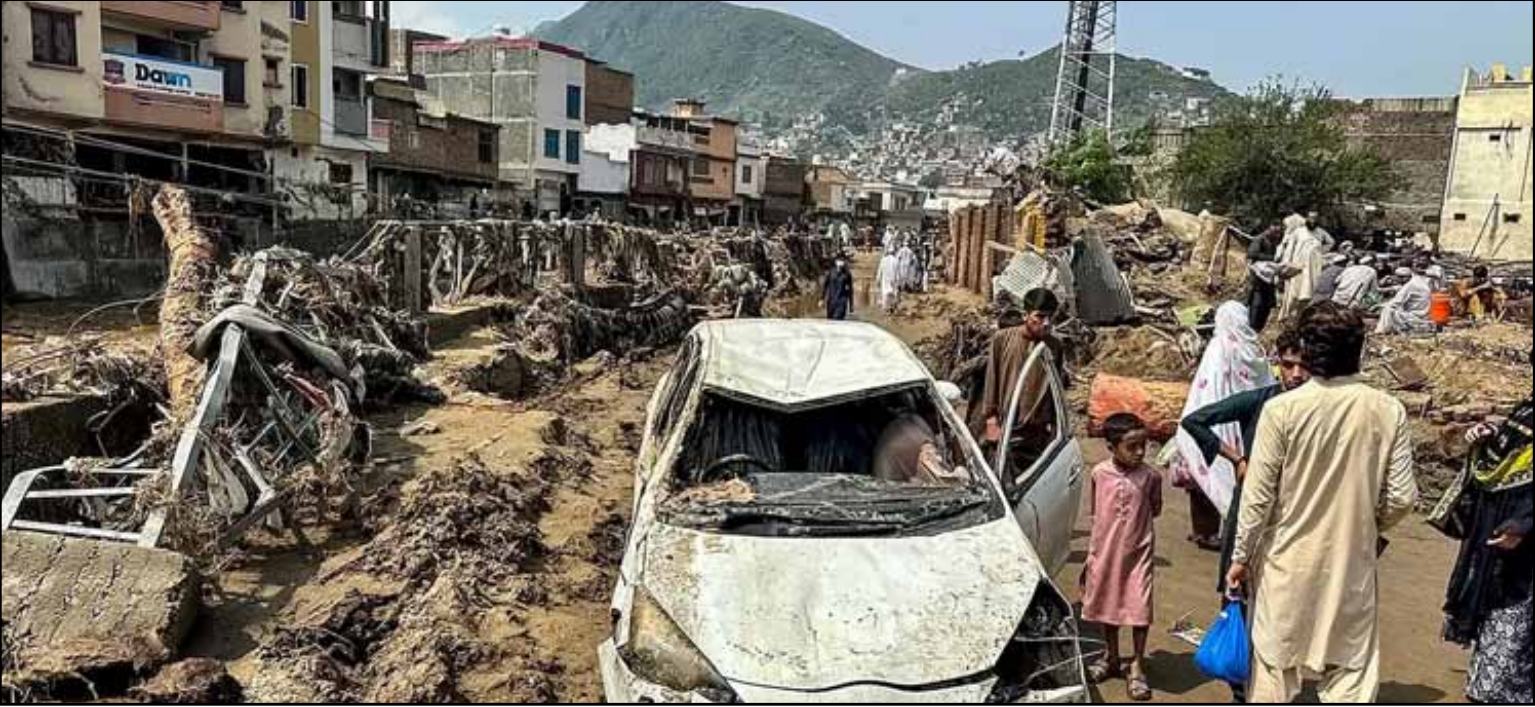
Although being close to rivers can mostly be a blessing, due to melting glaciers and increasingly erratic monsoons, being close to rivers can be a cursed blessing! The Kabul River flooded in Peshawar in 2010 and this is only going to become frequent over time.
Migration
Due to flooding from the Hindukush mountains and the Kabul river, Peshawar, geographically, is a natural migratory location for many Afghans in the event of flooding. Regardless of the open or closed nature of the border with Afghanistan, Peshawar will either face a growing number of migrants and climate refugees from Afghanistan, or either way from other parts of the Khyber Pakhtunkhwa region.
Flood mitigation plan
A federal flood mitigation plan, for parts of KP, and specifically the Peshawar valley could offer solutions to the city’s issues. The provincial government should use signage to make the citizens aware of at high risk areas, particularly where tourism is more.
There should be special attention paid to migration issues due to the climate crisis within the region. A special committee should make an assessment and determine the problems that Peshawar could face due to seasonal migrations due to internally displaced persons.
National faultlines
While each city faces its own distinct climate pressures, several underlying challenges cut across provincial and municipal boundaries. These are structural issues — tied to governance, demographics, energy, and agriculture — that require a coordinated response at the national level.
The Bangladesh model
To add insult to injury, one must take a look at Bangladesh. Formerly East Pakistan, the country has done better in terms of at least controlling its population growth. It is common knowledge that Bangladesh had a population greater than West Pakistan in 1971 – seven children per woman. Presently, that number is down to only two per woman, with a smaller population than Pakistan. This is a sign of a relatively effective civil bureaucracy and administration in comparison to our country.
The Aid trap
Pakistan has always been on a high when blessed with aid. Instead of doing the hard work of picking up the economy and becoming competitive with the global market, we have always hoped for becoming useful to a great power. This happened most recently during the tenure of General Musharraf, when a significant amount of money was injected into the country’s economy, giving a false sense of progress. The same could become true, if the international community is not careful, regarding the climate crisis. In order to look good to their voters and the international community, it is not inconceivable that industrialised great economies will choose to give money to climate vulnerable countries to Pakistan without any strings attached and a method by which progress can be monitored – almost as a charity, which in turn could either be consumed in part by corruption, or make us complacent regardless. Rich individuals do this all the time, to maintain a good reputation, there’s no reason why countries will not do the same. This of course is just the worst case scenario, to be avoided at all costs.
Fuel poverty
The recent and ongoing crisis in the Strait of Hormuz is the best lesson we could all be subjected to. It lays bare the vulnerability of oil. Regardless of the threat the burning of oil and gas poses to the future of humanity, it’s also deeply unstrategic and an unnecessary cost for the populace. In a country like Pakistan where the sun always shines, Pakistan can almost entirely shift towards renewables through solar energy. In doing so, it will not require us to import oil and gas, and will give us an endless supply of energy.
The cost of outdated agriculture
Another common thread is agriculture. If Pakistan did nothing, but merely reformed its outdated agricultural practices, that would in and of itself have a significantly positive impact on the country. If, instead of burning crops, we acquired modern techniques of clearing our fields, and instead of flood irrigation we moved towards more efficient ways of watering out farmlands, we would be not only more efficient, but also have less contribution to our worsening air quality and water shortage crisis.
At the end of the day, Pakistan needs to make an effort to come out of the stone ages. One has to embrace modern technology, science, and an effective bureaucracy, to crack down on poor governance and enforcement. This may seem like a naive suggestion, but the rulers will have to realise soon that if they are to continue making their money, they will have to spend some money on basic maintenance -- otherwise the return on their investment will begin to diminish, as it likely already has.
The writer is a climate activist focusing on the mechanics of mobilisation and organisation
All facts and information are the sole responsibility of the writer