Monsoon keeps Punjab rivers swollen
Updated 18 hours ago

Sell beef around Rs800/kg, mutton around Rs1,500/kg to low-income residents
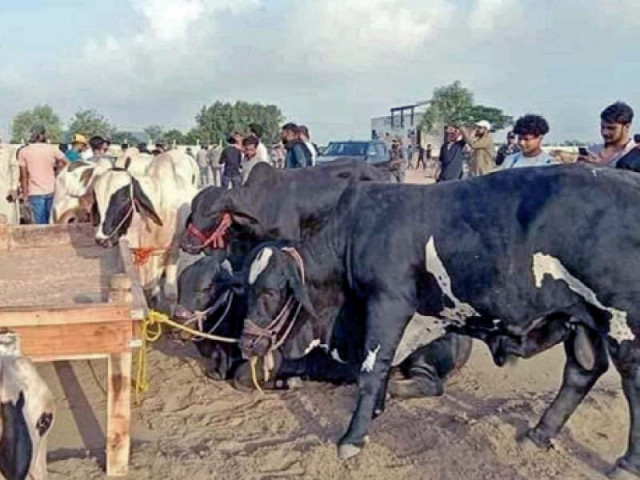
During the three days of Eidul Azha, professional beggars and their families swarmed the twin cities, collecting sacrificial meat from households and selling it in a thriving informal market on Jamia Masjid Road.
The road effectively transformed into a temporary marketplace where professional beggars from Rawalpindi and Islamabad sold donated beef, mutton, trotters and animal heads collected during the Eid holidays.
Small-scale butchers and low-income residents who had been unable to offer sacrificial animals due to financial constraints flocked to the market to purchase meat at comparatively lower prices.
According to local residents, men, women and children spent the Eid holidays going door-to-door collecting sacrificial meat before bringing it to Jamia Masjid Road for resale. The makeshift market extended across nearly 500 metres, with traders weighing and selling meat in an organised manner.
Beef was reportedly being sold for around Rs800 per kilogram, while mutton fetched between Rs1,500 and Rs1,600 per kilogram. Large trotters were selling for approximately Rs500 each and smaller trotters for around Rs100 apiece.
Temporary furnaces were also set up along the roadside where animal heads and trotters were cleaned and prepared for sale. The area remained crowded throughout the Eid holidays as buyers sought lower-cost alternatives to prevailing market prices.
Nazakatullah, a local resident, said he had been unable to perform a sacrifice this year and had not received meat from any household. "I purchased affordable meat and trotters from this market. It has helped bring some joy to my children during Eid," he said.
Meanwhile, two vendors, Allah Rakha and Ghaus Ahmed, defended the practice, arguing that economic hardship had forced many families to seek alternative means of earning an income during the festival.
"Eidul Azha is increasingly becoming a festival for the poor. Hardly anyone gives more than a token amount of Eidi these days," they said. "We travelled from our village on Chakri Road with our parents and siblings. Each family member collected between five and seven kilograms of meat, which we later sold here to earn money."
They maintained that the activity required considerable effort, involving long hours of visiting homes, collecting meat and enduring occasional harsh treatment from residents.










This material may not be published, broadcast, rewritten, redistributed or derived from. Unless otherwise stated, all content is copyrighted © 2026 The Express Tribune.




COMMENTS
Comments are moderated and generally will be posted if they are on-topic and not abusive.
For more information, please see our Comments FAQ