
He may have died in 2009, but after the release of Michael, the legendary Michael Jackson is back to what he did best -- ruling the hearts and minds of all those who came into contact with his music. The film not only revives the audience's interest in the performer who gave them Moonwalk, made Breakdance seem cool, and pioneered the art of modern music videos, but also explains the reasons behind his idiosyncrasies, which also made headlines.
Directed by Antoine Fuqua and featuring MJ's own nephew, Jaafar Jackson, as the King of Pop, Michael introduces Gen Z to what their predecessors loved - MJ's music. Through this film, they learn Michael's previously lesser-known origin story, including how an abusive relationship with his dad shaped him, and how his rise as a solo artist helped the Jackson 5, the band his father founded with MJ and his siblings.
The film wasn't without fault either; on the one hand, it brought Michael Jackson back to life, whereas on the other, it whitewashed his life, something biopics aren't supposed to do. They aim to show exactly what happened, not what could have happened, and that's where critics and fans disagree. While the former were expecting something along the lines of Elvis or Ray, what they got was an episode of a 'Tribute to the Stars', where a lookalike performed the star's famous moves on screen and left the audience hanging at the climax with an incomplete story.
As for the audience that currently listens to what can easily be termed below-average music, MJ's songs must have hit hard, as they were far superior in quality, lyrics, and presentation. It would have been a surprise if they hadn't liked the movie, which, in my opinion, is more of a tribute than a biopic.
Not Just Another Rise-and-Fall Story
In an era when musical biopics often follow the same well-worn path—early struggle, meteoric success, personal collapse, and then some form of redemption—Michael takes a quieter, more focused approach. It doesn't try to do everything, and that's exactly why it works.
Instead of racing through decades of Michael Jackson's life, the film settles into his early years. It examines the making of the icon rather than the unravelling of the man. That shift in focus makes it feel less like a standard biopic and more like a tribute—more selective, more emotional, and arguably more honest about what it wants to say.
There's no rush to tick boxes or cover controversies. The film lingers where it matters: the music, the pressure, the discipline, and the sheer brilliance that turned a gifted child into a global phenomenon. Yes, the film could have covered the 1990s as well, when MJ was at his best, but the makers chose to skip that era to keep the audience focused on the rise rather than the fall in MJ's life.
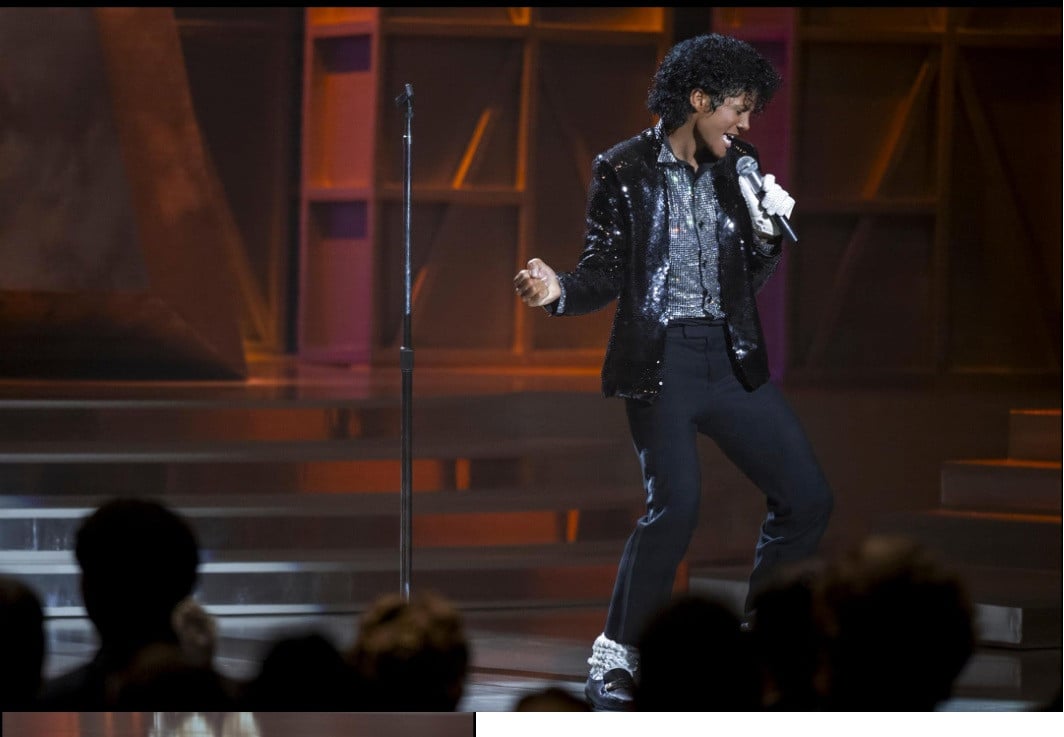
Genius in the making
A two-hour spectacle was never going to be enough for someone like Michael Jackson, who was unstoppable in the 1980s, adaptive in the 1990s, and was making a comeback in the 2000s before his death. Hence, it made sense to keep the film limited to the first 20 years of his career, with the last 20 years covered in the sequel.
And when you get the timeline right, things fall into place. The director and the art directors of this period drama need to be celebrated for spending a lot of time bringing MJ back to life. Call it their luck that the King of Pop's own nephew was the same age as the character he was supposed to portray onscreen, and he did a brilliant job, to say the least. Not only did he bring to light the grind behind the talent, but he also portrayed his strained relationship with his often abusive father, Joe Jackson (Colman Domingo), and how it changed him as he grew up.
It doesn't feel rushed. It doesn't feel like it's building toward a checklist of "important moments." Instead, it feels like it's trying to understand how greatness is shaped. And because it avoids diving into the more controversial chapters of his life, the film keeps its gaze firmly on the artistry. That choice won't work for everyone, but it gives the film a clarity of purpose that most biopics lack.
Why Michael Feels Different
Most biopics revolve around the subject and cover their rise and fall; however, since Michael was a project of the Jackson family, they chose to use it to whitewash one of their own. They chose one from the family to play the title character, and that was a masterstroke because not only did Jaafar Jackson resemble his late uncle, he even sounded like him when he spoke the dialogue, danced like him when he performed onscreen, and even gave expressions that would have reminded the audience of MJ in his prime.
However, without Janet Jackson in the film, there was a void that couldn't have been filled, no matter how much Jaafar looked like Michael. She was the closest sibling to the late performer, who entered music by following his brother's footsteps. The film makes no mention of Diana Ross or Elizabeth Taylor, with whom he was very close during the latter half of his career. The film builds the audience's expectations, but when those expectations are about to be met, it ends.
What happened to the stories about Neverland that MJ used to be fascinated with? How did his life change once he went solo? And what were the reasons behind his drug addiction that ultimately claimed his life? If you need answers to these questions, then you are looking in the wrong direction. The neat ending, the admiration element, and the refusal to go deep into his life give the film a strong, consistent tone that many wouldn't agree with.
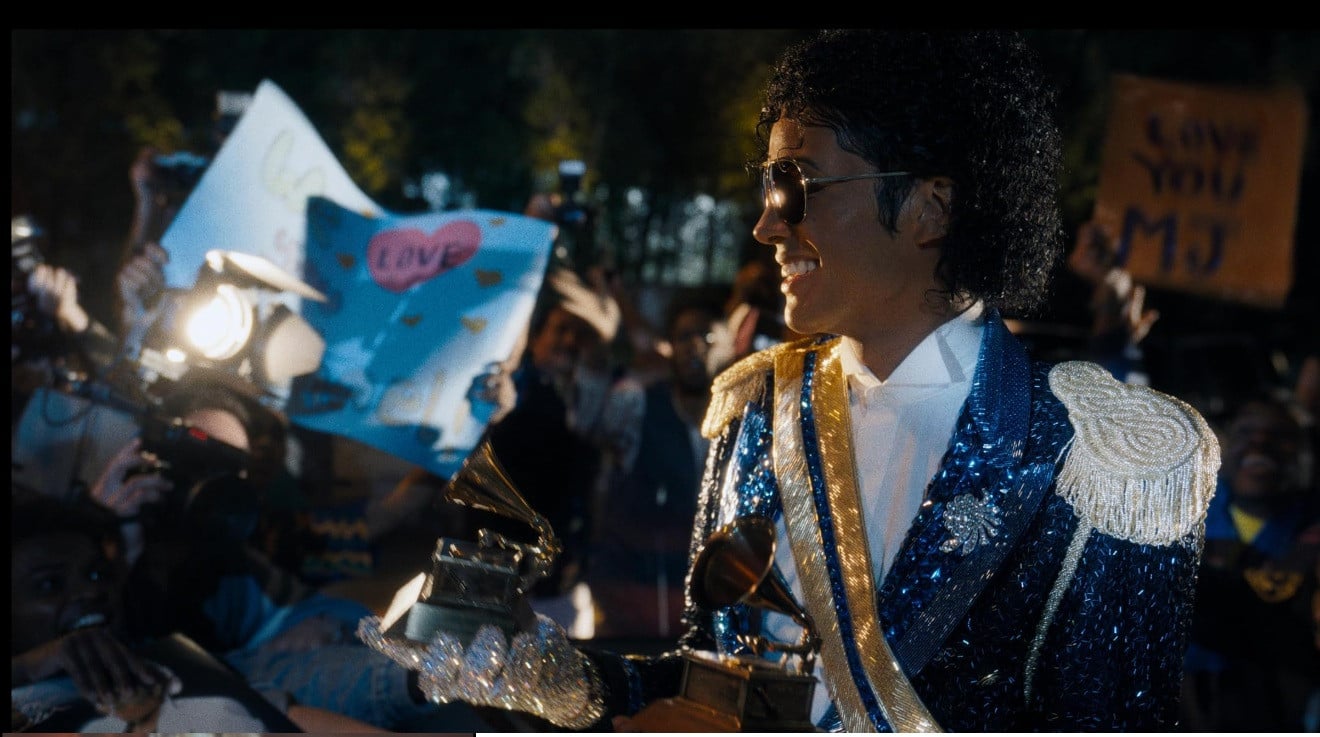
Smart or abrupt
There are two kinds of people out there - those who want the biopic and those who want a tribute. For the former, not showing why he wrote "Dirty Diana," why he came up with "They Don't Really Care About Us," or what the reasons were behind "Black or White" was an injustice to those who spent their money to be entertained, not to be schooled. For the latter, ending the story halfway gave Michael its identity.
For me, it wasn't a smart decision as I was expecting to be entertained myself. The moments where Jafaar Jackson danced like his uncle on screen were pure magic, but that magic should have continued in a third act. By ending the film in 1988, the makers were either trying to save money or waiting for their legal issues to be resolved so they could make a sequel. But when has there been a sequel to a biopic? I don't remember any!
But there is another opinion -- by stepping away before things get complicated, the film preserves a sense of awe. It leaves you at a point where the legend is still growing, not being questioned or dismantled. It's less about avoiding the darker chapters and more about choosing a specific lens.
How could Michael have been a contender?
If anything, Michael could have taken the route Baz Luhrmann's Elvis did four years ago. Actor Austin Butler was nominated for an Academy Award for his portrayal of the King of Rock & Roll, performed all the songs himself, and danced like Elvis in a film that didn't shy away from touching uncomfortable subjects.
Did they think of a sequel when they were making the biopic? Definitely not. They knew that telling a story properly was their superpower, and they succeeded because of that. Michael also succeeds at the box office, but not as something people would emulate, but as something that came, entertained, and left.
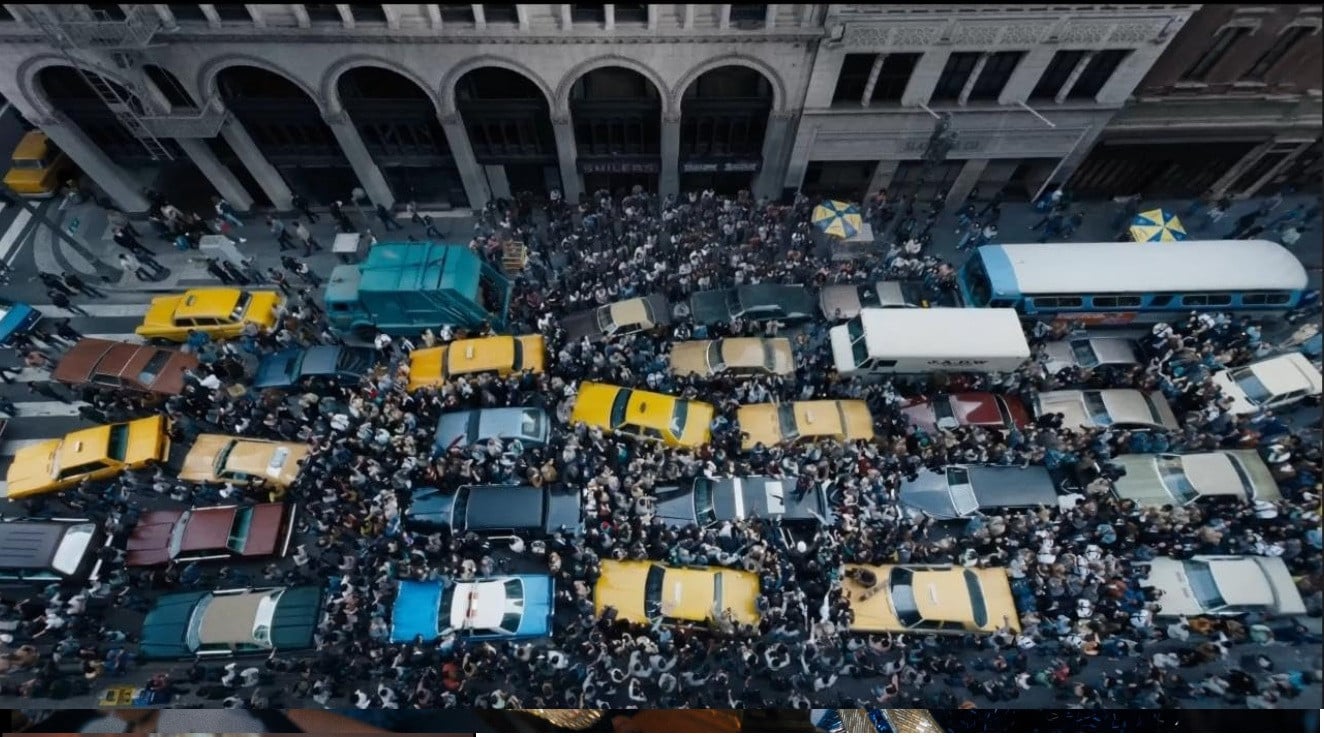
The biopic boom
Michael is neither the first biopic of a music icon, nor will it be the last. It is better to compare it with the biopics that preceded it and see where it stands.
Elvis (2022)
In this Baz Luhrmann-directed film, Austin Butler was nominated for an Academy Award for his portrayal of the King of Rock and Roll, whose rise and fall were chronicled perfectly. The film leaned heavily on the manipulative relationship between Elvis and Colonel Tom Parker (played by Tom Hanks) and how it damaged Elvis' career. It's as much about exploitation as it is about fame, showing the cost of being turned into a brand. Where Michael is controlled and intimate, Elvis is chaotic and operatic—almost like a concert that never stops.
Bohemian Rhapsody (2018)
The story of Freddie Mercury and Queen became one of the most commercially successful biopics ever, but it plays fast and loose with the truth. Timelines are rearranged, conflicts are simplified, and everything builds toward that Live Aid performance. Rami Malek won an Oscar for bringing Freddie Mercury to life, and if the producers play their cards right, Jaafar Jackson might be able to emulate him. After all, it's the closest film to Michael, since they both celebrate legacy more than they interrogate it.
Rocketman (2019)
Unlike most biopics, this one doesn't pretend realism is enough. It features Taron Egerton as Elton John, whose life is told through musical sequences where characters burst into song, float through the air, or relive trauma in stylised ways. It's deeply personal, especially in how it deals with addiction and identity, but it still covers a full arc—from childhood to recovery. If Michael is restrained, Rocketman is expressive and theatrical.
Ray (2004)
The story of Ray Charles set the gold standard for modern music biopics. Anchored by Jamie Foxx's Oscar-winning performance, it doesn't shy away from addiction, infidelity, or personal demons. It balances admiration with honesty, showing both the genius and the cost of that genius. In many ways, it's the opposite of Michael's approach—comprehensive, unflinching, and determined to show the full picture.
Walk the Line (2005)
Starring Joaquin Phoenix and Reese Witherspoon as Johnny Cash and June Carter, the film focused on their relationship and emphasized romance. Not only did it trace Cash's struggles with addiction, but it also framed his story around emotional recovery and partnership. While Oscar nominated future winner Joaquin Phoenix for Best Actor, it was Reese Witherspoon who took home the trophy for her grounded, character-driven, and traditional performance.
The Doors (1991)
Oliver Stone's film chronicled the history of American rock band the Doors and their influence on music and counterculture. Val Kilmer's performance as Jim Morrison was so realistic that many, including the original band members, were in shock. The film doesn't try to clean Jim Morrison up; it throws you straight into the chaos—drug use, erratic performances, clashes with authority—and lets you sit in it.
It's messy, excessive, and at times overwhelming, but that's the point. It captures a specific cultural moment—the late '60s counterculture—without trying to package it neatly. And that's where the contrast with Michael becomes clearest.
Where The Doors dissects its subject to understand the man behind the myth, Michael does the opposite—it builds the myth, carefully, deliberately, and with admiration. Neither approach is definitive, but together they show how flexible the musical biopic can be.
The film deliberately sidesteps the sexual abuse allegations that later came to define much of Michael Jackson’s public narrative, as well as his well-documented dependence on prescription medication. They both played a significant role in his final years but the makers chose not to engage with these chapter at all. By leaving out these darker, more complicated aspects, the story remains firmly rooted in admiration rather than examination.
The writer is a freelance contributor who writes about film, television and popular culture
All facts and information are the sole responsibility of the writer